

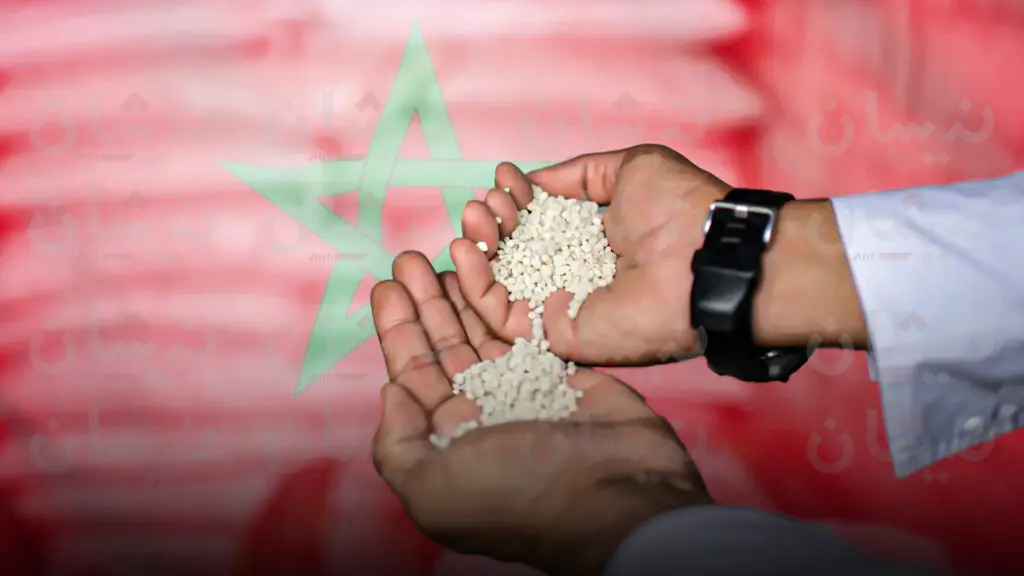
From Samir to phosphate: when Moroccan wealth becomes a variable in a ruthless global energy equation
In the global economy, no resource is ever truly “silent.” Even materials buried deep underground eventually become part of a vast system where energy, logistics, industry, and international power relations intersect. Within this system, Morocco holds a strategic position through its phosphate reserves, while the global energy landscape remains largely shaped by major oil powers, particularly in the Gulf.
But the real question today is no longer about abundance — it is about fragility within strength itself: is Moroccan phosphate still an independent source of power, or has it become a variable inside a global energy system it does not control?
Phosphate is not the problem… but what surrounds it is
The basic facts are clear: Morocco has not stopped exporting phosphate. Through the OCP Group, it continues to play a central role in the global fertilizers and phosphate derivatives market.
However, the industrial reality goes far beyond export volumes. The key issue lies in processing costs, the energy intensity of chemical transformation, and above all, one often invisible element: sulfur.
Sulfur, used in the production of sulfuric acid, is a critical component in fertilizer manufacturing. A significant share of it comes as a by-product of oil and gas refining. This creates an indirect but powerful link between phosphate production and global energy markets.
In other words: when energy markets move, they do not only affect fuel prices — they reshape the cost structure of fertilizer production itself.
Energy as an indirect pressure factor
In recent months, some interpretations have tried to link global energy fluctuations to disruptions in phosphate supply chains. While some narratives have exaggerated claims of “shutdowns” or “blockages,” a more subtle reality remains: markets do not stop — they adjust.
Rising energy prices lead to:
- higher industrial production costs
- increased maritime transport costs
- compressed global profit margins
- restructuring of value chains
Phosphate therefore shifts from a stable commodity to an energy-sensitive strategic resource.
Saudi Arabia: an energy player, not a phosphate controller
In this context, Saudi Arabia appears not as a controller of phosphate itself, but as a major player in energy-linked industrial chains, particularly through investments in fertilizers and petrochemicals.
However, one key distinction must be made:
energy strength does not translate into control over global phosphate reserves, which remain geographically concentrated in specific producing countries, with Morocco as one of the key pillars.
This is not a monopoly — it is an interconnected but unequal system.
Morocco between geological strength and industrial constraint
Morocco holds some of the world’s largest phosphate reserves. Yet this natural strength operates within a complex environment:
- energy-intensive transformation industries
- dependence on Asian and Latin American agricultural demand
- volatile transport and energy costs
- partial reliance on external inputs such as sulfur
The real competition is therefore not about extraction, but about transformation and added value.
From Samir to phosphate: a missing energy link
Morocco’s energy question cannot be separated from its phosphate industry. The shutdown of the Samir refinery created a structural gap in the national energy value chain.
Its consequences include:
- increased reliance on fuel imports
- greater exposure to global oil price volatility
- loss of domestic value creation
- weaker internal industrial integration
The result is an economy with strong industrial potential, but partial exposure to external energy conditions.
Transition, not crisis
It would be simplistic to describe the situation as a collapse or crisis. There is no evidence of phosphate stoppage or structural decline.
What we are witnessing instead is a transition:
- from a raw-material export model
- toward an industrial, technological, value-added model
But transitions expose weaknesses before they create balance.
Conclusion: wealth is no longer enough
Morocco is not losing its phosphate advantage. It is not facing an immediate breakdown. But it is operating in a world where natural wealth alone no longer guarantees economic power.
Modern power depends on:
- energy control or security
- industrial transformation capacity
- resilience of value chains
- and anticipation of global shifts
Between Samir and phosphate, one equation becomes clear:
real economic sovereignty is no longer about resources alone, but about controlling the entire chain that turns those resources into value.


