

Morocco no longer wants to rely on a single electricity gateway to Europe. The direct interconnection project with Portugal, frozen since 2022, is back on the table, with a planned capacity that could reach 1,000 MW. On paper, it is another undersea cable. But the issue behind it is broader: what happens when Morocco wants to increase its electricity production, secure domestic supply, sell its surpluses and, at the same time, avoid having its access to the European power grid depend on one country alone?
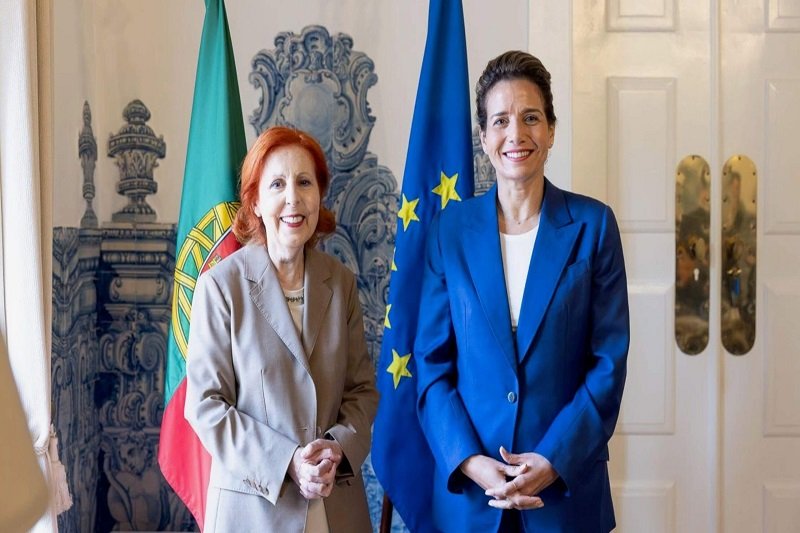
The project was put back into motion in Lisbon on July 20, when Morocco’s Minister of Energy Transition and Sustainable Development, Leila Benali, met her Portuguese counterpart, Maria da Graça Carvalho. The discussions went beyond a political announcement. The two countries agreed to work on mobilising European and private funding and are seeking to give the project “Project of European Interest” status, which could open the way to support from the EU budget and make it more attractive to private investors.
The project itself is not new. Its financial assumptions are. In 2018, its cost was estimated at around €800 million. Since then, equipment and construction costs have risen, forcing Morocco and Portugal to update the financial and technical studies and settle the final route of the undersea cable. Bringing the project back does not therefore mean simply reopening an old file. The project has to be recalculated against today’s costs and conditions.
The proposed connection would work in both directions. Morocco could import electricity from the Iberian market when demand rises or domestic production falls. At other times, electricity could move the other way, particularly as wind and solar projects expand and generate larger surpluses. The cable would therefore not simply be an import line. It would give both sides another way of moving electricity to where it is needed.
Morocco has already seen how important that flexibility can be. On April 28, 2025, when large parts of the Spanish and Portuguese electricity networks were hit by a major blackout, the normal direction of electricity flows was reversed. Spain’s Red Eléctrica asked Morocco’s National Office of Electricity and Drinking Water for support, and Morocco supplied electricity to Spain to help restore the grid. At one stage of the crisis, the Kingdom reportedly mobilised as much as 38% of its production capacity to support its northern neighbour.
That episode gave a very practical meaning to what is often treated as a purely technical matter. An interconnector matters when one country needs electricity from another, but it can become just as valuable when the situation is reversed. For Morocco, having more generation capacity is therefore only part of the equation. It also needs more than one route through which that electricity can reach external markets.
For now, Morocco’s electrical gateway to Europe runs through Spain. The two countries are connected by two 400 kV submarine links. The first entered service in 1997 and the second in 2006. Each has a technical capacity of 700 MW, giving the two connections a combined capacity of about 1,400 MW. In 2019, Morocco and Spain also agreed to build a third 700 MW link, then estimated to cost around €150 million, with the expectation that it would be operational before 2026. It is still not in service.
That is what gives the Portuguese project a significance beyond simply adding another line. Morocco is not replacing Spain with Portugal. It is adding another route. Spain’s El Economista described the project as an alternative electricity route that would bypass Spain. In a strategic network, the difference between having one door and having several is not theoretical.
There is pressure coming from inside Morocco as well. Electricity consumption reached around 49 TWh in 2025, up 7.4%, with peak demand reaching 7,990 MW. In July 2026, a new record was set at 8,400 MW. Installed generation capacity has reached 12,314 MW, with renewables accounting for 46.1% of that capacity.
But those figures tell another story too. The share of renewables in installed capacity does not yet translate into the same share of actual electricity generation. In 2025, coal remained by far the largest source of electricity generation, accounting for nearly 61.5%, compared with 16% for wind, 10.9% for gas and 5.8% for solar. Morocco is rapidly adding renewable capacity, but its electricity system has not yet escaped its heavy reliance on coal.
The issue, then, is not simply about producing more electricity or laying more cables. Morocco needs to store power, absorb periods of high demand, make use of renewable surpluses and have more than one external market available when domestic production exceeds domestic needs. Interconnections are becoming part of that system, alongside generation, renewables and storage.
The Portugal link will not make coal disappear. It will not replace the existing connections with Spain, and it will not solve Morocco’s electricity needs on its own. It adds something simpler, but strategically important: another way into the European electricity market.
If the project is completed, electricity could move north through Spain or Portugal depending on demand, available capacity and market conditions. At that point, the real issue will be less about the cable itself and more about how much electricity Morocco can produce, store and sell when Europe needs it.


