

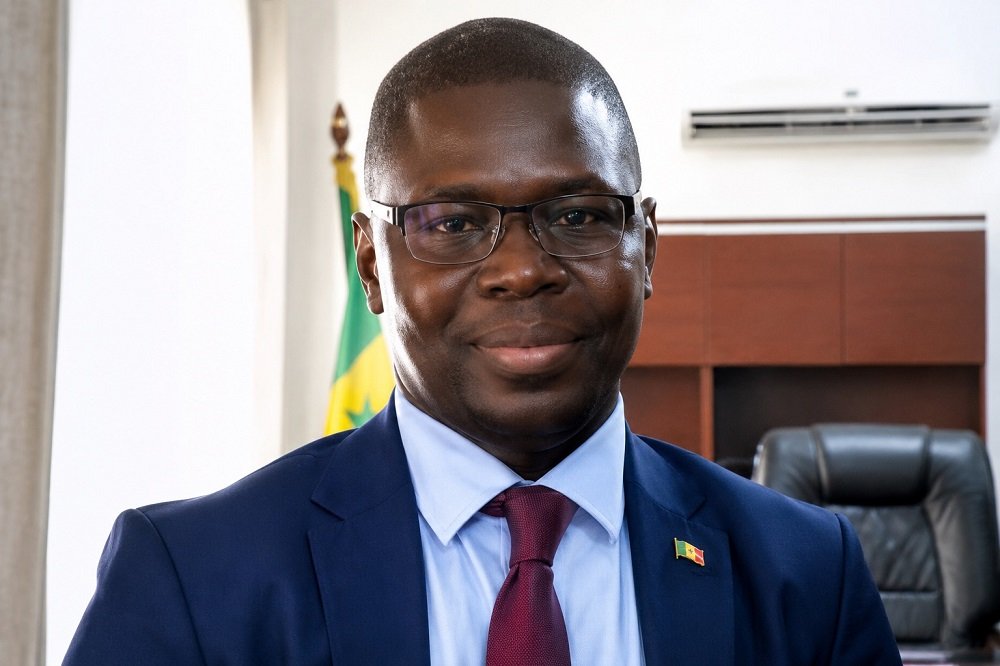
In his article “Senegal: What Economic Diplomacy with the Maghreb by 2035?”, journalist Cheikh Mbacké Sène addresses one of the questions that could largely determine Senegal’s economic position in the years ahead: will its relations with the countries of the Maghreb remain primarily based on trade and investment flows, or can Dakar turn these relations into genuine productive partnerships capable of creating value inside Senegal and integrating its economy into African and Euro-Mediterranean value chains?
The importance of Sène’s argument does not lie simply in listing the Maghreb countries or presenting trade figures. It lies first in changing the way economic diplomacy itself is understood.
Diplomacy should no longer be assessed only through the number of agreements signed, official visits conducted, or joint declarations issued. It should also be measured by what those relationships leave behind in the real economy: a factory, jobs, skills, stronger local companies, exportable products, and production chains capable of continuing beyond the official visit during which they were announced.
This is what makes the 2035 horizon so important in Sène’s analysis. The question is therefore not simply what Senegal will have bought from Morocco or sold to it, but what will actually have changed in the structure of the Senegalese economy.
When agreements become an obligation to deliver results
Sène recalls the new direction being given to Senegalese economic diplomacy, particularly following the presidential instructions of April 2026 calling on the Government to make economic diplomacy part of the implementation of Senegal 2050, through investment attractiveness, financing mobilisation and strategic partnerships.
But the most important journalistic reading begins after the agreement is signed.
Senegal, like many African countries, does not necessarily suffer from a lack of agreements or memoranda of understanding. The harder question is: how many of them actually become projects?
That is why Sène attaches particular importance to the seventeen agreements and memoranda signed during the Senegalese mission to Morocco in January 2026, covering areas including industry, mining, agriculture, digital technology, logistics and training.
The real value of these agreements will not be measured by the number of pages they contain or by the level of official representation present at their signing. It will be measured by investments actually delivered, jobs created, local content, skills transferred, export volumes and the number of companies that move from cooperation to joint production.
This is where diplomacy meets economic governance.
An agreement that never reaches the real economy risks becoming another diplomatic document in the archives. An agreement that produces a company, jobs and export capacity becomes part of the national economy.
Morocco: from trading partner to potential industrial base
The figures cited by Sène give this reflection a concrete dimension.
Trade between Morocco and Senegal reached approximately $307 million in 2025, while approved Moroccan investments in Senegal between 2010 and 2025 represented 36 projects, worth 180.4 billion CFA francs, and generating 1,856 jobs, according to the figures used in the article.
Sène also recalls Senegalese Prime Minister Ousmane Sonko’s assessment that these flows remain below the potential of the two economies.
This is where the central question lies: the issue is not necessarily the weakness of the relationship, but the nature of that relationship.
If Morocco and Senegal continue mainly to sell and buy more than they produce together, the relationship will remain essentially commercial.
If, however, Moroccan investment becomes more deeply integrated into Senegalese production, and Senegalese companies become partners in shared value chains, the relationship moves to another level.
That is the meaning of the shift from trade to co-production highlighted in Sène’s analysis: moving from selling products to manufacturing products, from importing value added to creating it, and from foreign investment operating separately from the local economy to investment integrated into the national productive fabric.
The question goes beyond Morocco
Morocco is the natural starting point of Sène’s analysis, but his argument does not stop at the bilateral relationship.
He is effectively proposing a broader vision of relations between the Maghreb and West Africa, in which Senegal would no longer be simply a market for Maghreb investment, but a platform through which Maghreb economies could also access the wider West African space.
Geography therefore becomes an economic asset.
Senegal has an Atlantic position, agricultural, fisheries, mining and energy resources, and a place within a broad West African economic space.
The Maghreb economies, for their part, possess industrial, financial, technological and logistical capabilities.
The question emerging from Sène’s reasoning is therefore straightforward: can these differences in resources and capabilities be turned into economic complementarities?
If the answer is yes, the relationship will no longer be limited to Dakar and Rabat. It could become part of a broader economic geography connecting North and West Africa.
The five sectors reveal the nature of the bet
The sectors identified by Cheikh Mbacké Sène are not incidental.
When he refers to agro-industry, he is in fact raising the question of moving from the export of raw materials to their local processing.
When he identifies fertilisers and chemicals, he opens the possibility of linking Senegal’s agricultural needs with phosphate resources and the industrial experience developed in Morocco.
Pharmaceuticals and healthcare raise another strategic issue: productive sovereignty in a sensitive sector, where the ability to import medicines does not necessarily amount to building a domestic industrial base.
With energy and infrastructure, investment becomes directly connected to the economy’s capacity to grow, because sustainable industrial expansion requires energy, logistics, transport and industrial services.
Finally, digital technology and high-value services create a field of cooperation that goes beyond physical goods towards knowledge, technology and services.
The five sectors therefore reveal, behind Sène’s analysis, a broader development equation:
local resources + foreign investment + industrial transformation + knowledge + exports.
Dakar as a platform, not simply a market
One of the most significant ideas in Cheikh Mbacké Sène’s article is the proposal to transform Dakar from a market and investment destination into a platform for production, services and exports to West Africa.
The difference between the two models is fundamental.
A market receives the product.
A platform participates in producing, moving and redistributing it.
This is why the reference to the Dakhla–Dakar corridor, discussed during the January 2026 visit, matters. Economic corridors are not merely roads. They reshape commercial geography: where goods come from, where they are transformed, where they are stored and which markets they reach.
If this logic develops, the Atlantic could become more than a geographical space. It could become a genuine economic space connecting North and West Africa.
But Sène places an essential condition before Senegal: the country must have its own companies capable of entering these partnerships.
This is perhaps one of the most important messages addressed to Senegalese policymakers.
Attracting investment is not enough
A country can succeed in attracting foreign investors without necessarily succeeding in building a strong industrial economy.
The difference lies in the ability of the domestic private sector to enter the equation.
If a foreign investor brings its capital, factory, technology, management and markets while Senegalese companies remain outside the value chain, the project may create jobs and financial flows without necessarily delivering the structural transformation being sought.
But when joint ventures emerge, skills are transferred and Senegalese companies participate in supply, production, services and exports, foreign investment becomes an instrument for building national capabilities.
Local content then becomes more than a technical expression.
It becomes a fundamental question:
Who actually benefits from the investment?
How much value remains in Senegal? How many Senegalese companies participate in the projects? How many engineers, technicians and managers acquire new skills? What remains when the investor changes strategy or the project evolves?
2035 is not merely a date
The 2035 horizon chosen by Sène allows the discussion to go beyond a simple timeline.
The coming years can become a test period for an entire economic model.
That is why the author proposes precise indicators: productive investment, joint projects, jobs, local content, the number of Senegalese companies exporting to the Maghreb, the number of Maghreb companies producing in Senegal, the value added retained inside the country, and the volumes re-exported to West Africa.
These indicators change the language of diplomacy.
Instead of asking:
How many agreements have we signed?
The question becomes:
What have those agreements produced?
Instead of asking:
How many investors have we attracted?
The question becomes:
How much economic value have we created?
And instead of asking only:
What is the volume of trade?
The question becomes:
What have we succeeded in producing together?
This is probably where the core of Cheikh Mbacké Sène’s argument lies.
A question for Senegal — but also for the Maghreb
Reading the article also opens another question: is Senegal the only side that needs to change the way it thinks about this relationship?
If the objective is to build a genuine economic space between the Maghreb and West Africa, the challenge is not simply for Dakar to attract more investment.
Maghreb companies and economies will also need to view West Africa as a space for co-production, rather than simply an export market.
The Morocco–Senegal relationship could therefore become a practical laboratory for this approach.
The success of a single industrial, agricultural, healthcare or logistics project can sometimes have a greater impact than dozens of agreements because it creates a model that can be replicated elsewhere.
Conversely, failure to implement agreements could demonstrate that political will, however strong, is not sufficient by itself to build economic integration.
From a geography of interests to an economy of partnership
The central idea emerging from Cheikh Mbacké Sène’s article is therefore not that Senegal should choose between the Maghreb and West Africa.
Quite the opposite.
He proposes turning Senegal’s geographical position into an economic function.
A country capable of connecting capital, technology and industrial capabilities on one side with markets, resources and value chains on the other is no longer simply a trading actor. It becomes a node within a broader economic architecture.
The question emerging from Sène’s analysis is therefore not simply:
What will the volume of trade between Senegal and the Maghreb be in 2035?
The deeper question is:
By 2035, will Senegal merely be a market for Maghreb investment, or will it become a partner in value creation, an export platform and a genuine economic bridge between the Maghreb and West Africa?
This is where the reflection offered by journalist Cheikh Mbacké Sène reaches Senegalese policymakers and the business community.
The future he describes should not be measured only by the amount of capital entering the country, but by the capacity of that capital to transform the structure of the economy, create skills, jobs, companies and exports.
Only under those conditions can economic diplomacy become more than an extension of political diplomacy: it can become a genuine instrument for building Senegal’s economic position in Africa and beyond.


