

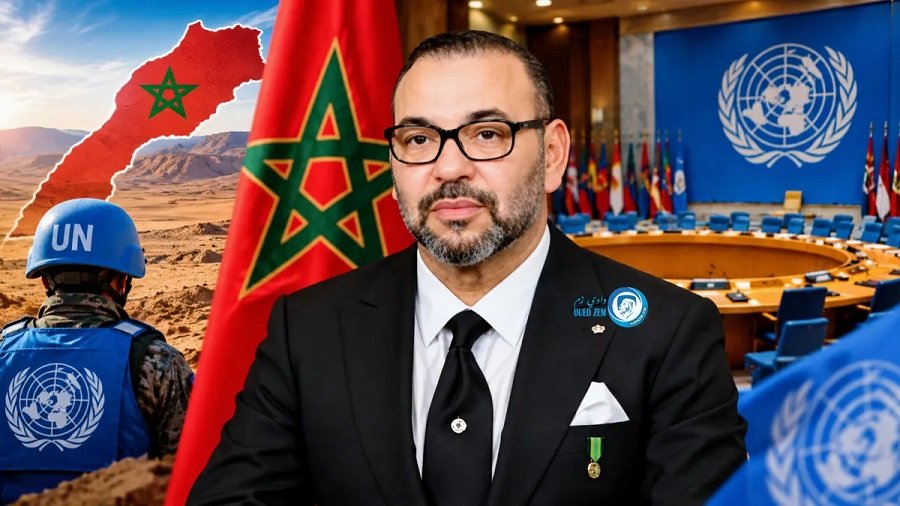
An in-depth analysis of the diplomatic shift between Morocco’s position, divisions within the Security Council, and the future of the autonomy initiative under Moroccan sovereignty.
The United Nations Security Council meeting held on 30 October 2026 did not result in the renewal of MINURSO’s mandate. Nor did it lead to the adoption of the American draft resolution seeking to bring the mission to an end under a new framework for the UN process. Between the two texts put to a vote, divisions within the Council produced an unprecedented situation since the mission was established in 1991: the major powers failed to agree on the future form of its presence and the nature of its mandate.
This is the starting point for understanding the significance of the latest development. It helps explain the Royal Cabinet statement issued on Friday, 30 October, as well as the distance between the institutional outcome at the Security Council and the diplomatic objectives Morocco seeks to consolidate in the coming phase.
The Royal statement did not treat the failure to renew MINURSO’s mandate as a merely administrative matter involving the expiry of a UN mission. Instead, it placed the development within a broader transformation of the way the Moroccan Sahara issue is being addressed, linking it to a shift away from managing the dispute towards a deeper transformation of the parameters that have shaped it.
The statement described the non-extension of MINURSO’s mandate as a major step towards bringing the Moroccan Sahara issue to a definitive close within the United Nations. It also indicated that the mission’s presence in the Kingdom’s southern provinces, including its personnel, vehicles, equipment and symbols, should come to an end in the coming days.
Yet the details of the vote show that this development did not result from an international consensus on ending the mission. Rather, it emerged from a diplomatic confrontation between two competing proposals, each reflecting a different understanding of MINURSO’s future and the political framework within which the Sahara issue should proceed.
The Security Council Between Two Drafts: Why Neither Proposal Was Adopted
The United States submitted a draft resolution seeking to redefine the mission’s mandate. It envisaged a one-year extension, a change in the mission’s name to a United Nations mission in Western Sahara, and a revision of its functions in light of the political developments surrounding the issue.
The most significant element of the American proposal was its decision to place Morocco’s autonomy initiative under Moroccan sovereignty at the centre of negotiations. It also described genuine autonomy within the framework of Moroccan sovereignty as the most viable solution. The draft further envisaged reducing certain military functions of the mission and reviewing its future structure.
However, the proposal faced a Russian veto despite receiving the support of a majority of Council members.
A competing Russian draft was subsequently put to a vote. Unlike the American text, it did not propose restructuring the mission or changing its name. Instead, it called for a one-year extension until 31 October 2027, while maintaining the mission’s traditional framework. That proposal also failed to secure the nine votes required for adoption.
The Security Council therefore adopted neither draft, and the meeting ended without a new resolution extending MINURSO’s mandate.
These details, reported by Associated Press and Reuters, require a distinction between the failure of the renewal proposal, the failure of the proposal to restructure the mission, Morocco’s stated political position, and the legal outcome of the vote.
The disagreement was not simply about the mission’s name. The American draft reflected an approach aimed at making Morocco’s autonomy initiative the starting point for negotiations. Moscow, meanwhile, defended the continuation of the existing framework, arguing that changes of this nature raised questions concerning the principles of the political process and self-determination.
The United Kingdom’s position expressed clear support for Morocco’s autonomy initiative as the most credible and pragmatic basis for a lasting settlement. London also criticised Russia’s veto, arguing that it risked undermining the progress achieved in the political process and the continued presence of the UN mission itself.
Neither proposal was adopted. Nevertheless, the expiry of the mandate without renewal creates an institutional situation different from that of previous years, when extensions of MINURSO’s mandate were regularly approved.
From Resolution 690 to the Expiry of the Mandate: What Changed Over 35 Years?
MINURSO originated in Security Council Resolution 690, adopted on 29 April 1991, within the framework of ceasefire arrangements and settlement proposals that envisaged organising a referendum on the future of the territory.
The mission was not merely an administrative structure of the United Nations. Its establishment was linked to specific functions, including monitoring the ceasefire and contributing to the implementation of arrangements related to the proposed referendum.
However, political and legal disagreements over the identification of eligible voters and the conditions for participation prevented the organisation of the referendum that the mission had originally been established to help prepare.
Over the years, MINURSO became a continuing UN institution operating in a political and security environment very different from the one in which it had been created. The Security Council continued renewing its mandate despite the political process reaching an impasse and the absence of a definitive settlement.
The previous extension was adopted under Resolution 2797 on 31 October 2025, extending the mandate until 31 October 2026. The resolution also requested the Secretary-General to provide a strategic review of the mission’s future within six months, taking into account the outcome of negotiations.
That review became a central element of the discussions preceding the October 2026 meeting. The issue was no longer simply whether to grant a technical extension, but whether the mission should continue under its previous structure, be reorganised, or undergo a change in the nature of its presence on the ground.
The discussions exposed differences among Council members over the value of maintaining the mission in the form it had taken over previous decades and over the relationship between its field functions and the political process.
From Morocco’s perspective, the continued presence of a mission established under arrangements that have failed to produce a definitive settlement no longer corresponds to the transformations in the issue or to the diplomatic progress achieved by the Kingdom in support of the autonomy initiative under Moroccan sovereignty.
However, the expiry of the mandate should not be confused with the adoption of a new UN decision abolishing all mechanisms associated with the issue. The directly established outcome is that no new extension was adopted. The arrangements governing the cessation of operations and the withdrawal of personnel and equipment remain linked to the institutional and operational measures that follow the expiry of the mandate.
Autonomy: From a Moroccan Initiative to the Foundation of an American Draft
The significance of the latest developments also lies in the evolution of the language used in international resolutions and positions concerning Morocco’s autonomy initiative.
In Resolution 2797 of 2025, the Security Council did more than simply refer to the Moroccan initiative. It expressed its full support for the Secretary-General and his Personal Envoy in facilitating negotiations, with the Moroccan initiative serving as their basis. It also indicated that genuine autonomy could represent the most feasible outcome.
This marked a shift in the political framework of negotiations compared with earlier resolutions, which placed greater emphasis on arrangements connected to the referendum.
In the American draft presented on 30 October 2026, this direction appeared to go further. Autonomy under Moroccan sovereignty was positioned as the basis for negotiations within a new conception of the United Nations’ role.
This distinction deserves particular attention. There is a difference between an adopted Security Council resolution and a draft resolution that has failed to obtain approval. Despite its rejection following the Russian veto, the American draft reflects the position of the state that submitted it and reveals the institutional framework Washington sought to introduce. However, its submission does not transform it into a decision of the Security Council.
Morocco’s position, meanwhile, rests on a wider diplomatic dynamic that extends beyond Washington. The positions of several European, African and Arab countries have evolved towards support for the autonomy initiative, while official statements describing it as a realistic and pragmatic basis for a settlement have become increasingly common.
The Royal Cabinet statement indicates that more than two-thirds of UN member states, including permanent members of the Security Council and influential international powers, support autonomy under Moroccan sovereignty as the framework for resolving this regional dispute.
That figure appears in the official statement and should be presented as such. It is nevertheless important to distinguish between states that have explicitly declared their support for the initiative, those that regard it as a basis for negotiations, and those that support the political process without necessarily adopting the same position.
This distinction does not diminish the significance of Morocco’s diplomatic gains. On the contrary, it makes their assessment more precise. International relations are not measured solely by the number of statements issued, but also by the nature of official positions, their consistency, and the decisions, agreements and diplomatic practices that follow from them.
Has the Issue Actually Been Removed from the Security Council’s Agenda?
One of the most sensitive elements of the Royal statement concerns the view that the non-renewal of MINURSO’s mandate should bring an end to the periodic referral of the issue to the Security Council and lead to its removal from the Council’s agenda. This would mean moving beyond the recurring meetings, annual reports of the Secretary-General and briefings by the Personal Envoy.
This direction reflects a clear Moroccan intention to end a period during which the national question was repeatedly discussed by the Security Council, accompanied by recurring debates, diplomatic positions and draft resolutions.
Institutionally, however, there is a difference between the expiry of a UN mission’s mandate and the removal of an issue from the Security Council’s agenda. The Council determines its own agenda and retains its powers under the United Nations Charter and its rules of procedure.
The failure to adopt a new resolution does not, in itself, constitute an explicit decision to close the issue or abolish every form of UN follow-up.
This distinction is particularly important because Resolution 2797 of 2025 stated in its final paragraph that the Council would continue to follow the matter. The absence of a renewal in October 2026 was not accompanied by a new resolution explicitly removing the Sahara issue from the Council’s agenda.
The Royal Cabinet’s stated intention to bring the period of recurring referrals to an end therefore represents a Moroccan political and diplomatic direction for the coming phase. It is not a procedural decision already adopted by the Security Council.
This distinction between Morocco’s position and the UN procedure will be important in determining the next steps. The Royal statement also referred to taking similar measures within other UN bodies, including those that have continued to consider the issue within the framework of decolonisation.
Shifting diplomatic engagement towards other arenas does not necessarily mean that the issue will immediately disappear from international debate. Rather, it indicates that Morocco intends to reconsider the nature of its presence within these institutions and the means through which it defends its position and autonomy initiative.
MINURSO and the Ceasefire: The Security Dimension Cannot Be Ignored
While Morocco expressed satisfaction with the absence of a mandate renewal, the Royal statement reaffirmed the Kingdom’s continued commitment to the ceasefire, alongside its determination to safeguard its territorial integrity, national security and the peace of mind of its citizens.
This position needs to be examined without confusing the end of MINURSO’s mandate with the disappearance of the need to maintain stability on the ground.
Regardless of political disagreements over the nature and effectiveness of its role, the mission performed a UN function connected to monitoring the ceasefire. Any restructuring of its presence therefore raises the question of what measures will ensure continued stability and which mechanisms could assume some of its monitoring and field-communication functions.
The discussions within the Security Council demonstrated that the future of the mission was not merely an administrative matter. The United Kingdom warned that the failure to renew the mandate risked undermining the mission’s deployment and jeopardising progress in the political process. Reuters also reported concerns expressed by humanitarian organisations regarding potential risks to civilians and regional stability if monitoring mechanisms were to disappear.
These positions do not alter Morocco’s fundamental principles. They do, however, show that the new phase requires careful management of the security dimension, particularly in a region that has experienced developments on the ground since 2020, following the breakdown of previous ceasefire arrangements.
Morocco’s commitment to de-escalation, as stated in the Royal communiqué, should be understood as a continuation of a policy aimed at preserving regional stability, without relinquishing the Kingdom’s rights or accepting the reproduction of a political framework that no longer corresponds to its vision of a settlement.
The Unity Day: The National Dimension of the Diplomatic Shift
The connection established in the Royal statement between this development and Unity Day is not merely a ceremonial reference. It places the occasion within a broader conception of how the Moroccan Sahara issue is to be addressed, moving from a phase of dispute management towards a phase of deep transformation of its underlying parameters.
The significance of this reference lies in the connection between external diplomacy and the domestic national dimension.
For Morocco, the national question has never been a negotiating file detached from the State’s broader institutional and development project. Over the years, it has been accompanied by the expansion of infrastructure in the southern provinces, investment in ports, roads and renewable energy, the development of public services and stronger economic integration among the Kingdom’s regions.
Major projects, particularly the Dakhla Atlantic Port, road infrastructure and development programmes in the southern provinces, form part of Morocco’s vision of linking the consolidation of its sovereign presence to development, investment and job creation.
However, in rigorous journalistic analysis, development should not be reduced to promotional figures or political slogans. Its impact must be assessed through actual project completion rates, the volume of investments implemented, their effects on the populations of the Kingdom’s southern provinces and their contribution to building a productive and sustainable economy.
The national dimension of Unity Day therefore places a particular responsibility on public institutions, elected representatives and economic actors. The phase Morocco seeks to consolidate requires development outcomes on the ground to correspond to the diplomatic transformation it is defending.
The sovereignty Morocco advocates in international forums is also reflected in the ability of its institutions to provide public services, achieve development, generate wealth and ensure citizens’ participation in managing their local affairs.
Beyond MINURSO: The Shift Towards Bilateral and Regional Diplomacy
The Royal statement clearly indicates that the international momentum initiated by King Mohammed VI will continue at both bilateral and regional levels. This means that Morocco does not intend to make the future of the issue dependent on the continuation of UN mechanisms that have framed it for several decades.
This approach is explained by the evolution of Morocco’s relations with several international powers and by the transition from general political expressions of support for the autonomy initiative to official positions issued by governments and parliaments, sometimes accompanied by concrete diplomatic and economic measures.
The American recognition of Morocco’s sovereignty over its Sahara in 2020, the evolution of France’s position towards supporting autonomy under Moroccan sovereignty as a basis for a settlement, and the British position in favour of the initiative as a credible and pragmatic foundation are all milestones in this diplomatic accumulation.
The next challenge is not simply to preserve these positions, but to transform them into a network of sustainable partnerships in which political support is accompanied by economic cooperation, investment and institutional engagement.
Engagement within the African Union, relations with countries in Latin America and Asia, and continued work within international organisations will remain essential arenas for consolidating Morocco’s position.
Above all, Morocco must manage this new phase with the understanding that broader international support for the autonomy initiative does not remove the need for continued diplomatic engagement, nor does it mean that all parties involved in the dispute have abandoned their previous positions.
The confrontation at the Security Council on 30 October demonstrated precisely that disagreements among major powers remain. Russia vetoed the American draft despite its majority support, after which the competing Russian draft failed to obtain the necessary votes.
The result requires a precise reading: progress has been made in placing Morocco’s initiative within the framework of negotiations and in shaping the positions of influential international actors. However, divisions remain within the Security Council over how to translate these developments into new institutional arrangements.
The next phase will not be measured solely by the expiry of MINURSO’s mandate, but by Morocco’s ability to translate diplomatic developments into a stable political and institutional reality, while continuing to consolidate the autonomy initiative under Moroccan sovereignty as the framework it advocates for resolving the dispute.
The Royal Cabinet statement has given the new phase a clear political direction: moving from managing the dispute to transforming its underlying parameters. The consequences of this transition will depend on decisions taken by UN institutions, international reactions and Morocco’s forthcoming initiatives at both diplomatic and national levels.
The Kingdom enters this phase with a diplomatic record that has accumulated significant gains and with a clearly defined official position on the future of its southern provinces. The responsibility of Moroccan institutions is now to continue translating this momentum into tangible results while preserving stability, the ceasefire, development and the strengthening of international partnerships.
Morocco First, and accuracy in assessing national gains. The national question deserves journalism that defends the Kingdom’s supreme interests while remaining grounded in the strength of documents, decisions and verifiable facts. An achievement established by evidence is always stronger than a description that goes beyond it.


