

In an international landscape increasingly defined by complex threats and shifting power balances, security can no longer be confined to the realm of domestic sovereignty. It has evolved into a fully-fledged instrument of diplomacy. Within this transformation, Morocco is steadily asserting a model of “quiet security diplomacy,” where operational efficiency converges with strategic foresight to secure a more influential role within the global security architecture.
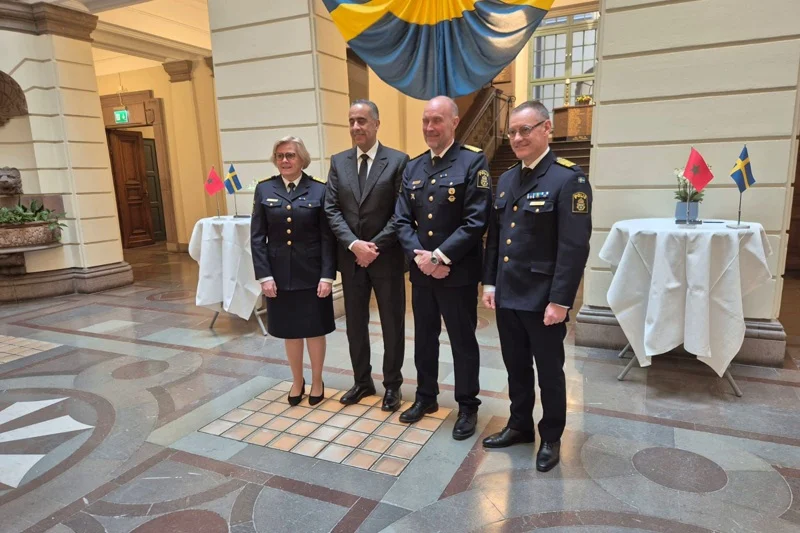
From Rabat to Stockholm, the recent visit led by Abdellatif Hammouchi was far from a routine diplomatic engagement. It signals a structural shift in Morocco’s security policy. The signing of a memorandum of understanding with Swedish authorities stands as a concrete manifestation of this shift, establishing an advanced framework for cooperation encompassing intelligence sharing, operational coordination, and police training in the face of transnational threats such as terrorism and organized crime.
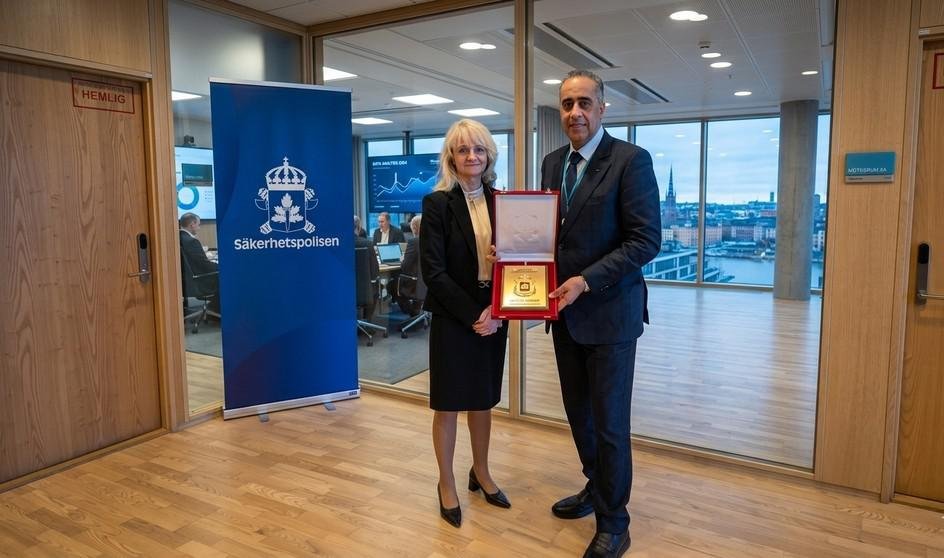
Yet, a surface-level reading would underestimate the broader implications of this agreement. Scandinavian countries—particularly Sweden—have not traditionally been central to Morocco’s security partnerships. Relations have, at times, been marked by political divergence, notably regarding the Sahara issue. In this sense, the recent agreement represents a strategic breakthrough into a space that had long remained relatively distant, reflecting a transformation in Morocco’s diplomatic toolkit, where security serves as a gateway to rebuilding political trust.
This evolution is part of a broader strategic vision grounded in the diversification of partnerships and the expansion of influence. Drawing on its proven track record in counterterrorism and intelligence cooperation, Morocco is no longer merely a reactive partner; it is increasingly positioning itself as a provider of expertise, offering a model that resonates in a global environment seeking effective and pragmatic solutions.
Emerging indicators also suggest that this engagement is mutually driven. Sweden’s interest in Morocco’s experience—particularly in tracking transnational criminal networks—points to a shift from ad hoc cooperation to a more structured partnership based on shared strategic interests.
Beyond the Scandinavian sphere, this trajectory reflects a wider policy of outreach extending to Latin America and Africa, while reinforcing established alliances in Europe. Morocco is not simply expanding its network; it is actively redefining its place within a reconfiguring global security order.
In this context, security becomes a vector of geostrategic projection, serving a pragmatic diplomacy that privileges results over rhetoric. The steady accumulation of trust takes precedence over overt displays of power.
The agreement with Sweden thus emerges as one element within a broader continuum—a deeper process through which Morocco is transitioning from a cooperative partner to an influential actor, contributing to the shaping of contemporary security balances.


