

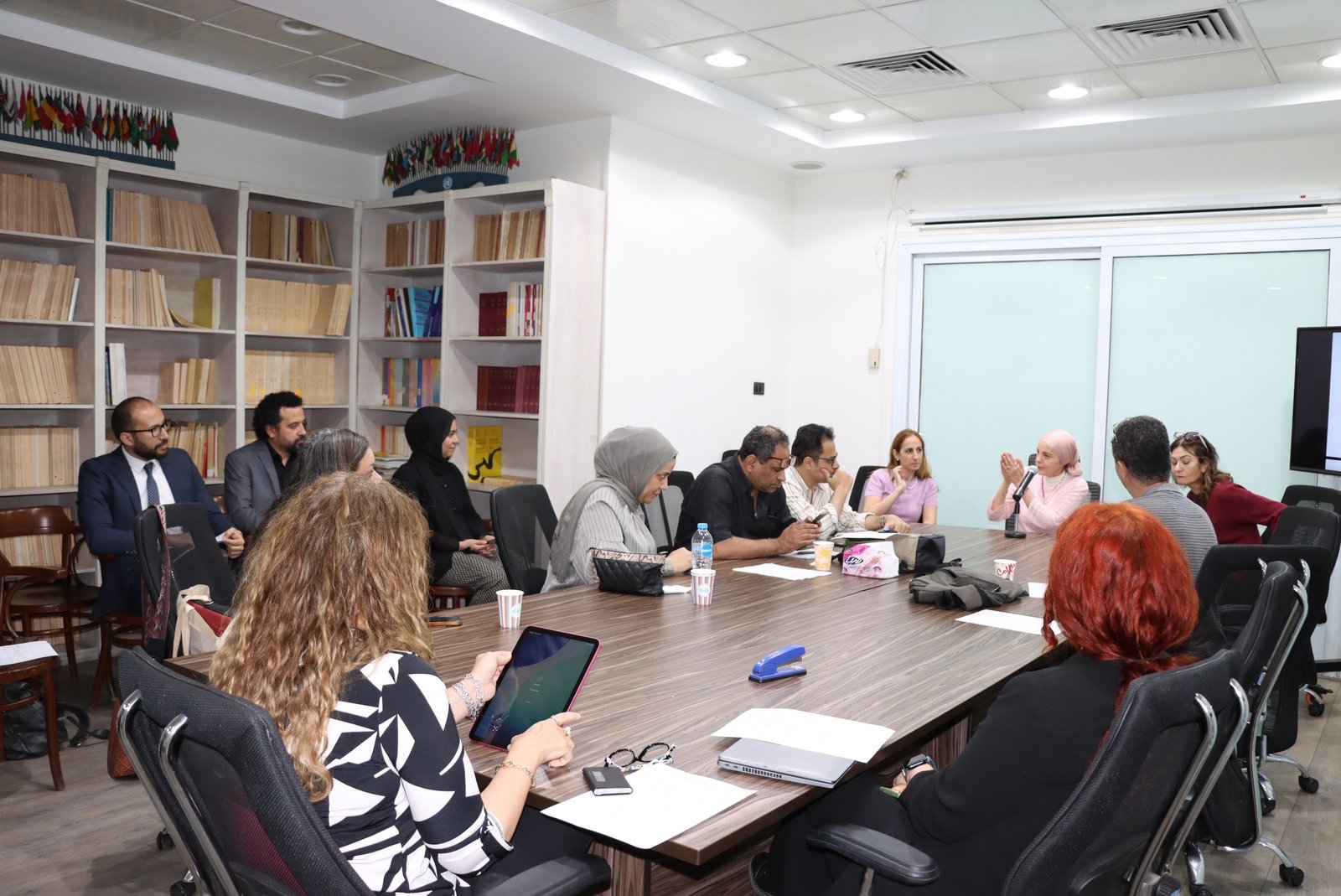
As part of highlighting the efforts of United Nations agencies operating in Egypt, the UN Information Centre in Cairo organized a press conference to review the activities of three agencies: the World Food Programme (WFP), the United Nations Industrial Development Organization (UNIDO), and the United Nations Children’s Fund (UNICEF).
Relations between Egypt and the United Nations continue to steadily develop across various development and humanitarian fields, as Cairo is considered one of the UN’s key regional partners in the Middle East and Africa. Numerous UN agencies operating in Egypt are implementing projects related to social protection, women’s empowerment, education and health support, food security, and climate change mitigation. The United Nations also cooperates with the Egyptian government in supporting the Sustainable Development Goals and Egypt Vision 2030, particularly in the areas of green transition, innovation, and economic and social capacity building.
The conference featured three sessions, each dedicated to presenting the activities and presence of one of the participating UN agencies. In the first session, officials from the World Food Programme in Egypt reviewed the growing challenges to food security amid global geopolitical shocks and disruptions in oil, fertilizer, and food supply chains, and their impact on Egypt.
Mitigating Supply Chain Disruptions
In this context, Roda Al-Halabi, Representative and Country Director of the World Food Programme in Egypt, stated that the ongoing disturbances in the Middle East in general have had repercussions on supply chains, fuel prices, and global prices of fertilizers and food, and that Egypt has naturally been affected by these disruptions.
The WFP representative in Egypt explained that the Programme is working closely with the Egyptian government on several projects that help strengthen responses to challenges resulting from these ongoing shocks.
She also revealed that among these projects is cooperation between the World Food Programme and the Egyptian Ministry of Agriculture under the “Decent Life” initiative, targeting 120 villages in rural Egypt through multiple interventions, including improving seedling production to increase farmers’ productivity, solar energy projects, improving agricultural land efficiency, and promoting the cultivation of strategic crops, particularly wheat.
The “Decent Life” initiative is considered one of the largest development and social projects in Egypt in recent years, aiming to improve living standards in the most underserved rural areas by upgrading infrastructure and basic services. The initiative includes establishing water and sanitation networks, developing schools and healthcare units, improving roads and housing, as well as supporting small projects and creating job opportunities. “Decent Life” also seeks to reduce poverty rates, promote social justice, and improve quality of life for millions of citizens in rural Egypt. It enjoys strong government support as part of Egypt’s comprehensive development strategy and Vision 2030 to build a more sustainable and balanced society economically and socially.
Roda Al-Halabi further stated that one of WFP Egypt’s strategies is linking rural farmers with the private sector to open export channels for their products on one hand, and building partnerships on the other, noting that the current complex circumstances require the consolidation of efforts amid declining funding facing UN agencies and organizations.
Regarding the key results of cooperation between WFP and the Egyptian government, she noted increased value addition to agricultural products, a reduction in post-harvest losses of up to 50%, production increases of up to 35%, the promotion of agricultural waste recycling to increase farmers’ income and reduce environmental pollution, in addition to enhancing financial inclusion for farmers, enabling them to access government financial support and loans.
Faster Access of Egyptian Products to Markets
In the second session, Ahmed Kamal, National Coordinator of Projects at the United Nations Industrial Development Organization (UNIDO), presented an overview of European Union support for trade, industry, growth, and faster access of Egyptian products to markets.
Discussions focused on improving industrial policy frameworks in Egypt, strengthening national quality infrastructure systems, supporting industrial clusters and small and medium-sized enterprises, with emphasis on key sectors such as textiles, ready-made garments, dates, medicinal and aromatic plants, and honey production, thereby supporting inclusive economic growth.
Overall, cooperation between UNIDO and Egypt is witnessing significant development in supporting sustainable industrial development and enhancing the competitiveness of the Egyptian economy. The organization works in coordination with the Egyptian government to implement programs aimed at modernizing industry, supporting SMEs, improving energy efficiency, and promoting the transition toward a green economy. UNIDO also contributes to developing industrial value chains and improving the quality of Egyptian products to enhance their access to global markets. Cooperation also includes training programs, capacity building, and technology transfer, particularly in promising industrial sectors.
Ahmed Kamal stated that the organization currently focuses, through its cooperation with Egypt, on developing the industrial sector, improving industrial policies and quality standards, as well as strengthening the institutional framework of relevant industrial bodies.
He emphasized that improving the quality of Egyptian products and ensuring their compliance with international standards is essential for their rapid access to markets, especially amid tightening import regulations and standards by some countries and blocs such as the European Union, which requires corresponding adjustments in production methods in countries of origin.
Digital Child Protection
In the third session, Salma Al-Fawal, Child Protection Programme Manager at UNICEF Egypt, highlighted the challenges and risks facing children online, stressing the importance of strengthening digital awareness among children and families.
She also noted the role of institutions and partners in promoting digital protection and supporting a safe and inclusive online environment for children, ensuring their well-being amid the continuous expansion of technology use.
She further revealed partnerships between UNICEF and several Egyptian government entities, including the Ministry of Communications and Information Technology, the National Council for Motherhood and Childhood, the Public Prosecutor’s Office, and civil society organizations.
The UNICEF Egypt Child Protection Programme Manager noted that cooperation between the UN agency and the Egyptian government is progressing well and achieving its objectives, primarily increasing community awareness among parents, caregivers, and school teachers. She explained that the organization’s awareness efforts have successfully reached 70,000 schoolchildren.


