

The Moroccan Sahara is no longer merely a diplomatic file discussed within the corridors of the United Nations or confined to the framework of an unresolved regional dispute. Over the past few years, it has gradually evolved into the central prism through which Morocco redefines its foreign relations and reshapes the architecture of its strategic partnerships.
Rabat is no longer satisfied with securing occasional statements of support or symbolic diplomatic endorsements. Instead, it has moved toward a more ambitious objective: transforming foreign governments’ positions on the Sahara into a defining criterion of political trust and long-term strategic cooperation.
What once appeared to be an ambitious diplomatic aspiration is now increasingly taking the shape of a coherent foreign policy doctrine. This transformation is reflected not only in official declarations but, more importantly, in the very structure of the agreements Morocco signs with its international partners. Equally revealing is what Morocco’s rivals are no longer able to impose on the international agenda.
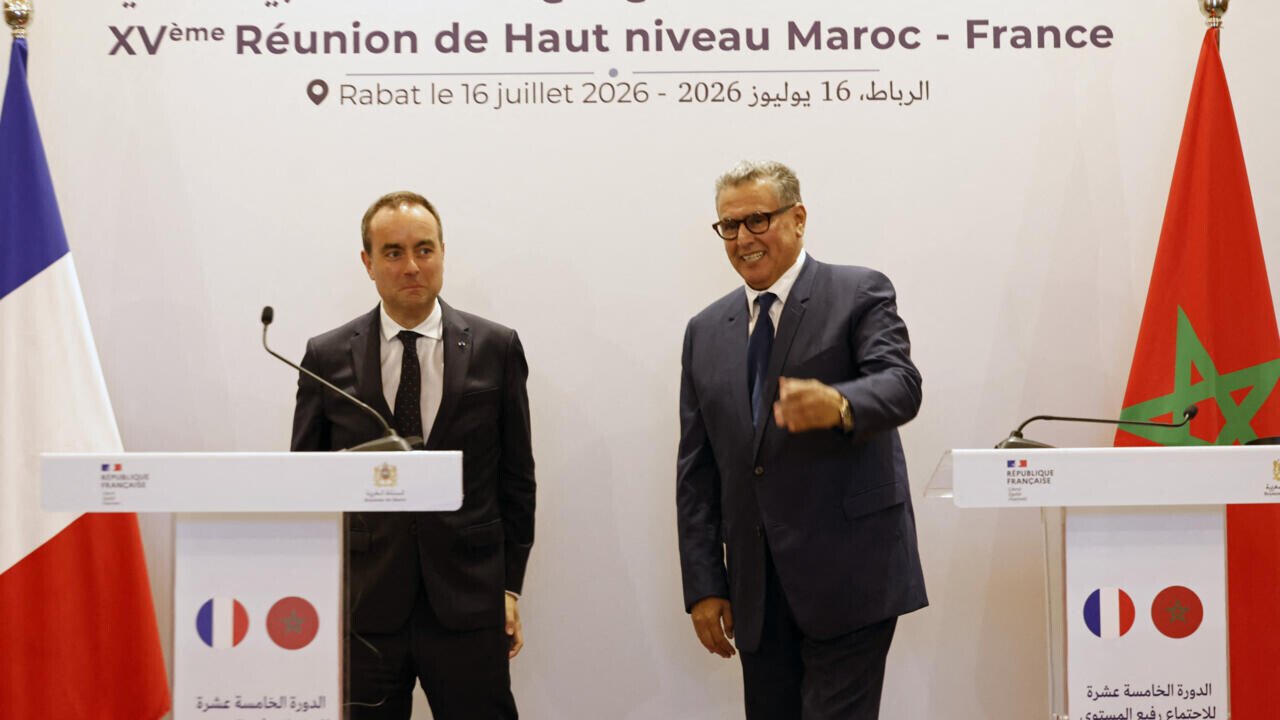
The latest high-level Moroccan-French partnership offers perhaps the clearest illustration of this evolution. The signing of fourteen new agreements covering defense, energy, innovation, industry, education, and economic cooperation goes far beyond the economic dimension.
The real message is fundamentally political.
France no longer separates its strategic partnership with Morocco from its position on the Sahara. By reaffirming that Morocco’s Autonomy Initiative under Moroccan sovereignty constitutes the sole credible basis for a lasting political settlement, Paris has effectively integrated its position on the Sahara into the very foundation of its strategic relationship with Rabat.
Reading between the lines reveals that these agreements carry a significance extending well beyond their technical or commercial content. The Sahara is no longer treated as an isolated diplomatic issue; it has become one of the structural pillars upon which bilateral relations are built.
In other words, Morocco has succeeded in shifting the diplomatic equation. Rather than merely seeking political support, it has worked to make that support an integral prerequisite for building comprehensive and lasting partnerships.
Meanwhile, another diplomatic dynamic is quietly unfolding on the opposite shore of the Mediterranean.
Algeria is preparing to welcome Spanish Prime Minister Pedro Sánchez in an effort to normalize relations that deteriorated sharply after Madrid’s landmark decision in 2022 to officially endorse Morocco’s Autonomy Initiative.
Expectations surrounding the visit largely focus on restoring economic cooperation, particularly in the energy sector, alongside expanding Algerian gas exports to the Spanish market.
Yet one striking detail deserves careful attention.
The very issue that triggered the diplomatic rupture between Algeria and Spain appears to have virtually disappeared from the public narrative surrounding the visit. Spanish media discussions have centered on energy, trade, and economic cooperation, while the Sahara issue no longer seems to occupy a central place in the anticipated agreements or political agenda.
That silence may be more meaningful than any official statement.
It suggests that, despite the unprecedented diplomatic crisis that erupted in 2022, Algeria has been unable to persuade Spain to reverse its support for Morocco’s autonomy proposal. Madrid now appears capable of rebuilding economic ties with Algiers without altering its political position on the Sahara.
This is precisely where a deeper diplomatic transformation becomes visible.
The Sahara issue is gradually losing its effectiveness as an instrument capable of preventing or obstructing international partnerships. At the same time, it is becoming an increasingly important foundation upon which Morocco builds its own strategic alliances.
The contrast between the two diplomatic approaches is striking.
For Morocco, the Sahara serves as a catalyst for expanding strategic cooperation.
For Algeria, however, the issue appears to be losing its ability to dictate or condition bilateral relations whenever broader economic and geopolitical interests prevail.
This evolution also reflects a more subtle transformation within Moroccan diplomacy itself.
For decades, Rabat’s foreign policy largely revolved around defending its position. Today, it increasingly appears focused on shaping new diplomatic realities. Rather than simply reacting to international developments, Morocco seeks to redefine the political environment in which the Sahara issue is addressed.
Its strategy relies on a particularly effective mechanism: moving the Sahara question from the realm of political declarations into the sphere of tangible national interests.
Once diplomatic support becomes embedded in investment agreements, industrial partnerships, defense cooperation, infrastructure projects, and long-term economic commitments, it acquires a durability that extends far beyond official communiqués.
At the same time, an objective reading requires acknowledging that the dispute has not been legally resolved. The United Nations-led political process remains the internationally recognized framework, while MINURSO continues its mandate and the Secretary-General’s Personal Envoy pursues efforts toward a negotiated settlement.
Yet diplomatic realities are evolving in parallel.
An increasing number of countries now regard Morocco’s Autonomy Initiative as the most serious, credible, and realistic basis for a political solution, gradually reshaping the international environment surrounding the dispute.
Against this backdrop, the central question is no longer simply which countries support Morocco and which do not.
A more consequential question is emerging:
Who is truly succeeding in transforming a political position into a lasting framework for international partnerships?
Recent developments suggest that Morocco has managed to move the Sahara issue beyond the traditional logic of crisis management and transform it into an instrument for building strategic alliances.
Conversely, Algeria’s partners increasingly appear able to restore cooperation with Algiers without reconsidering the political positions they have already adopted regarding the Moroccan Sahara.
This may well represent the most significant diplomatic shift now taking place.
The importance of current developments cannot be measured solely by the number of agreements signed between Rabat and Paris, nor by the scale of future energy contracts between Algeria and Spain.
Rather, it lies in the emergence of two competing diplomatic models.
One turns the Sahara into a cornerstone upon which strategic partnerships are built.
The other demonstrates that the same issue is no longer capable of preventing rapprochement when economic and geopolitical interests take precedence.
Between these two approaches, a new diplomatic chapter is quietly taking shape.
The legal dispute remains unresolved.
Yet the rules governing the diplomatic landscape surrounding it may already have begun to change.


