

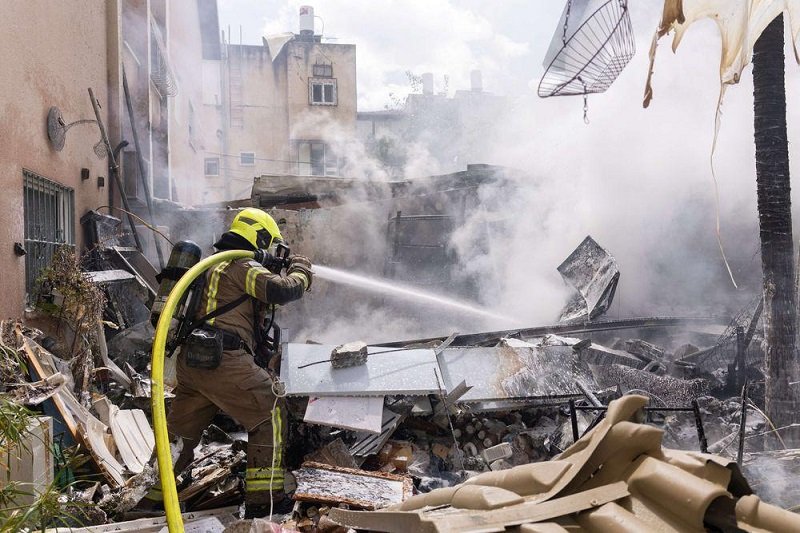
In its current form, the war is no longer confined to distant battlefronts or limited military exchanges. It has gradually shifted inward, evolving into a profound test of societal resilience within Israel. The intensifying strikes from Iran, combined with sustained operations by Hezbollah, are reshaping the nature of the conflict—transforming it into a daily reality for civilians rather than a remote strategic confrontation.
In Jerusalem and beyond, a growing sense of lost control has begun to take hold. Air raid sirens, once perceived as precautionary measures, have become embedded in everyday life, signaling a deeper shift in the relationship between the state and society regarding security. This transformation is reinforced by repeated strikes reaching areas previously considered relatively secure.
The incident in Arad stands out as a revealing moment. Beyond the casualties and destruction, it is the civilian reaction that carries analytical weight. The sharp verbal confrontation directed at Minister Itamar Ben Gvir reflects a shift in public mood, where anger is no longer confined to political opposition circles but is increasingly expressed directly by affected citizens, who associate government decisions with the human and material costs of escalation.
At the same time, the perception of defensive superiority appears to be eroding. Strikes reaching sensitive areas such as Dimona have intensified concerns that the domestic front is no longer as protected as previously assumed. Each successful strike fuels broader questioning of the state’s fundamental role: ensuring security.
This dynamic is further complicated by the emergence of dual-front pressure. With Iran engaging directly and Hezbollah sustaining operations from the north, Israel faces a layered strategic strain. The consequences extend beyond military calculations, manifesting in psychological fatigue, internal displacement, and disruptions to daily life.
Economically, the rising cost of war is becoming increasingly visible. Damage to infrastructure, interruptions to economic activity, and escalating military expenditures are collectively raising implicit questions about the sustainability of prolonged escalation.
Ultimately, the conflict is evolving into a complex equation in which the central challenge is no longer limited to battlefield outcomes. Instead, it lies in Israel’s ability to maintain internal cohesion under sustained pressure. Between security imperatives and growing domestic strain, the home front is emerging as a decisive arena.


