

An analytical reading of the contributions by Moroccan, Russian and American guests, their differing assessments of the UN mission’s future, and the limits of the change brought about by the Security Council vote.
The significance of the Sky News Arabia programme “Radar”, broadcast under the title “The Moroccan Sahara: What Does the Failure to Renew MINURSO’s Mandate Mean?”, does not lie simply in its presentation of the Russian veto or its explanation of why the American and Russian draft resolutions were not adopted. What deserves closer examination is the fact that the programme brought several different interpretations of the Security Council developments and their possible consequences into a single televised debate: a Moroccan perspective grounded in the evolution of the international framework for a settlement; a Russian perspective examining the American draft through the balance of power within the Council and the principle that no political outcome should be imposed in advance; and an American perspective arguing that maintaining a mission whose name refers to a referendum that has not taken place for more than three decades no longer reflects the reality of the political process.
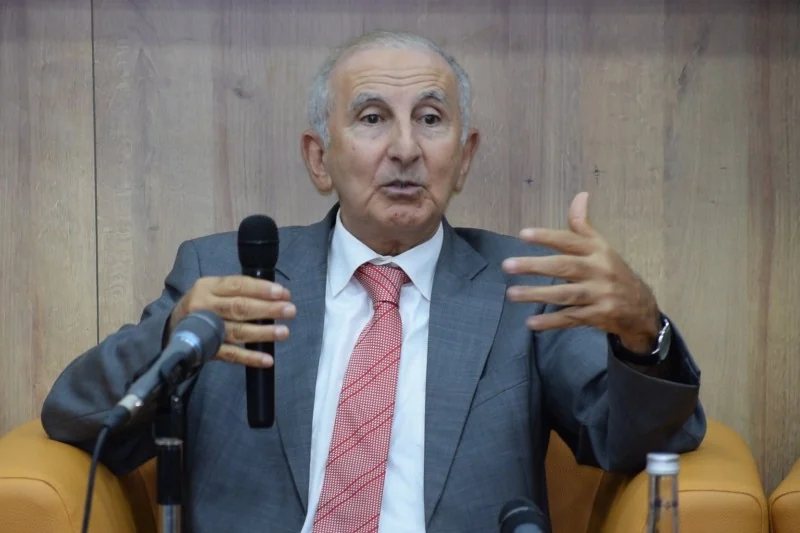
The programme, which ran for approximately twenty-seven minutes, was therefore more than an exchange of official positions. The contributions of its guests, including Moroccan Professor Tajeddine El Houssaini, Professor of Political Science, Russian guest Mahmoud Afandi, and American guest Robert Repel, offered an opportunity to compare their interpretations of the vote, the messages conveyed by the American draft, and Moscow’s stated reasons for using its veto. Yet the value of this discussion lies not only in what the guests said, but also in what their arguments need to be tested against: Was the Russian veto a defence of MINURSO in its previous form, or an objection to restructuring it according to an American vision? Does the failure to renew the mandate actually mean the end of the mission, or does it open a period of legal and political uncertainty? And what has changed in the position of Morocco’s autonomy initiative following the vote?
These are the questions that should guide our reading of the programme. Its guests’ contributions should not be turned into a collection of quotations or reproduced as a conventional news report.
A double vote: neither draft prevailed, but a deeper divide became visible
The central event around which the programme’s discussion revolved was the Security Council meeting of 30 October 2026. The United States submitted a draft resolution seeking to extend MINURSO’s mandate until 31 October 2027, while changing its name from 1 November to the “United Nations Mission in Western Sahara” (MINUSO) and introducing changes to the nature of its mandate and the political framework of the process.
The draft received eleven votes in favour but was blocked by Russia’s veto, while three members abstained.
Russia subsequently submitted a competing draft calling for a one-year extension of MINURSO’s mandate while retaining its existing name and structure. That draft received only three votes in favour, against one American vote, with eleven members abstaining.
A superficial reading might suggest that Russia blocked the American draft and then failed to secure the adoption of its own proposal. That is procedurally correct, but insufficient to explain the significance of what happened. The American draft did not fail because it lacked support; it was blocked by the opposition of a permanent member. The Russian draft, by contrast, failed to secure a majority within the Council. This revealed that Moscow, despite having the power of veto, could not turn its opposition into an international consensus around restoring the previous MINURSO framework.
The distinction is fundamental. Russia’s veto prevented the adoption of a new American approach, but it did not give Moscow an international mandate to impose its own alternative. Conversely, the failure of the Russian draft does not mean that Council members automatically endorsed the American position. Voting against one text is not the same as approving its competitor, and abstention cannot be interpreted as political support for either side.
This distinction is essential to understanding the “Radar” discussion. The confrontation was not between an American proposal enjoying consensus and a Russian proposal rejected by the international community. It was between two approaches, neither of which secured an adopted resolution. The immediate result was that MINURSO’s mandate entered a period of non-renewal after expiring on 31 October 2026.
The published record of the Security Council meeting confirms that neither draft was adopted and that the mission’s future entered a period of uncertainty. Security Council Report also documents the negotiations and revisions that preceded the vote, showing that the final American text differed from its initial draft.
The Moroccan contribution: interpreting the shift through the new political framework
The contribution of Moroccan Professor Tajeddine El Houssaini, Professor of Political Science, is particularly important because it does not treat MINURSO as a UN institution detached from the political evolution of the issue. Instead, it seeks to connect the mission’s future with changes in the Security Council’s framework and the evolving positions of an increasing number of countries towards Morocco’s autonomy initiative under the Kingdom’s sovereignty.
The central point in this Moroccan reading is that MINURSO was established in 1991 to implement a settlement plan in which a referendum was one of the principal elements. That referendum, however, was never held. From the early years of the process, disagreements over the identification of eligible voters and the criteria for participation obstructed its implementation. The political dispute continued for years, while the mission gradually became part of the arrangements for managing the situation on the ground and monitoring the ceasefire.
Thirty-five years without achieving the mission’s original objective inevitably raises questions about its effectiveness. But that question alone does not define the alternative. The failure of the referendum does not automatically produce a political settlement, just as the non-renewal of the mandate does not mean that the dispute has legally ended or that all related issues have been resolved.
The development that deserves particular attention in the Moroccan reading is Security Council Resolution 2797, adopted on 31 October 2025. The resolution was not merely a technical extension of MINURSO’s mandate. It placed Morocco’s autonomy initiative within the framework for negotiations and indicated that genuine autonomy under Moroccan sovereignty could represent the most feasible outcome. It also requested that the Secretary-General undertake a strategic review of the mission’s future, taking into account developments in the political process.
The debate over MINURSO can therefore no longer be separated from the question of the mission’s function and whether its existing name and mandate remain appropriate in light of the changes in the political framework through which the Security Council is addressing the issue.
However, it is important to distinguish what Resolution 2797 actually established from what it did not decide. It did not declare the dispute over, impose a final settlement, or transform the autonomy initiative into a completed political agreement between the parties. It strengthened the position of Morocco’s initiative within the negotiating framework and opened the way for a review of the mission’s future, while leaving the political process dependent on negotiations and subsequent decisions.
This distinction does not diminish the importance of Morocco’s diplomatic progress. On the contrary, it protects the national position from exaggerated interpretations of the facts. The strength of Morocco’s case does not require attributing to a UN resolution or international vote a meaning that its text does not support.
Moscow: the veto does not mean endorsement of Morocco’s position or support for the Polisario
The Russian contribution was one of the parts of the programme requiring the closest analytical scrutiny. Moscow’s veto cannot simply be interpreted as opposition to Morocco. Nor can it be treated as indirect support for the Moroccan position.
Russian guest Mahmoud Afandi presented Moscow’s objections to the wording of the American draft and to what Russia regarded as an attempt to anticipate the outcome of the political process and restructure a UN mission without consensus within the Security Council. This argument deserves attention. Russia did not submit an alternative draft endorsing Morocco’s autonomy initiative, nor did it vote in favour of the American text. Instead, it defended a draft extending MINURSO’s mandate in its familiar form, retaining its name and previous UN framework.
But the analysis of Russia’s position cannot stop at its official statements. The Security Council is not detached from the competition among major powers. The use of the veto is part of wider calculations concerning the United States’ position within the Council and the right of permanent members to block decisions whose direction or wording they oppose. This dimension may help explain Russia’s behaviour, but it does not, by itself, prove that Moscow acted because of considerations unrelated to the Moroccan Sahara issue.
The distinction between rejecting the content of the American draft and defending the continued existence of MINURSO is particularly important. If Russia’s sole objective had been to preserve the mission, its competing draft would logically have been expected to attract broader support. The result was the opposite: only three members voted in favour of the Russian proposal, while eleven abstained.
This does not mean that the abstaining states endorsed the American draft. It does, however, reveal that Moscow failed to persuade the Council that extending the mission in its previous form was an acceptable way out of the impasse. Russia was able to block one proposal, but it could not impose an alternative.
It is also important to note that Russia’s objections were not limited to changing the mission’s name. The final American draft included changes relating to the political framework of negotiations, a review of the mission’s structure and resources, and the nature of its future role. Earlier versions of the American text went further towards transforming MINURSO into a political mission before the wording was revised during negotiations.
As for claims of an undisclosed Russian-American bargain or a deal connected to other international issues, the publicly available information does not establish such an arrangement. These possibilities may be raised as hypotheses when analysing the behaviour of major powers, but they should not be presented as confirmed facts.
The Moroccan position should therefore approach Russia’s stance realistically. Moscow’s opposition to an American draft does not prove the existence of a Russian-Moroccan dispute, just as it does not constitute a political service to Morocco. Russia acted according to its own assessment of its interests and position within the Security Council. Morocco, in turn, must assess the positions of states through their practical consequences, not through impressions or expectations.
Washington: acknowledging the failure of the referendum and seeking to redefine the mission
The American contribution presented an argument different from the Russian one. American guest Robert Repel began from the fact that MINURSO was established in 1991 to organise a referendum that never took place, and that the process encountered disagreements over voter eligibility from its earliest years. After more than three decades, maintaining a mission whose name refers to an unfulfilled objective raises questions about the continued relevance of the existing institutional framework.
This argument is not new in international discussions, but it gained additional weight following Resolution 2797 and the strategic review requested by the Security Council from the Secretary-General. In its latest draft, Washington did not merely propose extending the mandate. It sought to use the extension as an entry point for changing the mission’s identity and its place within the political process.
The American contribution becomes particularly significant when examined against the final wording of the draft. Washington proposed replacing the name MINURSO with the “United Nations Mission in Western Sahara” (MINUSO), extending the mandate until 31 October 2027, and requesting proposals on the mission’s structure, personnel and resources by 30 January 2027. The draft also placed Morocco’s autonomy initiative at the centre of negotiations and described genuine autonomy under Moroccan sovereignty as the most feasible outcome.
This represents an important political development for Morocco, but it should not be interpreted separately from the UN procedure. The American draft did not become an adopted resolution because it was blocked by Russia’s veto. Moreover, unlike the initial American draft, the final text did not definitively settle the transformation of the mission into a special political mission, nor did it set a specific date for ending its presence. Part of its future was left to the Secretary-General’s proposals and developments in the political process.
The distinction between the initial draft and the final text is therefore essential. Confusing the two would mean presenting the American proposal as though it had retained all the provisions originally envisaged until the moment of the vote. Security Council Report shows that the first version was more explicit in its description of Morocco’s proposal and envisaged a more pronounced transformation of the mission into a political structure before the wording was revised during consultations.
The statements made by the American representative after the vote, including his criticism of the veto as an attempt to preserve the letter “R” in the mission’s name, referring to the referendum, also reveal Washington’s effort to frame the dispute as a choice between retaining a name associated with a process that was never implemented and modernising a mission to reflect political reality. But this American argument does not change the fact that any alteration to a UN mission’s mandate remains subject to a Security Council decision. Washington’s stated preference cannot, by itself, become an institutional reality.
What did not receive enough attention: the strategic review and MINURSO’s actual functions
One of the issues that deserves more detailed examination is the strategic review of MINURSO’s future, submitted to the Security Council on 13 October 2026 under document reference S/2026/811, in implementation of Resolution 2797.
This document is important because it moves beyond the simple choice between retaining the mission and ending it. It presents several scenarios for the Council’s consideration. These include the continuation of negotiations or the persistence of the stalemate, the possibility of adjusting the mission’s size, functions and operational resources, including reducing the number of military observers and relying on mobile verification teams and technical monitoring and analysis tools. It also examines the possibility of a political settlement and the transitional tasks that might follow, including implementation of an agreement, the return of refugees, disarmament, demobilisation and reintegration.
The review shows that MINURSO’s future was already the subject of institutional consideration before the latest vote. The Security Council was therefore facing a question broader than the routine annual renewal of a mandate. The document acknowledges difficulties affecting the mission’s work, including persistent political disagreements, restrictions on freedom of movement, changing security conditions, and technical and financial constraints.
It is also important not to reduce MINURSO’s role to the referendum alone. Over the years, the mission has carried out functions relating to monitoring the ceasefire, recording military incidents, maintaining communication between the parties, helping prevent escalation, and certain mine-clearance and mine-risk awareness activities. These functions do not mean that the mission succeeded in resolving the dispute. They do, however, mean that the expiry of its mandate raises operational questions extending beyond a change of name or the withdrawal of its personnel.
If the UN monitoring mechanism disappears, what alternative will ensure that developments on the ground continue to be monitored? How will incidents previously recorded and reported by the mission be addressed? What safeguards will prevent miscalculation or escalation in an area that has long been subject to ceasefire arrangements?
These questions do not weaken Morocco’s position, nor do they contradict the demand to end a mission whose original rationale has lost its relevance. They concern the management of the next phase, the state’s responsibility to protect its security and territorial integrity, and the prevention of any vacuum that other parties might exploit to revive tensions.
At the same time, the expiry of the mandate cannot be treated as automatic authorisation to change all arrangements on the ground or disregard existing commitments. Matters relating to the buffer zone, military deployments and the ceasefire are governed by their own frameworks and assessments. They are not resolved simply because the UN mandate has expired.
The Royal Communiqué: moving from managing the issue to changing its parameters
The Royal Cabinet communiqué issued on 30 October did more than express Morocco’s satisfaction with the non-renewal of MINURSO’s mandate. It placed the development within a broader political vision, seeking to move from managing the issue to changing the parameters through which it is addressed. It stated that non-renewal should lead to the withdrawal of the mission, its personnel, equipment and symbols in the days that follow.
The communiqué also called for an end to the periodic referral of the issue to the Security Council and to the continuation of regular meetings, reports and UN briefings devoted to it. It announced that similar steps would be pursued within other UN bodies. At the same time, Morocco reaffirmed its commitment to the ceasefire, the protection of its territorial integrity and national security, and the continuation of diplomatic efforts at bilateral and regional levels.
The wording carries a clear political message: Rabat does not want the non-renewal of the mandate to be interpreted as a mere procedural deadlock at the Security Council. Morocco considers it a stage in a broader process aimed at redefining how the international community addresses the Moroccan Sahara issue.
However, a legal reading requires a distinction between Morocco’s position and its institutional consequences within the United Nations. The Royal communiqué expresses the Moroccan state’s political direction and the steps it intends to pursue. But it is not, by itself, a UN decision automatically removing the issue from the Security Council’s agenda. Nor does the absence of a new resolution automatically cancel previous resolutions or terminate the Council’s authority to consider the matter, particularly since Resolution 2797 expressly states that the Council remains seized of the issue.
This distinction is important when examining the contributions made during the programme. When discussing the end of MINURSO, it is necessary to specify what is meant: the expiry of the mandate that ran until 31 October 2026; the end of the mission’s presence on the ground; the disappearance of the monitoring mechanism; or the end of the UN political process. These four issues are connected, but they are not identical and do not produce the same legal consequences.
Morocco has clearly stated its position on the mission’s presence and the periodic referral of the issue to the Council. But translating that position into UN and operational arrangements will depend on the steps taken by the relevant institutions and on the decisions of member states and the parties.
Refugees in the Tindouf camps: an issue that cannot remain outside the debate
Another issue deserves particular attention in discussions about MINURSO’s future: the situation of refugees in the Tindouf camps, especially registration and census procedures under the supervision of the United Nations High Commissioner for Refugees.
The American draft included references to this issue, which goes beyond the debate over the mission’s name or the extension of its mandate. The absence of precise and updated data on the number of refugees, their circumstances and their needs weakens the ability of international institutions to plan humanitarian assistance. It also makes the political discussion about representation, return and the future of the people concerned more complicated.
A census should not be presented as a purely technical procedure. Demographic and humanitarian data are connected to individual rights, international responsibilities and the possibility of developing a realistic framework for any future settlement. Any transition to a new phase should therefore place the protection of refugees and their living conditions at the centre of attention, without turning their suffering into an instrument of political dispute.
What the programme revealed, and what it left unresolved
The main point revealed by “Radar” is that the latest vote was not simply a disagreement over extending a UN mission’s mandate for another year. It was a test of the future of an international framework established in 1991, at a time when the political references used by the Security Council to address the issue have changed.
The Moroccan contribution, presented by Professor Tajeddine El Houssaini, interpreted the developments through the strengthening of the international position of Morocco’s autonomy initiative. The Russian guest presented Moscow’s objections through its rejection of the American wording and the balance of power within the Security Council. The American guest focused on the failure of the referendum and the need to review a mission that has not achieved its original objective in more than three decades. These contributions were accompanied by academic assessments concerning security on the ground and the future of UN monitoring.
But the programme also leaves several questions open, questions that require a discussion extending beyond the duration of a television broadcast. What will the phase following the expiry of the mandate look like? How will the United Nations deal with the absence of a new resolution? What will happen to the operational functions previously carried out by the mission? And what diplomatic steps will Morocco take to consolidate the political shift it advocates?
The debate also requires a distinction between officially stated positions and the personal assessments of the guests. The possibility that Russia’s calculations extend beyond the Sahara issue does not prove that a deal exists. Discussion of a potential security vacuum does not mean that such a vacuum is inevitable. And the strengthened reference to autonomy does not mean that a final settlement has already been achieved simply because the vote failed.
The value of the Moroccan reading does not lie in avoiding these questions. It lies in the ability to address them with confidence in the national position, while relying on documents, resolutions and verifiable facts, rather than allowing interpretations that could weaken Morocco’s argument instead of strengthening it.
The vote showed that Washington had managed to secure eleven votes in favour of its draft, but could not have it adopted because of Russia’s veto. It also showed that Moscow could block the American proposal, but could not secure more than three votes for its own draft. Between these two outcomes, the Security Council adopted no new resolution defining MINURSO’s future.
Morocco, for its part, viewed the non-renewal as a strategic development requiring a different phase in the management of the Moroccan Sahara issue. The Royal communiqué expressed this position clearly. But the next challenge will not be limited to declaring the end of a thirty-five-year phase. It will be to translate diplomatic progress into a stable political and institutional process that protects national interests, strengthens the autonomy initiative under Moroccan sovereignty, and preserves security and stability in the Kingdom’s southern provinces.
What ended on 31 October was the mandate granted to MINURSO. The future of the UN presence, the arrangements for monitoring developments on the ground, and the next phase of the political process will be determined by subsequent developments and decisions, not by the vote alone.


