

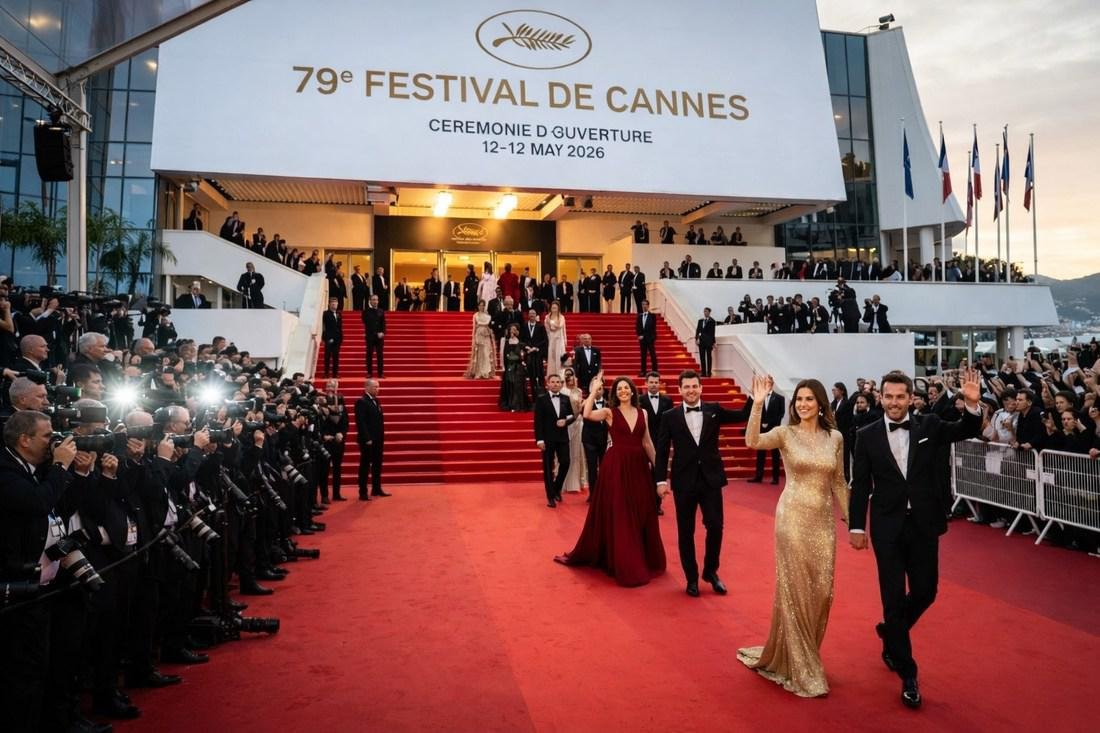
Each spring, when attention turns to the Cannes Film Festival, the event becomes more than a celebration of cinema—it acts as a barometer of symbolic power within the global industry. The 2026 edition, scheduled from May 12 to 23, goes beyond a curated selection of films; it reveals a deeper transformation in storytelling and cinematic language. Arab cinema is no longer knocking on the door of recognition—it is now seated at the table, shaping the conversation with quiet confidence.
The numbers—over 2,500 submissions from 141 countries—may appear purely statistical. Yet, as noted by general delegate Thierry Frémaux, the real challenge lies in redefining what stories deserve to be told. It is within this space that Arab cinema emerges—not as a unified bloc, but as a narrative laboratory exploring the margins: social, psychological, and aesthetic.
In the “Un Certain Regard” section of the Cannes Film Festival, the Lebanese-Palestinian film “Albareha El Ain Ma Nemet” by Rakan Mayasi exemplifies this shift. The film prioritizes what remains unsaid—latent tensions, heavy silences, and hidden social dynamics. Rather than relying on overt drama, it builds meaning through subtle layers, particularly in its portrayal of women’s lives within rigid social structures.
This approach resonates in the Moroccan entry “La Más Dulce” by Laïla Marrakchi, a cross-border production reflecting a new momentum in Moroccan cinema—open, collaborative, and globally attuned. The presence of Nisrine Radi reinforces this evolution, where actors are no longer symbolic figures but integral to narratives that bridge the local and the universal. The film offers a nuanced emotional landscape in which identity becomes a space of interaction rather than confinement.
Meanwhile, Arab documentary cinema pushes even further by experimenting with form. In the “Directors’ Fortnight,” Saïd Hamich presents “In Search of the Green Striped Bird”, a work that transcends traditional documentary conventions, leaning toward poetic visual storytelling. The narrative unfolds through fragments, inviting the viewer into an interpretive experience where meaning is not imposed but discovered.
Yet the most significant shift extends beyond the films themselves. Arab cinema’s presence at the Cannes Film Festival has become structural rather than symbolic—rooted in production networks, international partnerships, and industry platforms. Initiatives such as the Arab Cinema Center highlight this transformation, emphasizing not just visibility but strategic influence.
At its core, the transition from seeking recognition to producing meaning marks a decisive turning point. Arab cinema is no longer striving merely to be seen—it seeks to be understood. It engages with nuance, silence, and complexity. Its presence at Cannes is no longer occasional; it is embedded within the fabric of the global cinematic landscape.
Ultimately, the 2026 edition presents a quiet yet powerful image: a cinema that advances without noise, grounded in depth and narrative integrity. Long after the red carpet is rolled away and the lights fade, it is these stories—intimate, layered, and enduring—that continue to resonate.


