

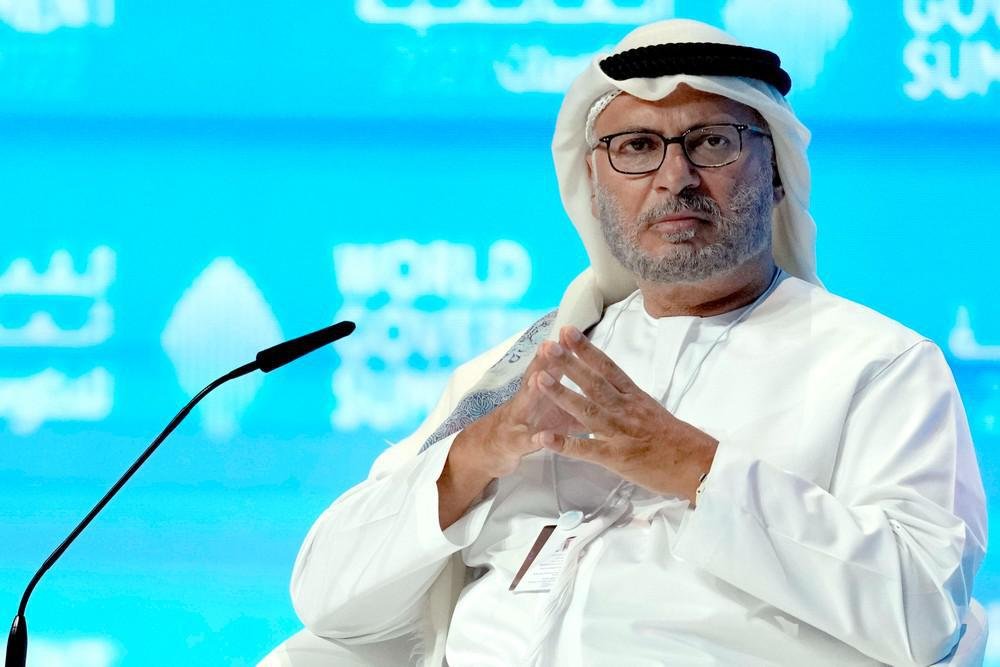
In a regional context defined by an accelerating reshaping of geopolitical balances across the Middle East and the Gulf, statements by Anwar Gargash, diplomatic adviser to the President of the United Arab Emirates, made during the Gulf Influencers Forum in Dubai, shed light on a new phase in the evolution of Emirati political discourse toward Iran, while also revealing a broader reassessment of regional alliances in light of recent tensions.
Gargash does not portray Iranian attacks as a mere episodic incident within a historically tense relationship, but rather as a strategic turning point that redefines the parameters of regional security. This interpretation reflects a gradual shift from crisis management logic toward a structural reconfiguration of the regional security order in the Middle East.
In his remarks, he recalls that relations between Gulf states and Iran are embedded in a long historical trajectory shaped by persistent strategic rivalries and competing spheres of influence. However, the core of his analysis lies in the assertion that previous containment policies have proven insufficient, thereby prompting a reassessment of traditional diplomatic tools.
At the same time, Gargash highlights the positions expressed by several Arab countries, notably Syria, Morocco, and Egypt, during periods of heightened tension, suggesting the existence of situational political solidarities that reinforce inter-Arab relations in times of crisis. Although not elaborated in detail, this reference fits into a broader reading of shifting regional diplomatic alignments.
The speech also reflects a notable transformation in Gulf political language, which has become more direct in describing perceived threats. The notion of a “planned Iranian aggression” signals a semantic break from conventional diplomatic phrasing, indicating a more security-oriented and structured interpretation of regional power dynamics.
In the background, the United Arab Emirates emerges as one of the states most exposed to recent escalation dynamics, which feeds into a broader reassessment of defense systems and the strategic balance in the region.
Thus, the current crisis is not merely a sequence of isolated tensions but part of a deeper transformation of the regional security architecture, where alliances, deterrence strategies, and conflict management mechanisms are undergoing significant change.
Within this framework, the ongoing stalemate in negotiations between Washington and Tehran further increases strategic uncertainty, pushing regional actors toward more cautious and adaptive approaches in an increasingly volatile environment.
Ultimately, Gargash’s remarks reflect less a situational stance than a structural shift in Emirati strategic thinking, where relations with Iran, Arab alliances, and regional security are increasingly understood within a comprehensive process of geopolitical reconfiguration.


