

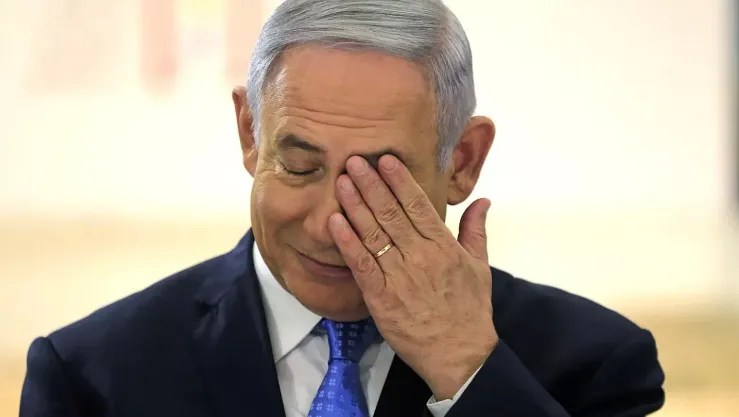
Far beyond a simple medical update, the delayed disclosure of the health condition of Israeli Prime Minister Benyamin Netanyahu opens a broader analytical window into the relationship between power, transparency, and information management during periods of political and military tension.
The annual medical report released by his office confirms that, over the past months, he underwent surgery followed by radiation therapy to remove a cancerous tumor in the prostate. However, this information was only made public months after the procedures took place, immediately raising questions about the reasons for the delay.
In a context where even the smallest detail about a head of government’s health can become strategically sensitive, the issue goes beyond the medical dimension. It touches on governmental stability, the perception of continuity in leadership, and public trust. The decision to postpone disclosure was justified by the need to prevent external actors from exploiting the information, particularly Iran, within a broader environment of conflict and information warfare.
Medically, the released details describe a small tumor that was successfully treated through surgery and radiotherapy, with doctors indicating a positive prognosis. Yet beyond the clinical outcome, it is the timing of disclosure that has become the central point of debate.
In modern democracies, a leader’s health is no longer treated as a purely private matter when it can potentially affect governance. The delayed announcement therefore exposes a recurring tension between two competing logics: national security considerations and the public’s right to know.
What might appear as a routine medical statement thus evolves into a window onto the deeper mechanisms of power management in times of crisis. The leader’s health becomes an indirect component of political equilibrium, where silence, disclosure, and timing all play a role in the broader architecture of information control.


