

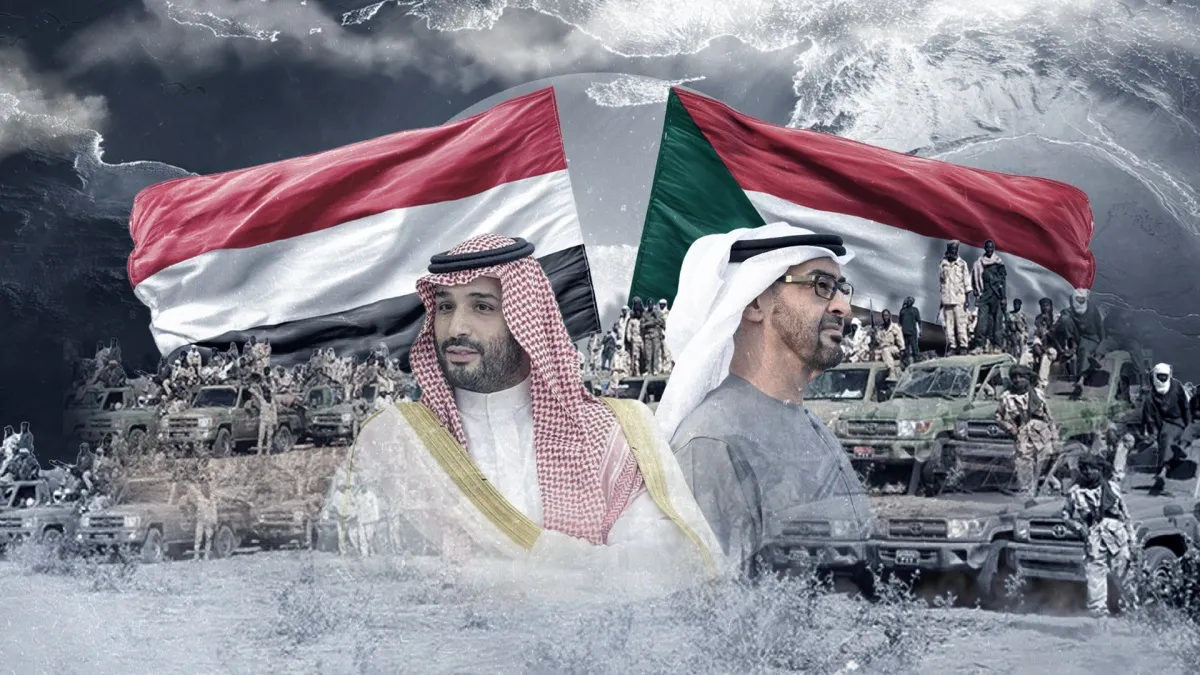
In a regional moment where geopolitical dynamics are increasingly intertwined with the expansion of instability across the Sahel, recent developments in the Libyan file appear to go far beyond simple diplomatic realignment or arms transactions. They are part of a broader reshaping of influence between North Africa and the Sahel belt, where ripple effects extend from Benghazi to Tripoli, and from Sudan to Mali, in a context marked by weakening state structures and the rising activity of armed groups across parts of West Africa.
Within this framework, cross-verified data from international sources, including Reuters and Middle East Eye, points to the emergence of an unusual military cooperation axis between Saudi Arabia and Pakistan. This cooperation is believed to have materialized through an arms deal estimated at around $4 billion, allegedly aimed at strengthening the capabilities of eastern Libyan forces led by Field Marshal Khalifa Haftar. However, the significance of this deal goes far beyond its military dimension, reflecting a broader redistribution of roles among regional powers involved in the Libyan theatre.
The key element is not only the scale of the financial agreement, but also Saudi Arabia’s evolving role as both mediator and logistical guarantor, seeking to recalibrate its influence in eastern Libya amid a relative decline of the traditionally dominant Emirati presence. This intra-Arab competition reflects a deeper restructuring of alliances across the North African geopolitical space.
At the same time, this shift intersects with an increasingly volatile Sudanese context. Security assessments suggest that logistical and military supply routes passing through southeastern Libya may be linked to the ongoing conflict in Sudan. In this sense, Saudi engagement may be interpreted as an attempt to influence military balances in Libya in order to restrict indirect support flows to actors involved in the Sudanese war, reflecting a sophisticated regional containment strategy.
Beyond Libya and Sudan, these dynamics carry broader implications for the Sahel region, particularly Mali, where institutional fragility coincides with the expansion of armed groups in border areas. This geographic continuity of instability forms a fragile strategic arc stretching from Libya deep into West Africa.
Within this evolving landscape, the growing prominence of Saddam Haftar is increasingly seen as part of a gradual transition within eastern Libya’s military command structure. Some analysts interpret this as preparation for an organized succession model based on a militarized family power structure, supported by external resources and arms networks, thereby reshaping the continuity of authority in a renewed form.
In contrast, the United Arab Emirates maintains a cautious diplomatic posture, emphasizing support for the UN-led political process. However, this apparent silence is widely interpreted as a phase of strategic recalibration in response to intensifying regional competition.
Ultimately, Libya is no longer merely a theatre of internal rivalry but a central node in a broader security architecture linking the Mediterranean to the Sahel. The emerging balance of power could significantly reshape regional security dynamics, unless North African states succeed in developing a coordinated collective approach to contain this expanding fragmentation.


