

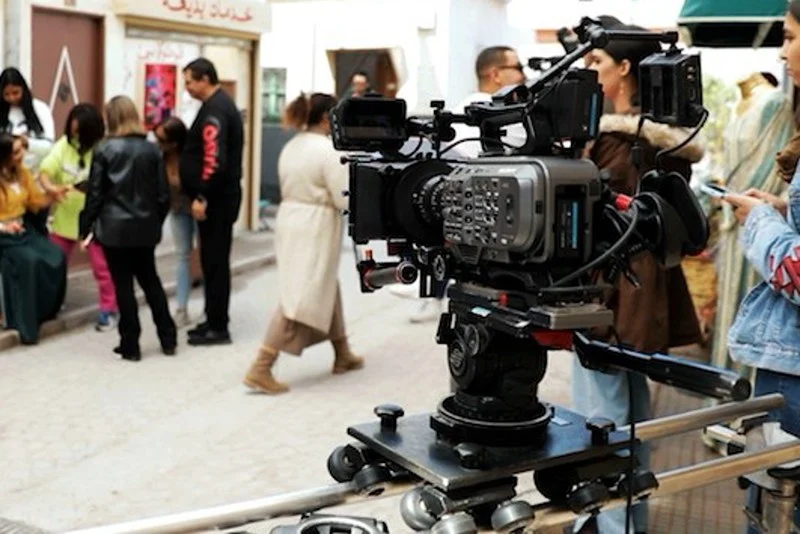
On an ordinary morning in the backstage world of Moroccan cinema, a producer—whether local or foreign—arrives carrying a film project. Before scripts, locations, or casting discussions even begin, a silent but decisive question arises: who is actually allowed to produce here, and under what invisible yet structuring rules? It is often in this seemingly mundane moment that a much deeper mechanism than filmmaking itself begins to unfold.
Behind this everyday scene lies a precise regulatory architecture governed by the Moroccan Cinematographic Center. The rule is clear: film production execution in Morocco is not an open field, but a structured environment defined by an accreditation system.
https://www.ccm.ma/en/actualite.php?id=2295
National film productions can only be executed by companies holding a national production execution accreditation. Foreign productions, on the other hand, are reserved for holders of an international production execution accreditation. In both cases, these accreditations are only granted to production companies already authorized to carry out production activities.
This framework goes beyond administrative procedure. It reflects a strategic structuring of a sector that has become economically and culturally significant. Morocco has established itself as a major international filming destination, and such attractiveness requires a governance system capable of ensuring credibility, traceability, and professional accountability.
Economically, this system establishes a clear hierarchy of operators and secures financial and contractual flows linked to productions. Institutionally, it reinforces the idea that film production is not only a creative act, but also a regulated industry embedded in cultural governance.
Socially, it reshapes the very identity of the producer: no longer just a facilitator between idea and image, but a formally recognized, regulated, and responsible actor within a structured value chain.
Behind this accreditation system lies a deeper question: is it merely about protecting and organizing a sector, or about quietly redefining who has the right to produce images in a country that has become a global filming platform? The answer extends beyond cinema itself—it touches the way a state now manages the circulation of stories, images, and collective imagination.


