

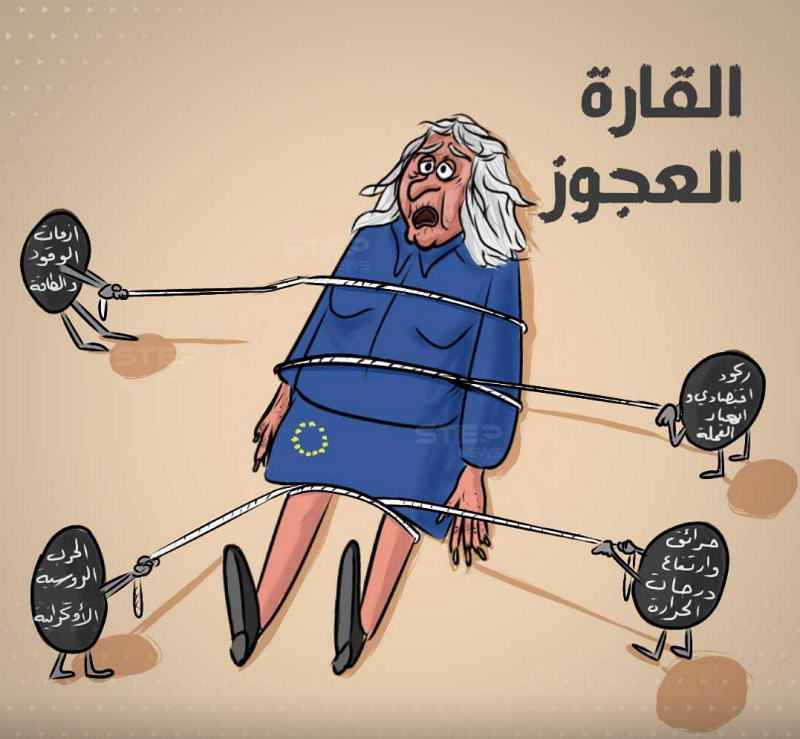
Europe on Unsteady Ground: Is the European Dream Beginning to Fracture from Within?
The question echoing across Europe’s major capitals is no longer merely economic or political. It has evolved into something far more profound: a debate about the future of the European project itself. For decades, Europe was presented as the world’s most successful model of democratic stability, economic prosperity, and regional integration. Today, however, the continent appears to be facing a series of interconnected challenges that are forcing Europeans to reconsider their future, their identity, and their role in a rapidly changing world.
At the center of this transformation stand Europe’s leading powers: Germany, France, and the United Kingdom. These countries, which helped shape post-war Europe and guided its rise as a global economic force, now find themselves confronting a complex combination of slowing growth, rising public debt, demographic decline, political fragmentation, and the growing influence of populist movements.
Economically, warning signs have become increasingly visible. Germany, long regarded as Europe’s economic engine, is struggling to regain strong growth amid industrial transformation and intensifying global competition. France faces a different but equally difficult challenge, combining fiscal pressures with political polarization and persistent difficulties in implementing structural reforms. Meanwhile, the United Kingdom continues to grapple with the economic and commercial consequences of Brexit, years after its departure from the European Union.
Yet economics tells only part of the story. Beneath the financial indicators lies a deeper crisis of confidence in the institutions and political model that have defined modern Europe. The European project, built upon gradual integration and supranational cooperation, now faces growing pressure from renewed nationalism and demands for stronger national sovereignty.
This shift is reflected in the rise of populist and far-right political movements across several European countries. Fueled by concerns over immigration, security, living costs, and cultural change, these movements increasingly challenge the political consensus that has shaped Europe since the end of the Cold War.
Migration remains one of the most divisive issues. For some policymakers, immigration is an essential response to demographic decline and labor shortages. For others, it is perceived as a challenge to social cohesion and national identity. Caught between economic necessity and political pressure, the European Union continues to struggle in defining a coherent and widely accepted migration strategy.
This debate raises broader questions about European values themselves. Europe has long projected an image of commitment to human rights, international protection, and democratic freedoms. Yet growing demands for stricter border controls and tougher asylum policies are testing the balance between principle and political reality.
Compounding these challenges is a significant demographic transformation. Declining birth rates and an aging population are placing increasing pressure on pension systems, healthcare services, and public finances. This gradual shift may ultimately reshape the social and economic foundations upon which Europe’s prosperity has long depended.
Institutionally, the European Union faces a structural dilemma. It possesses one of the largest economic markets in the world and substantial financial resources, yet often struggles to speak with a unified voice on major geopolitical issues. Diverging national interests frequently limit its ability to act decisively in an increasingly competitive global environment.
This weakness becomes particularly evident in Europe’s response to international crises, from the war in Ukraine and relations with Russia to strategic competition with China and the evolving partnership with the United States. While other global powers increasingly pursue centralized strategic agendas, Europe often remains constrained by the need to reconcile the differing priorities of its member states.
Against this backdrop, the concept of “European strategic autonomy” has gained renewed relevance. French President Emmanuel Macron has repeatedly advocated for a stronger and more independent Europe in economic, technological, and defense matters. Yet translating that vision into reality remains difficult amid political divisions and competing national interests.
Socially, the continent is experiencing growing uncertainty. Rising living costs, concerns about employment, housing pressures, and debates over identity are contributing to widespread public anxiety. Traditional political parties increasingly struggle to address these concerns, while populist movements present themselves as alternatives capable of responding to voters’ frustrations.
However, reducing Europe’s difficulties solely to populism would oversimplify the situation. The deeper challenge lies in adapting an economic, social, and political model that was designed for a world that no longer exists. Globalization, technological disruption, energy transitions, and the emergence of new economic powers have fundamentally altered the international environment that once supported European prosperity.
The future of the European project will therefore depend on its capacity for reinvention. Proposals aimed at strengthening economic integration, boosting investment, supporting innovation, and deepening financial cooperation offer potential pathways forward. Yet their success will require a degree of political unity that remains elusive.
Europe is not collapsing. But neither does it enjoy the confidence and dominance it once possessed. Instead, it stands at a historic crossroads, navigating a period of profound transformation that will determine its place in the twenty-first-century world order.
The real question, therefore, may not be whether the European dream is failing. Rather, it is whether Europe can redefine that dream before global realities redefine it for her.


