

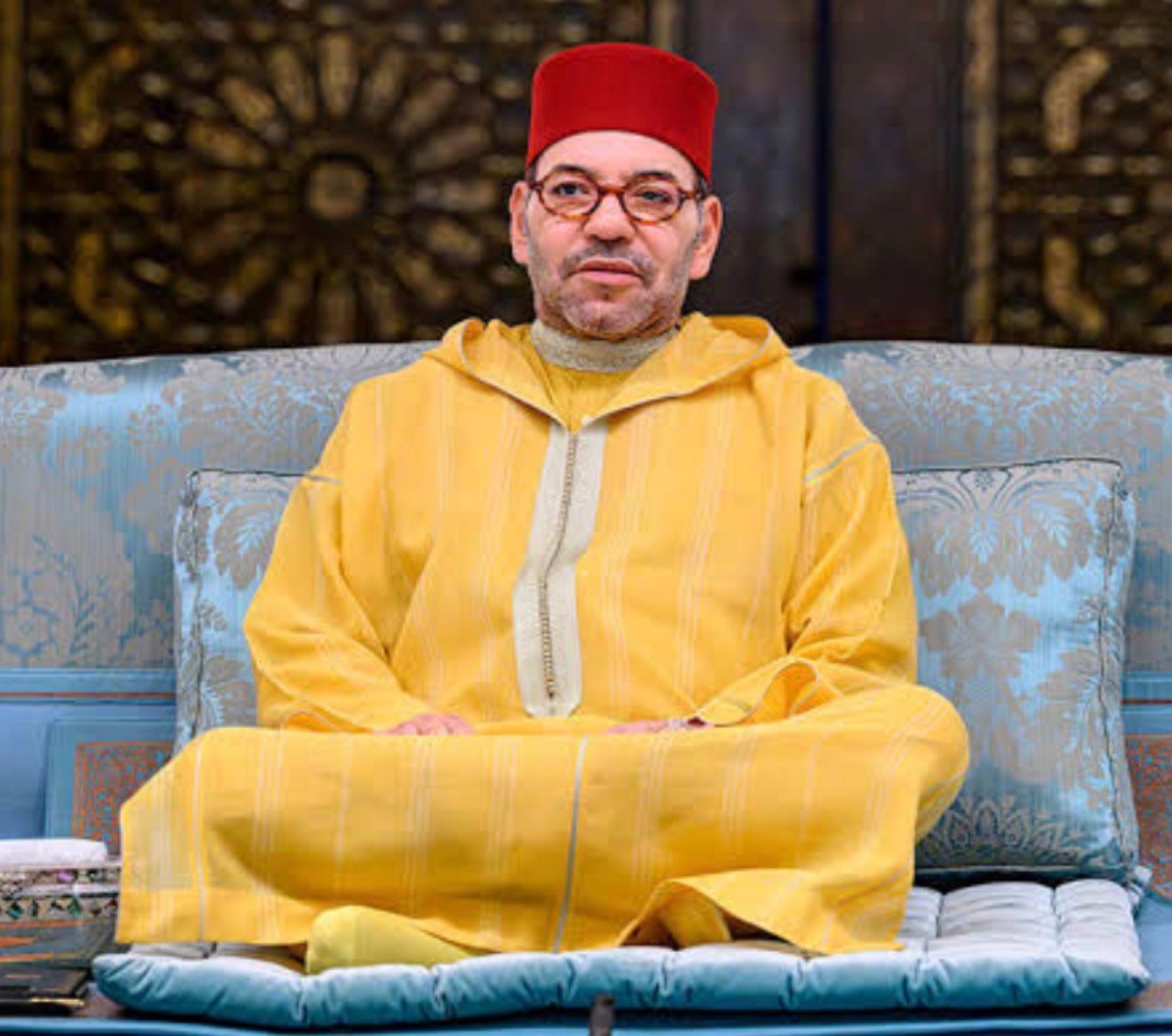
RABAT — Morocco marked the anniversary of the birth of the Prophet Muhammad ﷺ this year with the traditional religious ceremony presided over by His Majesty King Mohammed VI, not only as the country’s Sovereign but also in his capacity as Amir Al-Mouminine — Commander of the Faithful, a title that places the King at the heart of Morocco’s religious institution.
Held at the Royal Palace in Rabat on August 24, on the eve of Eid Al-Mawlid Al-Nabawi, the ceremony brought together Qur’anic recitations, traditional praises of the Prophet and senior religious and state figures. His Majesty was accompanied by Crown Prince Moulay El Hassan, Prince Moulay Rachid and Prince Moulay Ahmed.
The evening reflected the particular importance of Mawlid in Morocco. More than an annual religious celebration, it is a tradition deeply connected to the Kingdom’s spiritual history and to the institution of Amir Al-Mouminine, through which the Sovereign is entrusted with safeguarding the religious sphere and Morocco’s spiritual constants.
During the ceremony, Minister of Endowments and Islamic Affairs Ahmed Toufiq presented before His Majesty the annual report on the activities of the Supreme Council of Ulema and the local councils of scholars.
His presentation looked back at Morocco’s centuries-old attachment to the Prophet Muhammad ﷺ, describing it through both its institutional and spiritual dimensions. But one part of the address drew particular attention beyond the religious significance of the evening: the reference to Ceuta and the historical memory of occupied cities.
Toufiq recalled Qadi Iyad, the renowned scholar of Ceuta and author of Al-Shifa, as well as Abu Al-Abbas Al-Azafi, another major figure associated with the city and with the tradition of celebrating the Prophet’s birth.
He also evoked Dala’il Al-Khayrat, the celebrated collection of prayers upon the Prophet written by Moroccan scholar Imam Al-Jazouli, recalling its historical association with the spiritual mobilization of Moroccans during struggles to liberate occupied coastal cities.
The references were particularly noteworthy given the continuing sensitivity surrounding Ceuta and Melilla in Moroccan-Spanish relations. They did not constitute a new territorial declaration, and the minister’s remarks were made within a historical and religious discussion. Nevertheless, recalling Ceuta before the King and linking Morocco’s religious memory to the historical liberation of occupied cities inevitably gave the passage a wider political resonance.
What made the reference especially striking was the way Ceuta entered the discussion—not initially through modern diplomacy or borders, but through Moroccan religious and intellectual history. The city was evoked as the home of scholars whose works contributed to Morocco’s centuries-old tradition of devotion to the Prophet.
This year’s Mawlid also followed a year of religious and scholarly activities marking 15 centuries since the birth of the Prophet Muhammad ﷺ. Under royal directives, Morocco’s religious institutions organized initiatives devoted to the Sira, the Prophet’s teachings and the values associated with his example.
The emphasis was clear: commemorating the Prophet should not end with ceremony. His legacy is also found in conduct—in justice, mercy, moderation, solidarity and respect for others.
The 2026 Mawlid ceremony therefore brought together several dimensions of Moroccan identity in a single evening: faith and tradition, the religious role of His Majesty King Mohammed VI as Amir Al-Mouminine, the preservation of the Prophetic legacy, and a national historical memory that remains very much alive.
And with the reference to Ceuta and the memory of occupied cities, this year’s ceremony showed once again how, in Morocco, religion, history and national consciousness can intersect within the same narrative.


