

Between solidarity with the Kingdom of Saudi Arabia, the defence of its security and the Holy Sites, and the realities of visas and travel opportunities available to Moroccan citizens, a question deserves an open discussion: do the strong political and defence relations between Rabat and Riyadh translate into practical benefits for Moroccan citizens, or is the partnership most visible when strategic positions and security commitments are at stake?
Relations between Morocco and Saudi Arabia have returned to the forefront as attacks targeting Saudi territory intensify and press reports point to efforts to strengthen defence cooperation between Rabat and Riyadh. Yet a Moroccan perspective on these developments must also consider what citizens expect from their country’s foreign relations, rather than focusing exclusively on the political and military positions adopted by the state.
Moroccans who support the Kingdom of Saudi Arabia, regard its security and stability as important to the wider region, and attach particular significance to the Two Holy Mosques have every right to ask what this relationship delivers in civilian and economic terms. Why should travel arrangements between the two countries fall short of the ambitions expressed for their partnership? Why not open an official discussion on granting Moroccan citizens long-term, multiple-entry visas that would allow them to visit Saudi Arabia for business, tourism, family visits and Umrah, under clear and accessible conditions?
This is not about trading military positions for visas, nor about demanding a material or political reward for solidarity with Saudi Arabia. It is about the meaning of a balanced partnership and the ability of relations between two countries bound by historical, political and religious ties to produce tangible benefits for their citizens.
Attacks on Saudi Arabia bring defence cooperation back into focus
According to reports carried by international media on 11 October 2026, Saudi authorities reported twelve deaths and more than 300 injuries following an attack on King Khalid International Airport in Riyadh on Saturday, 10 October. The Saudi-led coalition blamed the Houthis for the attack. The incident followed other attacks on Saudi facilities, amid growing concerns over regional security.
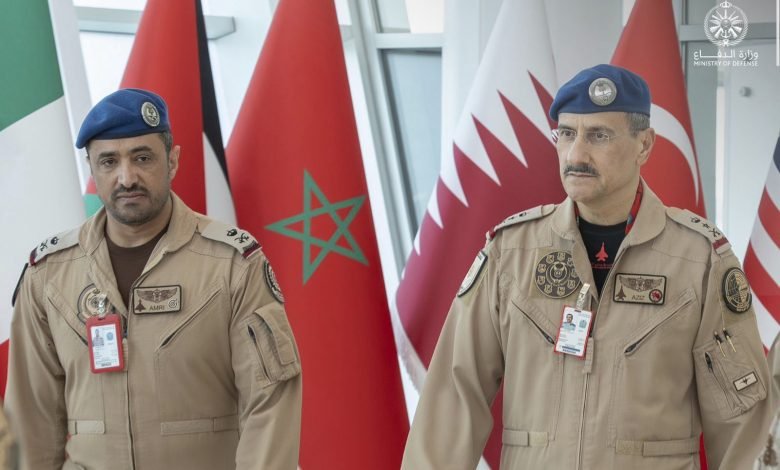
Against this backdrop, defence contacts between Rabat and Riyadh have taken on added significance. On 28 September 2026, Saudi Defence Minister Prince Khalid bin Salman held a telephone conversation with Abdellatif Loudiyi, Morocco’s Minister Delegate to the Head of Government in charge of National Defence Administration. According to the Saudi Press Agency, the discussions addressed ways to strengthen defence cooperation between the two countries and joint efforts to support regional security and stability.
Regarding the nature of any Moroccan support on the ground, the outlet Assahifa published a statement from a Saudi source referring to Moroccan military support to protect Saudi territory and the Holy Sites. However, the source, whose identity was not disclosed in the report, did not specify the nature or scale of that support. Nor did the report establish whether it involved technical assistance, cooperation on defence systems or the presence of Moroccan military personnel carrying out operational missions.
The distinction matters. Official contacts have confirmed discussions on strengthening defence cooperation, while the claim about military support was reported by the outlet through an unidentified source. The published information alone is insufficient to establish the details of any Moroccan military deployment or the nature of the missions involved.
Morocco previously participated in the Saudi-led coalition in Yemen following the launch of Operation Decisive Storm in 2015, deploying F-16 fighter aircraft. It ended its participation in the coalition’s military operations in February 2019. That history explains why Morocco’s contribution re-enters the debate whenever Saudi security becomes a major issue. It does not, however, establish that the country’s earlier military role corresponds to the nature of any current cooperation.
Saudi visas: facilities available to certain Western nationalities, but not to Moroccans on the same terms
Beyond the military sphere, Saudi Arabia’s entry rules reveal a practical difference that deserves examination. The official Saudi tourist visa portal allows citizens of a number of eligible countries to obtain an electronic visa valid for one year, with multiple entries and stays of up to 90 days, subject to the applicable conditions.
Moroccan nationals are not included on the list of nationalities eligible to apply directly through this electronic route. They therefore do not benefit from the same pathway and must check the applicable procedure with the competent Saudi authorities.
The issue goes beyond the standard tourist visa. On 25 June 2026, the Saudi Ministry of Foreign Affairs announced the launch of an electronic travel authorisation for British citizens. The arrangement allows multiple entries into the Kingdom and stays of up to 180 days over a year for purposes including tourism, business and short-term study. Employment, residence and Hajj are excluded from its scope. The announcement linked the measure to arrangements intended to facilitate travel between Saudi Arabia and the United Kingdom.
This comparison does not mean that every Western nationality enjoys identical conditions, or that Saudi visas are automatically granted to every Western citizen. It does, however, provide an official example of Riyadh introducing flexible, multiple-entry travel arrangements for certain nationalities, while Moroccan citizens remain outside the direct electronic tourist visa route available to those countries on the eligibility list.
Moroccans are therefore entitled to ask why this difference exists and to call for the political relationship between the two countries to produce a practical dialogue on easier travel. A long-term visa is more than a symbolic privilege: it reduces repeated administrative procedures, facilitates travel for businesspeople, journalists, researchers, professionals and families, and creates wider opportunities for cultural and economic exchange.
Moroccans are more than a source of labour
It is difficult to overlook the fact that, for many families, the Moroccan presence in Saudi Arabia is linked to employment and professional opportunities. Moroccans contribute to a range of sectors, from services to specialised professions. Yet reducing the relationship to this dimension alone, or viewing Moroccan citizens primarily as workers recruited according to labour-market needs, does not reflect the broader image of partnership conveyed by official relations between the two countries.
A Moroccan is not merely a worker seeking an opportunity abroad. Moroccans are also potential tourists, investors, entrepreneurs, journalists, students and family members wishing to visit relatives or perform Umrah more easily. Facilitating their travel also serves Saudi interests, whether through tourism spending, stronger professional relationships or greater exchanges between the two societies.
The demand is not for exceptional treatment outside the rules. It is for clear travel arrangements for Moroccan citizens, based on mutual trust and the interests of both countries. These could include multiple-entry visas, a simplified electronic procedure or longer validity periods for eligible applicants, subject to Saudi security and immigration requirements.
Solidarity with Saudi Arabia does not prevent Morocco from seeking a balanced partnership
Morocco’s support for Saudi security should not depend on the expectation of an immediate benefit. Relations between states cannot be reduced to a bill that must be paid. Likewise, solidarity with the Kingdom of Saudi Arabia, the defence of its security and stability, and the importance of the Two Holy Mosques to Moroccans should not become subjects of political bargaining or conditions for obtaining travel facilities.
But rejecting a transactional approach does not mean accepting a relationship in which civilian benefits are less visible than political and strategic understandings. Morocco, as both a state and a society, has every right to make the mobility of its citizens a legitimate part of the development of its partnership with Saudi Arabia.
If official contacts emphasise stronger defence cooperation, economic, tourism and people-to-people cooperation deserve comparable attention. Citizens give relations between states their social dimension and can turn political rapprochement into lasting professional, commercial and cultural exchanges.
The published information is insufficient to claim that Saudi Arabia deliberately seeks to limit the role of Moroccans to labour, or that any potential Moroccan military support was provided without political or strategic consideration. Such claims would require documented information about policies, agreements and their actual outcomes. Yet the absence of evidence for those accusations does not erase the legitimate question of unequal travel arrangements.
The objective is neither to cast doubt on Moroccan-Saudi relations nor to minimise the importance of defending Saudi security and the Holy Sites. It is to make the partnership more tangible for Moroccan citizens and to encourage Rabat and Riyadh to examine practical measures that facilitate repeat travel, business, family visits and Umrah under clear and fair rules.
Moroccans who stand alongside Saudi Arabia when its security and stability are at stake also expect the relationship between the two countries to open more doors for their travel, initiatives and legitimate interests. That demand deserves to be expressed clearly, without exaggeration or accusation, as part of building a partnership that serves both states and both peoples.


