

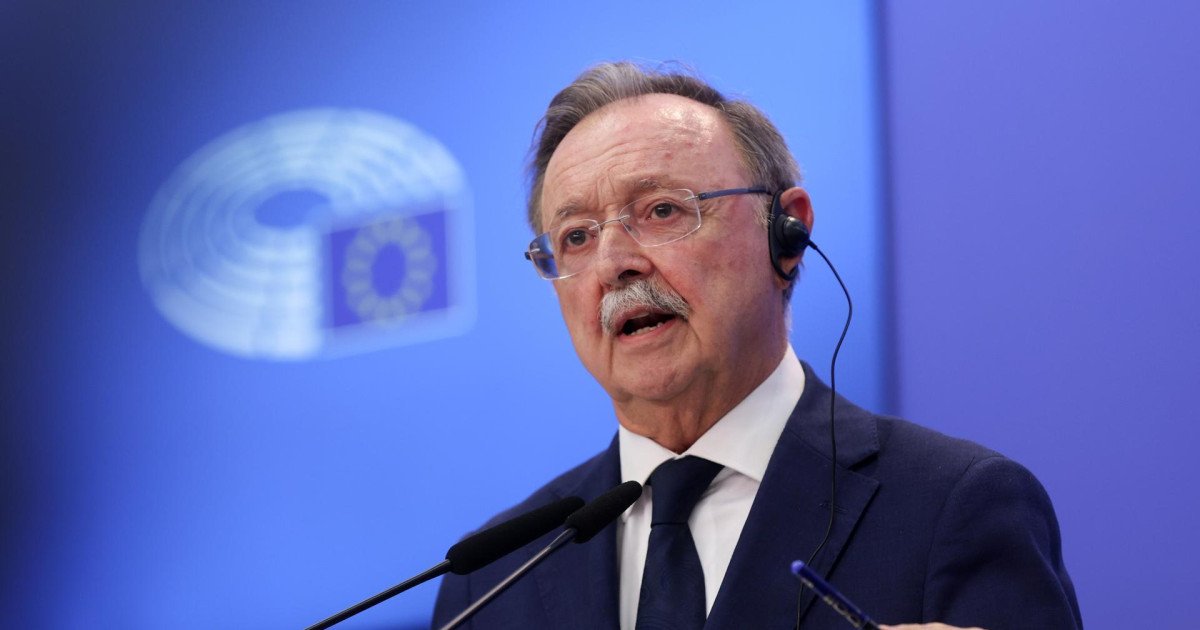
The President of the Government of Ceuta, Juan Jesús Vivas, returned from Brussels with a measure of European understanding, but without what he actually needed: a clear European commitment to adopt the Spanish narrative against Morocco, or an institutional position holding Rabat responsible for what happened in Ceuta and leading to some form of European action against the Kingdom.
The difference between the two matters.
It is entirely normal for European institutions to listen to a Spanish official who comes forward with concerns about migration, borders and security. Turning those complaints into a European policy directed against Morocco is something else. That requires evidence and political agreement within the European Union. Vivas appears to have returned from Brussels without securing the political outcome he was seeking.
After his return, he spoke of receptiveness and understanding. But he announced neither sanctions nor a new European mechanism to penalize Morocco, nor did he secure a European commitment endorsing the accusations he has repeated since the crisis of July 30 and 31.
That point deserves attention.
Vivas’s narrative, as it has been promoted in Spain, has attempted to present the mass arrivals in Ceuta as an almost exclusively bilateral affair: Morocco on one side, Ceuta and Spain on the other. More than 80,000 people entered, according to the figure cited by the Spanish official, and in his view this could not have happened “without Morocco’s knowledge or consent.”
But moving from a political assumption to a demonstrated fact is another matter. Vivas did not bring to Brussels evidence capable of turning that accusation into an established European position.
This is where the Spanish narrative encounters its real difficulty.
Spain knows Morocco very well. It knows the Kingdom through the borders, migration, security cooperation, counterterrorism, trade, investment, ports and, more broadly, through a relationship that has become far wider in recent years than the question of Ceuta and Melilla alone.
Reducing Morocco to the image of a state using migration pressure against a Spanish city may be politically useful in a local debate. It is much harder to make that reading prevail in Brussels, where relations with Rabat are viewed through a much wider European interest.
Vivas travelled to Europe seeking a “clear” position on the status of Ceuta and Melilla as part of Spain and Europe. He also called for a stronger presence of European agencies, better security and technological resources at the borders, and faster procedures for returning those who remain in Ceuta following the mass arrivals, particularly unaccompanied minors.
He also linked his demands to the exceptional €115 million package announced by Europe for Ceuta, arguing that the funds should help restore the situation that existed before the July crisis.
All of these demands can be understood from the perspective of a local government confronting exceptional pressure. What becomes much harder to sustain is the attempt to turn those demands into a political platform against Morocco without providing the evidence needed to substantiate the accusation.
The problem, however, does not end with Vivas.
There are media outlets, social-media accounts, local officials and political voices that recycle old images, attach them to recent events and present European audiences with a ready-made narrative about Morocco. Whenever a migration crisis erupts in Ceuta, the same country is brought back to the centre of the story, accompanied by almost identical accusations.
Sometimes the image becomes more powerful than the event itself.
An old video becomes supposed evidence of a new incident. A scene filmed in one region is used to support a narrative about the border. A political post becomes “information” the following day as other accounts repeat it. Then a political official builds upon that atmosphere, creating a closed circle in which the media and political discourse continuously reinforce one another.
Morocco, meanwhile, does not appear to be in a hurry to enter that circle.
Rabat is currently facing a legislative election. The country is focused on its elections, its domestic debates and a political and institutional sequence with its own priorities. The Moroccan press itself is entering a demanding period: following campaigns, programmes, candidates, institutions and public debate while also monitoring what is happening across the Strait.
Under such circumstances, it is difficult to give every Spanish post or every local statement from Ceuta the space it demands.
And that may be precisely what bothers those waiting for an immediate Moroccan reaction.
Spain has tried different forms of pressure on Morocco in recent years: diplomacy, media campaigns, migration, the discourse surrounding Ceuta and Melilla, repeated attempts to reopen the border debate, and the use of humanitarian or security crises to broaden political confrontation.
Each time, there has been an attempt to keep Morocco in the position of the party that must explain itself.
But Morocco no longer occupies exactly that position.
Rabat no longer approaches Europe simply as a space from which it waits for recognition or approval. The Kingdom has its own partnerships, interests and leverage, as well as international relationships that have become considerably more diversified.
That evolution is essential to understanding the limits of the Spanish narrative.
For Europe, Morocco is not simply Ceuta. It is not simply migration. It is a direct southern neighbour, a security partner, an economic actor, a gateway to Africa and an important interlocutor on the Sahel, migration, energy, trade and investment.
For Spain in particular, geography makes the relationship with Rabat far too complex to be reduced to an electoral speech coming out of Ceuta.
Vivas may obtain political sympathy in Madrid. He may find attentive ears in Brussels. Some Spanish media outlets may continue to raise the pressure. But turning all of this into a European consensus against Morocco requires more than repeating the same narrative.
It requires evidence.
And that is precisely what was missing from the Brussels trip.
There is also a broader question beyond Vivas himself: what do certain Spanish political and media circles actually want from Morocco?
If the objective is to manage migration, cooperation is the logical path. If the objective is to protect Ceuta, security coordination with the neighbouring country that effectively controls the other side of the border cannot be replaced by political statements. If the objective is to obtain additional European financial support, that is a Spanish and European matter.
But if migration becomes an instrument of political pressure on Rabat, then the nature of the issue changes.
Morocco is not obliged to accept the rule that some voices are trying to impose: that every border crisis must end with Moroccan explanations, Moroccan justifications or a Moroccan reaction.
Sometimes refusing to enter the game is itself a position.
There is also a difference between political silence and an absence of the ability to respond. Morocco’s current focus on its elections and domestic agenda does not mean that Rabat is unaware of what is happening on the other side of the Mediterranean.
Diplomacy does not always take place in front of cameras. States do not necessarily reveal all their cards at the moment their opponents expect them to, particularly when the issues involved are connected to multilateral partnerships.
Those waiting for Rabat to enter a daily confrontation with Ceuta’s media or with Vivas may therefore have to wait.
Morocco’s legislative elections have their own timetable. Moroccan institutions have their own agenda. National interests have their own priorities.
The Ceuta issue, however loudly it may be amplified, will not return Morocco to the old image in which some Spanish narratives would still like to confine it.
Even the Moroccan press, which sometimes seems expected to answer everything, must know where to place its energy. It does not need to chase every media campaign coming from Ceuta or Madrid, nor turn every provocation into a headline. Its more difficult responsibility is to distinguish between what deserves a response and what merely seeks to provoke one.
May God help the Moroccan press during this electoral season.
It is being asked to scrutinize politicians, read programmes, follow elections, question institutions and, at the same time, monitor what is coming from the other shore, where some Spanish voices appear to have decided to make Morocco a permanent electoral and media subject.
But Morocco is not obliged to make Spain the centre of its agenda.
The response may come soon. It may also come through channels that do not appear in headlines. It may even emerge from another file altogether, rather than the one Vivas wants to impose as the centre of the relationship. Nothing in the available information, however, allows us to claim that a specific Moroccan response has already been decided or that a particular measure has been adopted.
One thing, however, is clear: the level of pressure Vivas sought to turn into a European position against Morocco in Brussels did not produce the political result he was seeking.
Morocco, meanwhile, is busy with its elections.
And for those who have grown accustomed to setting the timetable of the debate themselves, that may be more unsettling than any angry statement.


