

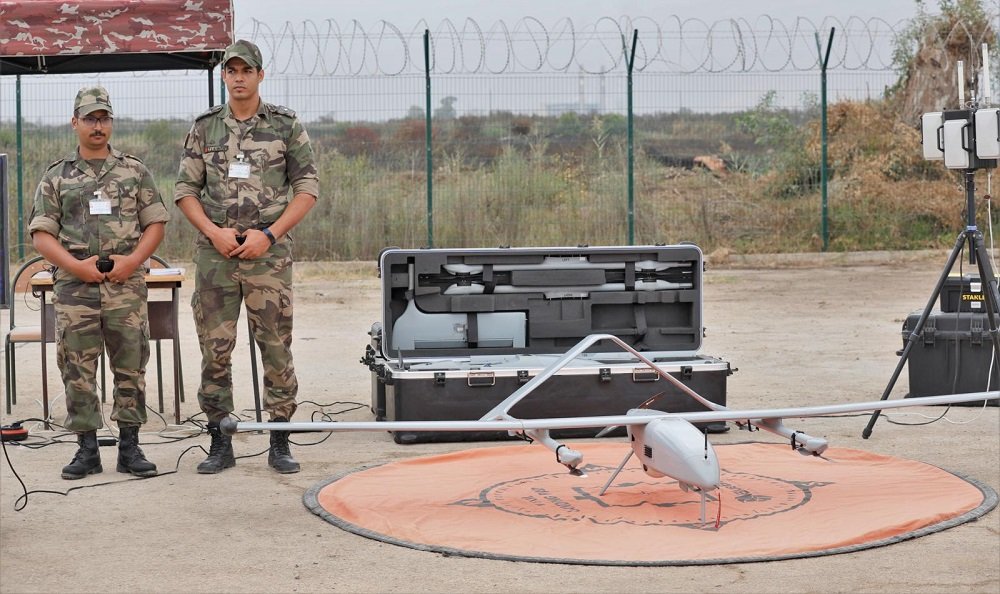
Morocco Under Wise Royal Leadership: When Years of Experience Become a Deterrent Force
The question of armed drones can no longer be reduced to the number of aircraft an army possesses, or even to its technical or legal ability to arm them. What increasingly makes the difference is the time separating the acquisition of a system from its actual integration into military operations.
It is precisely on this ground that Morocco appears to have gained a significant lead over Spain.
According to a report examining the armed-drone capabilities of the two countries, the Kingdom has accumulated several years of real operational experience with drones capable of carrying out precision strikes, while Spain has yet to put its first armed MQ-9 Reaper into service, despite having taken steps for years to develop this capability.
The assessment reported by the Spanish specialist outlet Escudo Digital is particularly revealing. Madrid has been announcing since 2017 its intention to arm its MQ-9 Reapers. Yet the four aircraft reportedly based at Talavera la Real remain, according to the source, without an operational strike capability. The latest known step came in August 2025, with a request to Lockheed Martin, but this has not yet resulted in a fully operational armed capability.
The difference, therefore, is not simply that Morocco acquired drones earlier or in greater numbers. It lies above all in the way those systems were conceived and integrated from the outset.
When Morocco acquired its Bayraktar TB2s in 2021, it did not limit itself to purchasing a surveillance platform. The systems were intended to operate with their control stations and guided munitions. The logic was that of a military tool capable of being used operationally, rather than a capability that would still have to pass through several stages before becoming genuinely armed.
The same logic can be seen in Morocco’s acquisition of next-generation unmanned systems. The Kingdom has also moved forward with the acquisition of MQ-9B systems, within a broader approach to long-range surveillance and strike capabilities.
The real difference, however, becomes visible when one moves beyond contracts and manufacturers’ catalogues and looks at what has happened in the field.
Since the resumption of military operations in the Moroccan Sahara in 2020, the Royal Moroccan Armed Forces have used armed drones against Polisario elements. Several analyses and reports have referred to strikes carried out with guided munitions and to the growing use of these aircraft for surveillance and target engagement.
Such experience produces something that no arms contract can immediately provide: operational reflexes.
Identifying a target under real conditions, establishing the chain of command, determining rules of engagement, coordinating the different elements of the system and assessing the effects of a strike are procedures that cannot be acquired solely in a training centre or during an exercise.
They are built over time, through experience.
This is probably where one of the main gaps between the two countries lies.
Spain may possess MQ-9 Reapers, trained personnel and a fully structured military programme. But until the system has completed all the stages involving weapons integration, crew qualification, control-system adaptation, testing, certification and rules of engagement, possessing the platform does not yet mean possessing the full operational capability.
Even under a favourable scenario, Spain’s first genuinely armed Reaper may not become operational until around 2027. If some stages are delayed, that timeline could move into 2028.
Spain’s Sirtap programme also illustrates this difference in maturity. The surveillance version is expected around 2027, while the armed version still has to pass verification stages and, according to the report cited, does not yet have a definitive entry-into-service timetable. The most optimistic estimates place that capability around 2029 or 2030.
By then, Morocco will already have accumulated several years of operational experience with armed drones.
Modern warfare has profoundly changed the role of these aircraft. A drone is no longer merely a flying eye tasked with observing a territory. It has become a platform capable of monitoring large areas for extended periods, identifying a target, transmitting information in real time and, when the conditions are met, striking with considerable precision.
This evolution also changes the relationship with human risk. An unmanned system makes it possible to maintain a persistent presence in an operational area without directly exposing an onboard crew. The ability to observe and act remotely is therefore becoming an increasingly important element of contemporary military strategies.
But the effectiveness of such a system does not depend solely on its technology.
It depends on the army using it, its procedures, its personnel, its ability to exploit intelligence and, above all, its experience.
That is precisely the dimension that acquisition figures can conceal.
Two countries may possess comparable platforms and still not have the same level of operational capability. One may still be in the process of integration, testing and qualification, while the other may already have completed those stages and be dealing with the concrete realities of battlefield employment.
For Morocco, several years of operational use have transformed the armed drone into a tangible component of its military posture. For Spain, part of that capability remains tied to programmes, procedures and future deadlines.
The gap is therefore also a gap in time.
And in military technology, time can itself become a capability.
Morocco’s defence policy, driven at the highest level of the state by a strategic vision that has given increasing importance to the modernisation of the Royal Moroccan Armed Forces, cannot be measured solely by the purchase of new equipment. It can also be seen in the ability to transform that equipment into operational instruments, integrate it into a coherent military architecture and accumulate the experience required to use it effectively.
It is this continuity between acquisition, integration, training and battlefield experience that gives Morocco an advantage extending beyond a simple comparison of military hardware.
Faced with a Spain still seeking to transform certain theoretical capabilities into operational ones, the Kingdom already possesses an asset that cannot be purchased from a catalogue: several years of real-world experience.
In a form of warfare where decision speed, strike precision, intelligence mastery and the ability to act remotely are becoming increasingly important, that experience itself becomes a form of power.
And a military capability that has already been tested in the field does not stand at the same level as one still waiting to achieve full operational deployment.


