
Saturday, September 19, 2026
HomeNewsAfricaBourita: Ties with Israel Have Not Changed Morocco’s Position on Palestine… and...

Bourita: Ties with Israel Have Not Changed Morocco’s Position on Palestine… and Algeria Has Entered a Logic of Overreach

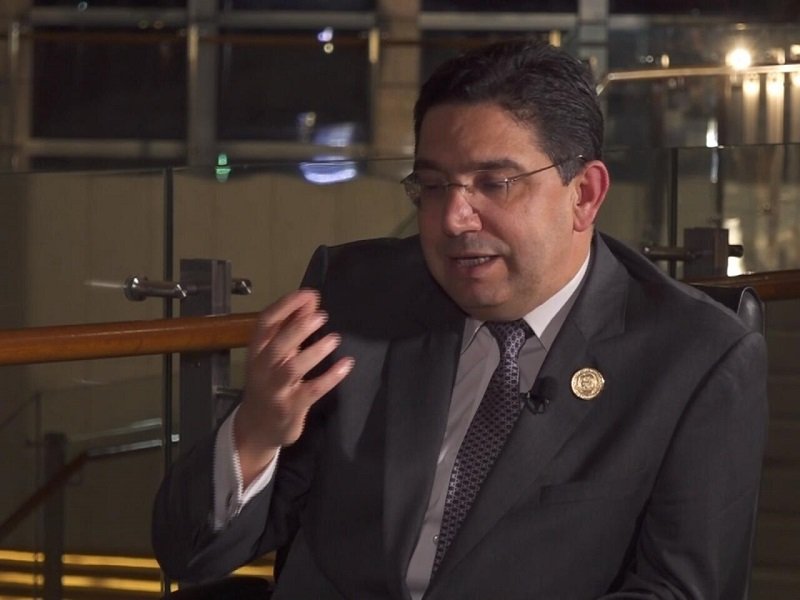
Nasser Bourita stated that Morocco’s resumption of relations with Israel had not changed the Kingdom’s position on the Palestinian issue and that Rabat remained committed to supporting the Palestinian people’s right to establish their own state, while maintaining its support for a two-state solution. The position was expressed during an interview the Moroccan foreign minister gave to RFI and France 24 in February 2022, at a time when the restoration of Moroccan-Israeli relations was generating intense debate over the limits of the new relationship and its possible implications for Morocco’s position on Palestine. Bourita placed the relationship between Rabat and Tel Aviv within a framework different from the reading that equates political, security and economic ties with a change in the Moroccan position on Palestinian rights. He stressed instead that Morocco saw those relations as potentially contributing to a solution that would secure Palestinian rights and statehood.

The timing matters because the interview between the Moroccan foreign minister and RFI and France 24 took place in February 2022, when the restoration of Moroccan-Israeli relations remained a particularly sensitive issue in Arab and African political debate. At the same time, Moroccan-Algerian relations had already entered a phase of rupture and heightened tension. Bourita’s remarks on Palestine therefore have to be read against that specific backdrop.
Asked about accusations that Rabat had begun placing its commercial and military relations with Israel above the Palestinian cause, Bourita gave a direct answer: Morocco, in his words, was “committed alongside the Palestinian people,” and the restoration of relations with Israel “would not change in any way” the Kingdom’s position on the Palestinian issue.
The position Bourita outlined was not built around rejecting Israel’s existence, but around a different political conception of how the conflict should be resolved. Morocco, he said, supports a two-state solution, meaning two states living side by side in peace and security. He added that the development of Moroccan-Israeli relations could also, from Rabat’s perspective, help contribute to securing the Palestinian people’s rights and their independent state.
That point was central to his argument because it showed how Moroccan diplomacy was seeking, at that stage, to maintain two lines that could appear contradictory in political debate: continuing relations with Israel on one side, while preserving the Palestinian issue as a political and rights-based cause independent of the nature of those relations on the other.
Bourita therefore rejected the idea that the relationship with Israel should become the measure by which Morocco’s position on Palestine was judged. When he addressed criticism directed at Rabat inside the African Union, the discussion quickly shifted toward another question: how disagreements are handled within the continental organization, and whether certain states can impose their positions on the others.
The Moroccan minister pointed out that 44 African countries at the time had relations with Israel, using that reality to challenge what he viewed as attempts by some states to alter an established situation within the African Union through political pressure. He singled out South Africa, questioning how a country could maintain relations with Israel domestically while advocating a different position at the level of the continental organization.
Bourita did not present the issue of Israel’s observer status in the African Union simply as an expression of Moroccan support for Israel. He deliberately moved the discussion toward “procedure” and the organization’s rules, arguing that Morocco’s position was first and foremost linked to the application of the African Union’s institutional rules and procedures. The formulation placed the dispute within an institutional framework, rather than reducing it to a political alignment over Israel.
The Algerian dimension became more direct when Bourita was asked about accusations concerning Moroccan-Israeli military cooperation.
He then invoked a diplomatic maxim attributed to Talleyrand concerning the loss of influence through excess and said he had stopped following what was being said in Algeria or by Algerian diplomacy because, in his assessment, there were too many contradictions. Regarding Algeria’s decision to sever relations with Morocco, he pointed out that, according to his account, Moroccan-Israeli relations had not been the sole reason given by Algiers. Algeria had also referred to the Sahara, the 1963 war and other issues.
The interview then reached its most sensitive point: could the political rupture between the two countries turn into a direct military confrontation?
Bourita’s answer was that Morocco “is not on a path of escalation” and does not want to “mortgage the future.” He linked that position to a broader approach he attributed to Moroccan policy: avoiding escalation and focusing on what brings the two countries together rather than expanding the areas of disagreement. Contemporary accounts of the interview similarly reported his emphasis on avoiding escalation between Morocco and Algeria.
The meaning of that answer became clearer when the discussion returned to the Moroccan Sahara. Bourita said that Morocco “is in its territory” and is engaged in “legitimate self-defense,” while stressing that the Kingdom had never sought confrontation. At the same time, he reaffirmed that the settlement should remain within the United Nations framework and be based on the autonomy initiative under Moroccan sovereignty.
His answers drew a distinction between two levels: Morocco’s position on the ground and its conception of a political settlement. According to Bourita, Rabat remained committed to the autonomy initiative as the basis for a solution, while the negotiating framework remained the round tables involving the parties concerned by the regional dispute.
Algeria occupied a different position in that reading from that of a neighboring country merely following the issue from outside. Bourita argued that the evolution of Algeria’s position had made its involvement more visible and presented it as a central party to the dispute. He also challenged Algeria’s reading of the framework established by the UN Security Council, while stressing Morocco’s own adherence to that framework.
This explains why Algeria repeatedly returned to the interview even when the initial question concerned Israel. In the Moroccan reading presented by Bourita, these files were not simply separate issues placed side by side; each helped illuminate the others. Allegations concerning military cooperation with Israel were therefore situated within the broader political confrontation between Rabat and Algiers, while Morocco viewed Algeria’s position on the Sahara as one of the elements explaining the depth of the bilateral tension.
The conversation then moved to Libya, and Bourita’s tone shifted with it. The subject was no longer directly a Moroccan-Algerian confrontation or a dispute over positions inside a regional organization, but a political process that Rabat was seeking to support among competing Libyan actors.
Bourita pointed out that the Libyans themselves had set the date for elections during the Geneva dialogue, and that everyone knew organizing them would be difficult. He nevertheless stressed that the political process had produced an important shift: moving from a logic of military confrontation toward discussion of the constitutional basis and electoral law.
For Rabat, the difficulty therefore lay not only in holding elections, but also in preventing disagreements over their organization from producing an institutional vacuum. Bourita accordingly referred to the parliament, the State Council, the Presidential Council and the government as institutions whose role needed to be preserved, while rejecting a situation in which political disagreement would lead to prolonged paralysis of the state.
The different parts of the interview thus point toward a recurring way of presenting Moroccan foreign policy: according to the position Bourita articulated, relations with Israel do not mean abandoning the Palestinian cause; tensions with Algeria do not mean that Rabat is moving toward war; the confrontation in the Sahara does not mean abandoning the UN framework; and political disagreements in Libya should not result in an institutional vacuum.
One chronological clarification remains essential. The interview from which these statements were drawn took place in February 2022. Some of its contents have subsequently been recirculated without the date being made sufficiently clear, which can create the impression of a recent statement. Available reports and archived accounts of the interview confirm that Bourita’s remarks on Palestine, Algeria, the Sahara and the African Union date from that period.
Morocco-Israel relations have since undergone a further development. On September 16, 2026, Morocco and Israel announced an agreement to upgrade their diplomatic missions to embassies and appoint ambassadors, following a meeting in New York between Nasser Bourita, Gideon Sa’ar and U.S. Ambassador to the United Nations Mike Waltz. The two countries also announced plans to advance air links and several economic files.
That development gives Bourita’s 2022 remarks a new resonance today, without turning them into a 2026 statement. Keeping the two moments separate remains essential to understanding what Bourita was saying at the time and to assessing, through the subsequent facts, what has changed in Morocco-Israel relations.
RELATED ARTICLES

LEAVE A REPLY

Please enter your comment!
Please enter your name here

- Advertisment -spot_img

Most Popular

Recent Comments