

Between Russia’s position on the US draft resolution concerning the Moroccan Sahara and the congratulations conveyed by its ambassador in Rabat to the Kingdom on the occasion of Unity Day lies a defining feature of international relations: states do not operate solely through friendship or hostility, but through calculations of interest and balances of power. Distinguishing diplomatic courtesy from political positions remains essential, particularly when the territorial integrity of the Kingdom is at stake.
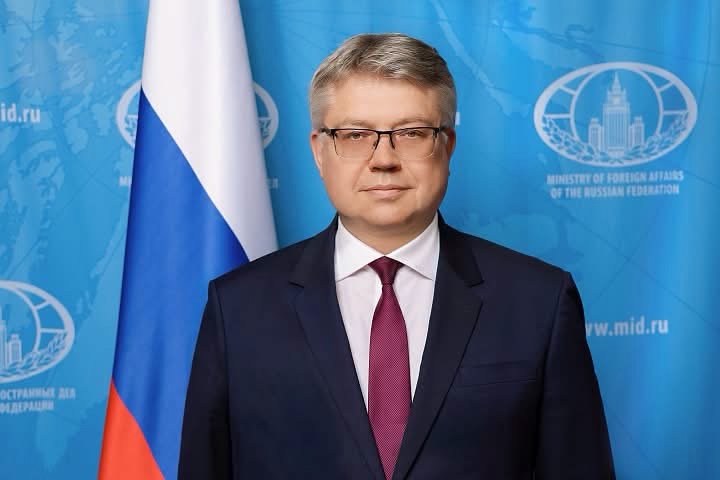
The remarks made by Russia’s ambassador to Morocco, Igor Belyaev, during the celebration of Russia’s National Unity Day deserve to be examined beyond the formal congratulations he extended to the Kingdom of Morocco on the occasion of its Unity Day, established on 31 October each year. Delivered on 4 November 2026 at a reception hosted by the Russian Embassy in Rabat, his speech came at a particular diplomatic moment, just days after Russia took a position at the United Nations Security Council with direct implications for the future of the United Nations Mission in the Moroccan Sahara.
The relationship between these two events deserves attention. Moscow, which congratulated Morocco, is also the capital whose representative exercised Russia’s veto against the US draft resolution on renewing the mandate of MINURSO on 30 October. This was not merely a procedural disagreement over the wording of a UN document. The draft contained significant proposed changes concerning the mission, its designation and its mandate, while reinforcing the Moroccan autonomy initiative under Moroccan sovereignty as the most viable basis for reaching a settlement.
According to the published results of the Security Council meeting, the US draft received eleven votes in favour, while Russia voted against it using its veto power. China, Pakistan and Somalia abstained. The subsequent Russian alternative draft, which proposed extending MINURSO’s mandate for another year without substantially changing its responsibilities, received only three votes in favour, one vote against from the United States, and eleven abstentions.
The Council therefore adopted neither proposal, and the mission’s mandate expired on 31 October 2026 without renewal. This is an essential point in understanding what happened: Russia did not simply block the American draft; it also failed to secure the adoption of its own alternative.
Moscow’s explanation was publicly articulated by its Permanent Representative to the United Nations, Vasily Nebenzia. He argued that the American draft risked reversing progress in the political process and maintained that any settlement formula should be acceptable to both Morocco and the Polisario Front. Russian diplomacy also objected to changing the mission’s designation and reducing certain aspects of its mandate without prior consultations with the parties concerned.
That is Russia’s officially stated position, regardless of how it is assessed from the standpoint of Morocco’s interests or how compatible it may be with the developments that have taken place in the Moroccan Sahara dossier over recent years.
Congratulations to Morocco do not erase Russia’s position at the Security Council
When congratulating Morocco on Unity Day, Belyaev used clear diplomatic language, praising the cohesion and unity of the Moroccan people and their attachment to national values and principles. The statement acknowledges the symbolic importance of a national celebration established following developments in the Moroccan Sahara dossier at the Security Council.
However, it would be excessive to attribute to these words a political meaning that they do not explicitly convey. Recognising the national symbolism of Moroccan unity does not automatically mean that Russia has changed its position on the mechanisms for managing the dispute, nor does it mean that its vote at the Security Council has become aligned with Morocco’s position.
There is a difference between acknowledging the national significance of a celebration and endorsing a state’s political choices in a complex international dispute. A country may maintain economic, cultural and political relations with Morocco while disagreeing with it on certain aspects of issues discussed within international institutions.
The difficulty arises when diplomatic courtesies become a substitute for assessing actual positions, or when the language of friendship is used to create a political impression unsupported by diplomatic actions.
Moscow understands Morocco’s importance in North Africa and its relations with the African, Atlantic and Mediterranean regions. It also understands that Rabat does not reduce its foreign policy to a single international axis, nor does it approach its partnerships through a logic of absolute alignment. This policy gives Morocco diplomatic room for manoeuvre, while requiring it to assess precisely what each partner offers and what limitations that partner seeks to preserve.
Moscow defends its own approach to a settlement, while Morocco measures positions by actions
It would also be reductive to describe Russia’s veto as a position directed against Morocco as a whole. Equally inaccurate would be to present it as a decision in Morocco’s favour simply because Moscow prevented the adoption of the American draft.
The American proposal included provisions that Russia considered to exceed what it regarded as an acceptable framework for UN action. Washington and its partners, on the other hand, viewed the proposed changes as a response to a political reality that had evolved over recent years. The disagreement centred on the nature of the UN mission, its future and the political basis on which the settlement process should proceed.
This divergence was clearly reflected in the British position. London criticised Russia’s veto, arguing that it threatened the mission’s continued deployment and obstructed progress in the political process, while reaffirming that Morocco’s autonomy initiative represented the most credible, viable and realistic basis for a lasting settlement.
For its part, Morocco, according to statements attributed to Foreign Minister Nasser Bourita in the published reporting, had prior knowledge of Russia’s intended position and chose to regard the situation as an opportunity to bring about a change in the management of the dossier, rather than make concessions on the content of the American draft to secure its adoption.
Placed alongside Moscow’s officially stated position, this information shows that Rabat does not base its policy on expecting complete convergence with Russia, the United States or any other major power. Its approach is to defend its national principles while assessing the opportunities created by international positions and the constraints they impose.
Nevertheless, it is impossible to classify the Russian veto as an absolute gain or loss for Morocco without examining its practical consequences for the future of the UN presence and the political process. The veto blocked the American draft but produced no alternative resolution, leaving the mission in an institutional impasse after its mandate expired.
Ten years of strategic partnership: What does Moscow expect from Rabat?
The Russian ambassador also described 2026 as a particularly important year for bilateral relations, marking the tenth anniversary of the joint statement on deepening the strategic partnership between the Kingdom of Morocco and the Russian Federation, adopted by King Mohammed VI and President Vladimir Putin in Moscow on 15 March 2016.
That declaration was more than a ceremonial diplomatic gesture. It formed part of a series of agreements intended to expand cooperation in investment, trade, the movement of goods and vehicles, and other sectors. Among the priorities announced at the time was improving Moroccan agricultural products’ access to the Russian market and achieving a greater balance in bilateral trade.
Ten years later, Moscow continues to speak of developing cooperation in industry, energy, agriculture, investment, education and tourism. Yet diplomatic language alone cannot establish how far these objectives have been achieved.
The actual performance of a strategic partnership cannot be assessed solely through the number of agreements signed or the level of relations between political leaders. It must also be measured through the volume and balance of trade, investments actually implemented, technology transfer, job creation and the continuity of joint projects.
The ambassador’s speech, as published, does not provide a detailed financial assessment that would make it possible to measure the achievements of the past decade or establish the possible gap between announced commitments and recorded economic results.
The participation of Morocco’s Head of Government, Fatima-Zahra Mansouri, in the Russia-Africa Summit held in Moscow on 28 October 2026 adds another dimension to this assessment. She represented King Mohammed VI at the third summit, accompanied notably by Foreign Minister Nasser Bourita and Morocco’s ambassador to Moscow, Lotfi Bouchaara.
The summit took place just two days before the Security Council vote concerning the Moroccan Sahara. Held under the theme of peace, security and development, it focused on trade, investment, energy, agriculture and technology.
This chronological proximity does not prove the existence of a political agreement or a specific understanding concerning Russia’s vote. No published evidence establishes a direct link between Morocco’s participation in the summit and Moscow’s subsequent decision. It does, however, demonstrate that political and economic communication channels remained open even as disagreements over the Moroccan Sahara were about to surface at the Security Council.
This is one of the defining characteristics of relations between states: cooperation can continue on certain issues even when positions diverge on others.
Economic and human figures: What they indicate and what they do not prove
On education, the ambassador stated that more than 4,000 Moroccan citizens had studied at Russian higher education institutions during the 2024–2025 academic year. This figure is consistent with published information from Russia’s Ministry of Education, which reported the presence of more than 4,000 Moroccan students at Russian universities during the same period.
Beyond its immediate academic dimension, this cooperation represents a lasting channel of communication between the two societies. Moroccan students educated in Russia can contribute to professional and cultural connections that continue after their return to the Kingdom. However, further development depends on mutual recognition of qualifications, the quality of education, employment opportunities for graduates and the relevance of academic specialisations to the needs of the Moroccan economy.
On tourism, Belyaev reported approximately 27,700 trips by Russian citizens to Morocco in 2025, representing an increase of 39.6 per cent compared with the previous year.
The nature of this indicator requires attention. It refers to the number of trips reported by the ambassador, not necessarily the number of distinct visitors, since the same individual may travel more than once. Likewise, percentage growth alone is insufficient to assess the economic benefits of Russian tourism without additional information on visitor spending, average length of stay and geographical distribution.
Nevertheless, the continuation of direct air connections and growing Russian interest in Morocco provide practical opportunities for developing tourism, particularly in an international environment where destinations compete increasingly to attract new markets.
These indicators, like those relating to higher education, are more readily measurable than the general expressions regularly used in diplomatic statements about historical friendship and mutual understanding.
Russian and Moroccan Unity Days: A shared name, different historical foundations
The ambassador also referred to the historical origins of Russia’s National Unity Day, celebrated on 4 November in memory of the events of 1612, when popular volunteer forces led by Kuzma Minin and Dmitry Pozharsky recaptured Moscow from Polish-Lithuanian forces during the period known in Russian history as the Time of Troubles.
The modern form of this public holiday dates back to 2005. It highlights the cohesion of Russian society, which encompasses numerous nationalities, religions and languages. Belyaev recalled that Russia is home to more than 190 peoples and that over 300 languages are used across the country. He also noted that 2026 had been designated the Year of Unity of the Peoples of Russia by presidential decree.
Morocco’s Unity Day, by contrast, has a different historical and political foundation. A Royal Cabinet statement issued on 4 November 2025 announced the designation of 31 October as a national holiday under the name “Unity Day”, in reference to the developments in the national cause following the adoption of UN Security Council Resolution 2797 in 2025.
The Royal statement linked the celebration to national unity and the territorial integrity of the Kingdom, as well as to developments in the process concerning the national cause.
The similarity in the names of the two celebrations therefore does not mean that they share the same historical or political foundations. The Russian ambassador’s decision to extend congratulations to Morocco during an official reception at his country’s embassy, just days after the veto, constitutes a diplomatic gesture worthy of analysis, but not evidence of a change in Russia’s position.
International relations are not governed by congratulations
Any assessment of Russia’s position must distinguish between three levels: its relationship with the Moroccan state, its position on Morocco’s national cause, and its approach to the international mechanisms through which the dispute is managed within the United Nations.
Moscow may maintain a strategic partnership with Rabat, regard Morocco as an important African partner and expand trade, educational and tourism cooperation, while at the same time defending an approach to the future of MINURSO and the mechanisms for a settlement that differs from those of Morocco and the United States.
This does not deprive Russia’s congratulations of diplomatic value. It does, however, prevent them from being transformed into a political endorsement that Moscow did not express at the Security Council.
This reality is not unique to Russia. Major powers do not make decisions on the basis of diplomatic courtesies or personal relations between officials. Their decisions are shaped by strategic interests, negotiating positions and calculations within international institutions. A country may therefore find common ground with Morocco on an economic issue, disagree with it on a political matter and share interests with it on a third issue.
For Morocco, the objective is not to seek partners who agree with every one of its positions, since such an expectation is unrealistic in international relations. Rather, it is to build partnerships that respect national interests while preserving the ability to assess every position according to its substance and consequences.
The Moroccan Sahara issue, however, is not an ordinary matter that can be handled through the logic of reciprocal diplomatic courtesies. It concerns sovereignty and the territorial integrity of the Kingdom. International positions on this issue must be assessed through resolutions, voting records and official statements, not simply through congratulatory messages delivered on national occasions.
The Russian ambassador’s speech confirms the continuation of dialogue between Rabat and Moscow, but it does not alter one essential fact: on 30 October, Russia chose to exercise its veto against the American draft resolution, while its own alternative proposal failed to obtain the required majority.
These are the facts that should remain at the centre of any assessment of Moroccan-Russian relations: cooperation remains open and dialogue continues, but the positions of states are measured by the decisions they take when issues reach the moment of real diplomatic testing.


