

Polisario Declares Readiness to Negotiate with Morocco Following the End of MINURSO’s Mandate: Rabat Moves to Manage the Post-Mission Phase
The Polisario Front did not wait long before announcing its willingness to resume negotiations with Morocco. On Wednesday, 4 November 2026, just hours after the Royal Cabinet issued a statement outlining the instructions of His Majesty King Mohammed VI concerning the management of the period following the end of MINURSO’s mandate, Mohamed Yeslem Beissat, the separatist movement’s official in charge of foreign affairs, declared from Algiers that the Polisario was prepared to engage in a new political process with Morocco aimed at reaching a settlement of the dispute.
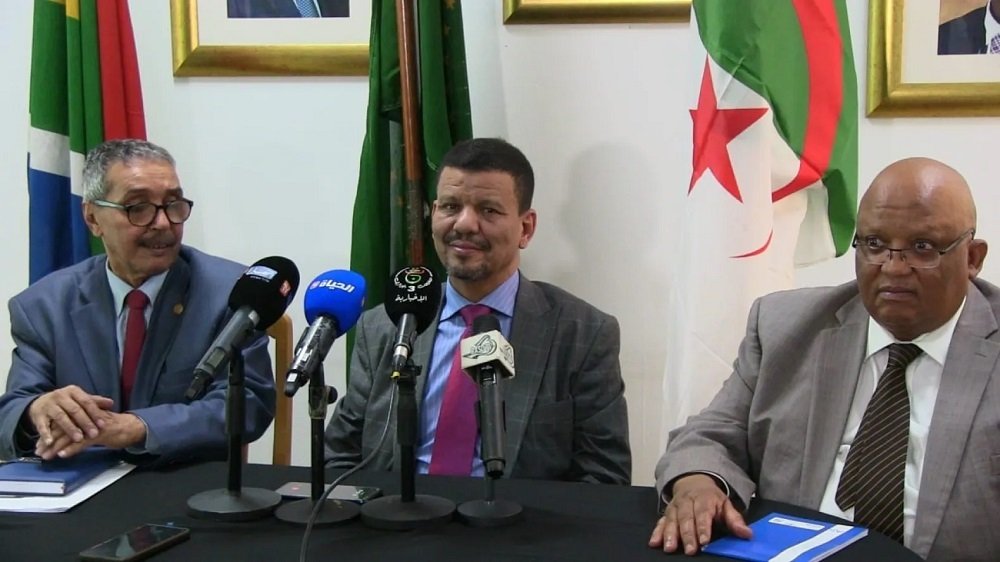
The statement came after the eighth session of the Diplomatic Forum of Solidarity with the Sahrawi People, held at the Embassy of South Africa in Algiers, with representatives of several countries supporting the Polisario’s position in attendance, under the chairmanship of Zimbabwe’s ambassador. Beissat’s remarks, however, went beyond a straightforward declaration of willingness to engage in dialogue. He attached conditions relating to international reference frameworks and what the movement describes as the right to self-determination, including independence. This formulation brings back to the forefront the fundamental divergence between Morocco’s position and the Polisario’s conception of the political settlement.
The timing of the announcement needs to be examined alongside developments at the United Nations Security Council in the preceding days. On 30 October, the Council failed to adopt the American draft resolution that proposed extending MINURSO’s mandate for another year, until 31 October 2027, while also suggesting a change to the mission’s name and adjustments to some of its functions. The draft received eleven votes in favour but was blocked by Russia’s veto, while three members abstained. A competing Russian draft, which proposed renewing the mandate without substantial changes, also failed to secure the nine votes required for adoption.
These details are essential to understanding precisely what happened. MINURSO did not leave the Kingdom’s southern provinces immediately following the vote, nor did the Security Council adopt a separate resolution ordering the immediate evacuation of its personnel and equipment. What actually occurred was the failure to renew its mandate, which expired on 31 October 2026. This development opened a new period of uncertainty regarding the mission’s operational status and the arrangements for ending its presence.
Morocco’s position in response to this development was clearly expressed. In its statement of 30 October, the Royal Cabinet described the non-renewal of the mandate as an important development in the process concerning the national cause. Morocco also indicated that the mission’s presence in the southern provinces, including its personnel, vehicles, equipment and symbols, was expected to come to an end in the following days. The statement placed this development within the broader evolution of international positions towards Morocco’s Autonomy Initiative under Moroccan sovereignty, noting that more than two-thirds of UN member states support this framework as a basis for a political settlement.
During the working session chaired by King Mohammed VI at the Royal Palace in Rabat on 4 November, attended by Head of Government Fatima Zahra Mansouri, Royal Adviser Fouad Ali El Himma, Interior Minister Abdelouafi Laftit, and Lieutenant General Mohammed Berrid, Inspector General of the Royal Armed Forces and Commander of the Southern Zone, official discussions moved towards the measures required to manage the next phase.
The Royal instructions were not limited to reaffirming priorities relating to territorial integrity, national security and the safety and tranquillity of citizens in the southern provinces. They also tasked the Coordination Office with MINURSO, operating under the Ministry of the Interior, with accompanying the process of winding down and withdrawing the mission, facilitating the related procedures and ensuring that the process takes place in an organised manner and in a spirit of cooperation with the United Nations.
The statement also reaffirmed Morocco’s continued commitment to the ceasefire, independently of the expiry of the UN mission’s mandate. This clarification is particularly significant given that the regional situation remains affected by unresolved sources of tension on the ground, while all parties retain a responsibility to avoid any escalation that could undermine stability.
Returning to Mohamed Yeslem Beissat’s remarks, the announcement of readiness to negotiate does not mean that the Polisario has presented a new vision for a settlement or abandoned its previous positions. The official specifically insisted that any negotiations should guarantee, in the movement’s terminology, the exercise of self-determination, including independence. He also criticised Morocco’s Autonomy Initiative, describing it as rooted in a colonial approach, while calling on countries supporting the Polisario to maintain their backing.
The wording therefore indicates that the declared openness to dialogue remains conditioned by the fundamental disagreement over the political framework that should guide negotiations. Security Council Resolution 2797, adopted on 31 October 2025, which extended MINURSO’s mandate until the end of October 2026, had called on the parties to engage in discussions without preconditions, on the basis of Morocco’s Autonomy Initiative. It also noted that genuine autonomy could represent the most feasible solution. However, since the American draft seeking to renew the mandate in October 2026 was not adopted, its provisions cannot be treated as a new Security Council decision.
For its part, Morocco stated in the Royal Cabinet communiqué of 4 November that the diplomatic momentum initiated by King Mohammed VI would continue at both bilateral and regional levels. This would proceed alongside the implementation of major development projects in the southern provinces, the preservation of national sovereignty and the fulfilment of the Kingdom’s international commitments.
The significance of these developments extends beyond the question of whether a UN mission continues to operate. The period now opening requires clarification of the arrangements for the post-MINURSO phase, the implications for United Nations mechanisms connected with the dispute, the future of mediation efforts and the guarantees needed to preserve stability on the ground. As for the Polisario’s announcement, its real significance will depend on whether the movement can move beyond political declarations and formulate a clear negotiating position that takes account of the evolution of Security Council frameworks and the positions adopted by a growing number of influential countries.
Morocco, meanwhile, is approaching the post-MINURSO phase through an integrated approach combining the consolidation of national sovereignty, continued development in the southern provinces, preservation of the ceasefire and sustained diplomatic engagement towards a definitive settlement of the dispute on the basis of the Autonomy Initiative under Moroccan sovereignty.


