

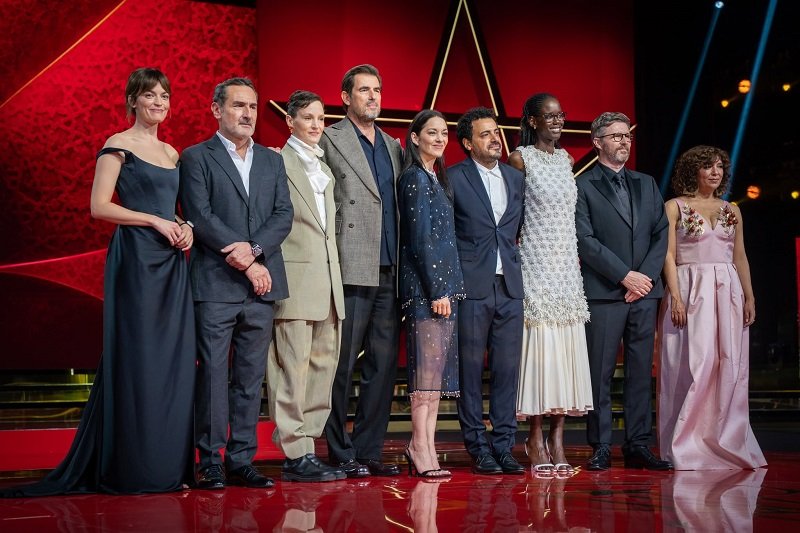
From the red carpet to the screening rooms and conversations with filmmakers, Marrakech is once again positioning itself as an international meeting point for cinema. Yet the Festival’s deeper significance also lies in what this platform can offer Moroccan filmmaking: production opportunities, greater visibility for emerging talent and new avenues for international cooperation.
The 23rd Marrakech International Film Festival, running from 20 to 28 November 2026, opens a new chapter in the event’s international presence at a time when major film festivals are expected to do more than bring celebrities together and screen films. Their standing is increasingly measured by their ability to connect different film industries, create opportunities for emerging filmmakers and link artistic creation with production, distribution and cross-border cooperation.
The opening ceremony, held on Friday, 20 November, under the High Patronage of His Majesty King Mohammed VI, brought together prominent figures from cinema, the arts, culture and the media. The red carpet once again placed the Ochre City at the centre of international attention. But this year’s programme extends well beyond the opening spectacle. It brings together the official competition, gala screenings, Moroccan cinema, tributes and direct encounters with actors and filmmakers representing a wide range of cinematic traditions.
This diversity offers one of the most revealing ways to understand the Festival’s current direction. Marrakech is not simply hosting films and established names; it is continuing to strengthen its position within a network of festivals competing to discover new talent, attract industry professionals and give films opportunities to reach audiences beyond their domestic markets.
The Official Competition: Investing in Emerging Filmmakers
The official competition places thirteen feature films at its centre, all first or second works by their directors, competing for the Golden Star. This selection deserves particular attention because it gives filmmakers still developing their careers a place in the main competition, rather than concentrating visibility on works that have already secured international recognition.
The jury is chaired by French actress Marion Cotillard, an Academy Award winner. Its members include Danish actor Claes Bang, Luxembourgish actress Vicky Krieps, French-British actress Emma Mackey, French actor and director Gilles Lellouche, Tunisian filmmaker Kaouther Ben Hania, British director Andrew Haigh, French-Senegalese filmmaker Ramata-Toulaye Sy, and Moroccan director and producer Saïd Hamich Benlarbi.
The jury brings together different artistic perspectives, from acting traditions in American and European cinema to auteur filmmaking and documentary and narrative approaches. Saïd Hamich Benlarbi’s presence also gives Morocco a voice within the jury. He previously participated in the Festival in 2024 with his film Across the Sea and returns this time in a role that places him among those assessing the competing works.
The selected films address subjects that reach well beyond the borders of their countries of production. Benimana, by Marie-Clémentine Dusabejambo, explores the wounds of memory and the rebuilding of human relationships after the genocide against the Tutsi in Rwanda. House of Wind, by Augustin Bernard Kouemo Yangou, examines the relationship between a Cameroonian mother and her children who have moved to Europe. Congo Boy, by Rafiki Fariala, follows the dreams of a young refugee in the Central African Republic who finds a means of self-expression through music.
In Rage, by Rami Kadiha, Lebanon’s economic crisis provides the backdrop for a bank robbery story. Sad Girls, by Fernanda Tovar, examines the friendship between two young women in the aftermath of sexual assault. The World Before, by Léon Dan Bi, returns to the first experiences of romantic love, while Marie Madeleine, by Jessica Genus, opens a reflection on freedom and social contradictions.
The competition also includes The Eclipse, by Manuel Fichter; Our Share of Sand, by Shalini Adnani; A Day in the Life of Joe: Phaedra Chapter, by Jacqueline Lentzou; Alkebulan, by Yassine Marco Marrocu; Waves of Silence, by Farzad Samsami; and In the Shadow of Cairo, by Rani and Salim Masalha.
Three of these films are receiving their world premieres, including Alkebulan, by Moroccan filmmaker Yassine Marco Marrocu, whose narrative moves between the desert of the 1960s and Italy in the 1930s; Waves of Silence, filmed in Morocco and addressing the tragedy of migrants who perish at sea; and In the Shadow of Cairo, which approaches Egyptian Coptic society through a suspense-driven story.
Together, these selections bring memory, history, migration, social change and human relationships into the competition. Their significance therefore goes beyond the award itself. They reveal filmmakers searching for new cinematic languages to explore realities that are not confined by national borders.
In her opening remarks, Marion Cotillard praised the Festival’s commitment to first and second films, describing them as works marked by ambition and courage and emphasising the opportunity they provide to filmmakers at the beginning of their careers. She also highlighted cinema’s ability to create a sense of human connection in an increasingly divided world through stories and emotions that cross borders.
Moroccan Cinema: A Presence in the Competition and Beyond
Morocco’s participation deserves a separate examination. It cannot be reduced to a single film or to the presence of Moroccan artists in the Festival’s parallel activities.
Director Yassine Marco Marrocu enters the official competition with Alkebulan, a Moroccan-Hungarian-Qatari co-production receiving its world premiere in Marrakech. Moroccan actor Amine Ennaji also appears in Waves of Silence, filmed in Morocco by Iranian-Norwegian director Farzad Samsami.
The Moroccan Cinema Panorama gives space to six feature and documentary films. Among them is Bardi, by Tala Hadid, which opens the section, as well as Masks, by Mohamed Mouftakir, presented as a world premiere.
Official Festival information indicates that twelve Moroccan films are included across the different sections, alongside three additional films shot in Morocco. The figure matters not simply as a measure of visibility, but because it raises a central question: what is the actual position of Moroccan production within international cinema networks? Does a place in a prestigious programme translate into lasting opportunities for production, distribution and cooperation?
This edition offers several forms of Moroccan participation: films competing for the main award, others featured in the Panorama, projects supported through the Atlas Workshops, and La Más Dulce, by Leïla Marrakchi, which represents Morocco in the Oscar race, according to the Festival’s official announcement.
The Atlas Workshops are particularly important in this regard. The professional programme is designed to support emerging talent and the development of film projects. The Festival Foundation states that eleven projects from the general selection benefited from its support. The programme’s value lies in connecting the development stage with professional networking, financing opportunities and international co-production — essential links in a film industry that cannot be built solely around making a film and presenting its premiere.
The next question concerns measurable outcomes: how many projects move into production? How many films secure distributors abroad? And what share of the partnerships developed around the Festival benefits Moroccan filmmakers? Participation in an official selection opens doors, but it does not, by itself, demonstrate the strength of the national film industry.
“Mona”: An Individual Story Opens an International Programme
The Festival has selected Mona (The Debut), directed by American filmmaker Jesse Eisenberg, as its opening film. The cast includes Julianne Moore, Paul Giamatti, Halle Bailey and Colton Ryan.
The story follows Mona Friedman, a homemaker whose life takes a new direction when she receives a small role in a neighbourhood theatre production. What initially appears to be a minor part becomes an opportunity to discover her own voice and express herself freely. The experience gradually develops into a personal struggle that leads her to reconsider her place in a life she has long known as routine.
The choice opens the Festival with a story about self-discovery through art and the space that theatre and performance can create for people who have remained distant from their own ambitions. It is a human-centred entry point that fits the Festival’s interest in works exploring individual experience and personal transformation.
Beyond the official competition, the programme includes gala screenings, the Horizons section, the Eleventh Continent, the Moroccan Cinema Panorama, screenings for young audiences and families, as well as films associated with this edition’s tributes.
These sections bring together widely distributed productions, independent works and films exploring freer narrative forms. They also address audiences looking beyond established stars, seeking films and directors whose work does not always find an easy path into commercial cinemas.
Three Tributes: A Cinematic Legacy Across Generations
The 23rd edition pays tribute to three artists whose careers have left distinctive marks on cinema: Americans Jeff Goldblum and John Turturro, and Moroccan artist Younes Megri.
Bringing these three names together means more than celebrating individual careers. Jeff Goldblum represents an American film journey spanning several decades and moving between science fiction, comedy and drama. John Turturro has made his mark in both independent and commercial cinema, while also pursuing directing and theatre.
Younes Megri represents a Moroccan artistic experience at the intersection of music and cinema. A singer, actor and film composer, he has left a lasting impression on Morocco’s cultural memory through his musical identity and screen performances.
The tribute also carries a cultural significance: it places a Moroccan artist within the same international space of recognition as established American figures, while drawing attention to the contribution of national artistic careers to the formation of cinematic memory.
“Conversations”: Cinema Beyond the Screen
The “Conversations” programme adds another dimension to the Festival by moving the audience’s encounter with cinema beyond the screening itself and towards the experiences that shape the creative process.
This year, the programme welcomes Jeff Goldblum and John Turturro, alongside Monica Bellucci, directors James Gray and Cristian Mungiu, Leïla Marrakchi, Luca Guadagnino, Xavier Dolan, Rian Johnson, and French screenwriter and director Arthur Harari.
The value of these encounters lies in the opportunity to explore creative journeys, decisions, risks and experiences that have accompanied filmmakers and actors across different works and cinematic genres.
The presence of directors from distinct artistic traditions also gives audiences an opportunity to understand different approaches to storytelling, character development and visual language, from major Hollywood productions to auteur cinema and narratives rooted in intimate human experiences.
Leïla Marrakchi brings a Moroccan perspective shaped by her exploration of social change, family relationships and individual choices. Monica Bellucci, meanwhile, represents the international acting dimension that connects European cinema with global productions.
James Gray, Cristian Mungiu, Luca Guadagnino and Xavier Dolan offer Marrakech audiences the opportunity to encounter different directing approaches and distinct ways of examining the world and the relationship between cinema and society.
“Conversations” can therefore move beyond their promotional function and become a space for transmitting cinematic knowledge, particularly when discussions address the actual process of filmmaking, changes in screenwriting and directing, and the transformations taking place across production practices.
Marrakech and the Film Ecosystem: Beyond the Red Carpet
The 23rd edition continues until 28 November with a programme combining screenings, tributes, professional encounters and artistic exchanges. Since the establishment of its Foundation in 2002, the Festival has become part of Morocco’s international cultural presence and a meeting place for cinematic experiences from different continents.
Yet the contribution this event can make to Moroccan cinema depends on what takes place beyond ceremonies and moments of celebration. The Festival offers an international platform, the Atlas Workshops provide a professional bridge for project development, the Moroccan Cinema Panorama gives national productions visibility, and the encounters create opportunities for contact between artists, producers and distributors.
These elements provide a foundation on which Morocco can build a stronger position within the global film industry. That potential, however, depends on whether relationships established during the Festival continue afterwards and whether Moroccan projects find pathways into financing, production, distribution and international markets.
Marrakech has built a significant reserve of visibility, credibility and international appeal, enabling it to attract influential figures from world cinema. The challenge worth following is whether this capital can become an additional force for Moroccan filmmaking, allowing the Festival’s impact to extend beyond nine days of screenings and encounters and translate into professional opportunities and production dynamics throughout the year.


