
Saturday, August 8, 2026
HomeNewsAfricaColombia Changes Course… and Recognizes Morocco’s Sovereignty over the Sahara

Colombia Changes Course… and Recognizes Morocco’s Sovereignty over the Sahara

Colombia’s announcement recognizing the sovereignty of the Kingdom of Morocco over its Sahara was not merely a diplomatic wording adjustment or the replacement of one phrase in an official statement. What happened in Cali on Friday carries a political significance that goes far beyond the bilateral relationship between Rabat and Bogotá. It moves one of Latin America’s positions from the camp of recognition of the so-called “Sahrawi Republic” to that of recognition of Moroccan sovereignty, while opening a new chapter in a file that, for years, has stood at the intersection of diplomacy, regional politics, and geopolitics.
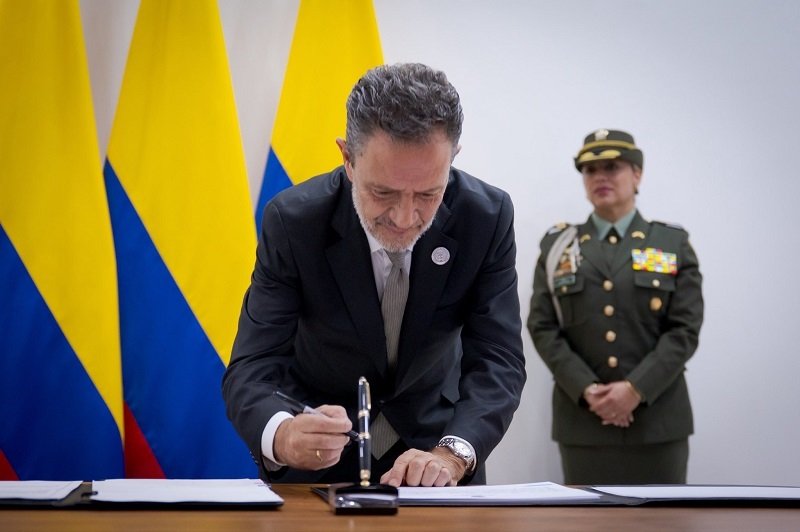
The announcement came following a meeting between Moroccan Foreign Minister Nasser Bourita and Colombia’s Vice President José Manuel Restrepo, in the presence of Foreign Relations Minister Omar Bola Escobar. There, the Colombian side left little room for interpretation. Escobar explicitly declared that his country “recognizes Morocco’s sovereignty over its Sahara,” thereby bringing an end to a period during which Bogotá had adopted a different position, after the government of President Gustavo Petro restored recognition of the so-called “Sahrawi Republic” and resumed relations with it in 2022.
This is precisely where the significance of the decision lies: Colombia is not merely adding another position to Morocco’s diplomatic balance sheet; it is withdrawing a position that had previously been counted on the other side. The distinction is profoundly political. Moroccan diplomacy does not measure diplomatic shifts solely by the number of countries declaring their support, but also by the number of states that reconsider previous positions and reassess their calculations regarding the dispute.

The Colombian shift also appears inseparable from the political transformation taking place within the country itself. The election of Abelardo de la Espriella as Colombia’s president has produced a new political environment, more distant from the line that characterized the Petro era. This had already led observers to anticipate a possible repositioning by Bogotá on the Sahara issue. The diplomatic move has now given that political transformation a clear external expression.
Yet reducing the decision solely to Colombia’s internal political change would be an incomplete reading. Bogotá is not simply taking a position on a territorial dispute thousands of kilometers away. It is redefining a relationship it considers strategically valuable. Colombia’s vice president described Morocco as “Colombia’s first ally in Africa” and expressed his country’s desire to build a strategic partnership with the Kingdom. The Sahara issue therefore becomes part of a broader reconstruction of Moroccan-Colombian relations, rather than an isolated file detached from the economic and political interests that both countries seek to develop.
This is precisely what explains the language chosen by Nasser Bourita. The Moroccan minister did not treat the decision merely as a symbolic gain. He described it as “historic” and directly linked it to the possibility of giving strong momentum to bilateral relations. More importantly, he placed the shift within an economic and geopolitical framework when he spoke of the possibility of Morocco and Colombia becoming reciprocal economic platforms, with each country benefiting from the other’s position in Africa and Latin America.
The deeper meaning is that Rabat does not want the Sahara issue to remain confined to the logic of “recognitions” alone. It seeks instead to transform political positions into a network of interests and partnerships that makes relations with Morocco part of the strategic calculations of other states. The more Morocco becomes a gateway to Africa, and Colombia a gateway to Latin America, the more the Sahara issue ceases to be an isolated diplomatic file and becomes an element within a broader system of relations and interests.
From this perspective, Colombia’s move acquires an additional significance. Latin America has historically been one of the arenas in which Morocco’s opponents succeeded in building political and diplomatic support for the separatist cause. Therefore, the decision of a regionally significant country such as Colombia to move from recognition of the so-called “Sahrawi Republic” to recognition of Moroccan sovereignty cannot be separated from the broader struggle over how the dispute is perceived in the region. Moreover, the Colombian Parliament had previously expressed positions supportive of Morocco’s territorial integrity, indicating that the country’s political position was never entirely unified around recognition of the separatist entity.
Another point is equally important: the Colombian decision reinforces the idea that states’ positions are not necessarily fixed forever, and that diplomacy can reorder priorities when political visions and calculations of interest change. This is also an important lesson for Morocco. Diplomatic gains do not become final victories simply because a statement has been issued. They require political, economic, and institutional consolidation capable of making the shift sustainable.
Bourita’s presence in Cali, representing King Mohammed VI at the inauguration ceremony of Colombia’s new president, also carries a message that goes beyond protocol. Morocco did not wait for the new position to be announced and then treat it as a completed outcome. It was present at the very moment of political transition, as if to signal that rebuilding the relationship begins from the first day of the new phase. Bourita emphasized that this presence reflected the Kingdom’s determination to accompany the new dynamic and elevate bilateral relations to a higher level.
From a broader perspective, Colombia’s move comes within an international context that, over recent years, has strengthened the position of the Moroccan proposal, with a growing number of countries viewing the autonomy initiative as a serious and realistic basis for a settlement. Yet it is important not to confuse this trajectory with the claim that the dispute has been legally settled at the international level. The Sahara issue remains within the United Nations framework, and a final settlement remains linked to negotiations and the UN-led process. The strength of Morocco’s position lies in the expanding political support for its autonomy proposal, not in claiming that the international process has come to an end.
This is why the calmest reading of the event should not focus merely on the question of “who won and who lost.” It should instead ask: What made a country that had previously adopted a different position reconsider its calculations? The answer cannot be found in the Colombian statement alone. It lies in the convergence of three elements: an internal political shift in Colombia, the growing strategic considerations underlying its relationship with Morocco, and the accumulation of Moroccan diplomatic efforts that have made distancing oneself from Rabat more costly and rapprochement with it more clearly beneficial.
At a deeper level, what has happened confirms that the Sahara issue has entered a phase in which traditional diplomacy alone is no longer sufficient. The contest is no longer only about statements and positions within international organizations. It is also about building long-term relationships, creating shared interests, and consolidating Morocco’s image as a continental and international partner capable of connecting Africa with Europe and Latin America.

This is why Colombia’s decision should be read without excessive emotion. Morocco’s national interest does not lie in turning every recognition into a passing moment of celebration. It lies in transforming these diplomatic shifts into a strategic accumulation that strengthens the Kingdom’s territorial integrity and reinforces Morocco’s position within its African and international environment. Recognition matters, but it becomes more meaningful when it turns into partnership. Partnership becomes more durable when it rests on mutual interests. And it is interests that give political positions their ability to endure.

In the end, Colombia has not merely changed its position on the Sahara issue; it has changed the place of that issue within its relationship with Morocco. That is the dimension that deserves attention. When a state withdraws its recognition of a separatist entity and instead declares its recognition of Morocco’s sovereignty over its Sahara, the message is not only about the past. It is also about the future: Bogotá is redrawing its relationship with Rabat, and Rabat now has an opportunity to turn this shift into a new bridge between Morocco, Africa, and Latin America.

Morocco’s challenge at this stage is therefore no longer simply to see states change their positions. It is to ensure that those changes become part of a cumulative process in which the Kingdom’s national and territorial unity becomes a firmly established political reality within its international relations—not merely a headline renewed every time a new diplomatic statement is issued.

RELATED ARTICLES

LEAVE A REPLY

Please enter your comment!
Please enter your name here

- Advertisment -spot_img

Most Popular

Recent Comments