

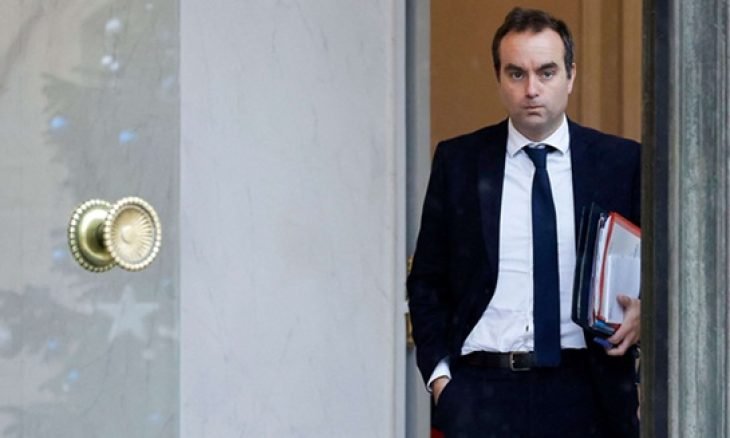
French Prime Minister Sébastien Lecornu’s upcoming visit to Rabat is far more than another entry on the diplomatic calendar. It signals the opening of a new chapter in Franco-Moroccan relations—one that differs fundamentally from previous phases of cooperation. When a newly appointed French Prime Minister chooses Morocco as his first foreign destination since taking office in the autumn of 2025, and arrives accompanied by twelve cabinet ministers representing France’s key sovereign, diplomatic, economic, and security portfolios, the real message extends well beyond the official agenda. It reflects a strategic calculation whose significance cannot be measured solely through diplomatic communiqués.
According to Agence France-Presse (AFP), the visit is intended to strengthen bilateral cooperation while preparing the ground for a possible visit by King Mohammed VI to Paris. Yet reading the developments beyond their official presentation reveals a broader reality: France is not simply restoring a bilateral relationship—it is redesigning the political architecture of one of its oldest partnerships in North Africa after years marked by mutual distrust and diplomatic tensions.
When Symbols Speak Louder Than Official Statements
Diplomacy has always been a language of symbols as much as words. The itinerary itself illustrates this reality. The program begins with a formal military welcome, followed by the laying of wreaths at the Mausoleum of Mohammed V, before bilateral talks between the two Prime Ministers and a joint governmental meeting concluding with the signing of several agreements.
These moments should not be dismissed as ceremonial protocol. Together, they represent France’s determination to reaffirm its respect for Morocco’s institutions and to rebuild a level of political trust that had been seriously weakened in recent years. Choosing the Mausoleum of Mohammed V carries profound symbolic weight, acknowledging the continuity of the Moroccan state and the historical legitimacy of its institutions. Likewise, convening a high-level joint governmental meeting signals that Paris no longer wishes to manage its relationship with Rabat through isolated files but through a comprehensive strategic partnership.
A First Official Trip That Sends a Message to the World Before It Reaches Morocco
The fact that Morocco is Sébastien Lecornu’s first official destination abroad deserves particular attention. In diplomatic practice, the first foreign visit by a newly appointed head of government often reflects a country’s strategic priorities.
Choosing Rabat ahead of any European, African, or Mediterranean capital suggests that France now views Morocco as an indispensable partner in addressing the major challenges shaping the region—from security cooperation and migration management to investment, energy, and geopolitical stability.
Twelve Ministers… More Than a Delegation, Almost an Entire Government
This is not simply a meeting between two Prime Ministers. By bringing twelve ministers—including the Ministers of Foreign Affairs and the Interior—France is effectively relocating a significant portion of its executive branch to Rabat.
Such an exceptional level of representation reveals an ambition that extends far beyond repairing diplomatic ties. Paris intends to reopen every major bilateral file simultaneously. Economic cooperation, defense, intelligence, internal security, migration management, infrastructure development, technological innovation, and strategic investment all form part of what increasingly resembles a long-term roadmap rather than a routine diplomatic encounter.
In essence, France is no longer seeking merely to close the chapter of a diplomatic crisis. It is attempting to establish an entirely new institutional framework for its partnership with Morocco.
What Changed to Make Paris Change Course?
The decisive turning point came during the summer of 2024, when President Emmanuel Macron officially recognized Morocco’s sovereignty over its Southern Provinces.
That decision represented far more than a diplomatic adjustment. It marked a strategic shift that fundamentally transformed the political relationship between the two countries. It ended years of calculated ambiguity while opening the door to resolving disputes that had fueled bilateral tensions—including the visa crisis, security disagreements, and allegations of espionage that had deeply eroded mutual confidence.
President Macron’s state visit to Rabat in October 2024 symbolized the restoration of political dialogue at the highest level. Lecornu’s upcoming mission now confirms that this rapprochement was not a temporary diplomatic gesture but a long-term strategic choice embraced by the French state.
The Messages Hidden Between the Lines
Official statements emphasize cooperation in trade, security, defense, and migration. Yet a deeper reading reveals several unspoken strategic messages.
The first is directed toward Europe. France is signaling that it intends to redefine its influence in North Africa with Morocco serving as its principal regional anchor.
The second targets French and international investors, reassuring them that political relations have regained sufficient stability to support a new cycle of major investments.
The third message is aimed at France’s domestic political audience. The new government seeks to demonstrate its capacity to restore one of France’s most important strategic partnerships outside the European Union, presenting diplomatic success as evidence of renewed international credibility.
Morocco… From Traditional Partner to Strategic Negotiating Power
Perhaps the most significant aspect of this visit lies not in France’s objectives, but in Morocco’s evolving international position.
Today, Rabat receives Paris not as a country seeking political backing, but as a regional power that has accumulated considerable diplomatic leverage. Growing international recognition of Morocco’s sovereignty over the Sahara, its central role in Euro-African migration management, internationally respected security cooperation, expanding economic attractiveness, and preparations for hosting the 2030 FIFA World Cup have collectively strengthened Morocco’s geopolitical standing.
It is precisely this accumulation of strategic assets that explains why France now approaches Morocco from a markedly different position than it did only a few years ago.
Preparing for a Royal Visit—or Opening an Entirely New Era?
The announcement that this visit is intended to prepare for a future visit by King Mohammed VI to Paris carries implications that extend well beyond diplomatic scheduling.
In international diplomacy, royal visits rarely serve to initiate negotiations. Rather, they generally formalize agreements and strategic understandings that have already been carefully negotiated behind the scenes.
Viewed from this perspective, Sébastien Lecornu’s mission appears less as a diplomatic courtesy and more as a political and institutional preparation for a renewed Franco-Moroccan partnership—one increasingly founded on converging strategic interests rather than historical legacy alone.
Conclusion
What is unfolding today between Rabat and Paris is far more than the restoration of bilateral relations.
It represents a comprehensive redefinition of the partnership itself.
France appears to have fully recognized that the geopolitical balance in North Africa has fundamentally changed, and that Morocco is no longer simply a traditional ally on the southern shore of the Mediterranean. It has become a regional power capable of shaping its own priorities, diversifying its international partnerships, and negotiating with major powers from a position of growing confidence.
Morocco, for its part, welcomes this renewed French engagement from a stronger diplomatic position, supported by profound regional and international transformations that have significantly enhanced its geopolitical influence.
For that reason, Sébastien Lecornu’s visit should not be viewed merely as a diplomatic mission culminating in the signing of agreements. It may instead represent the opening of a new chapter in Franco-Moroccan relations—one defined by a transition from crisis management to strategic balance-building, and from a partnership driven by necessity to an alliance sustained by deliberate geopolitical choice.


