

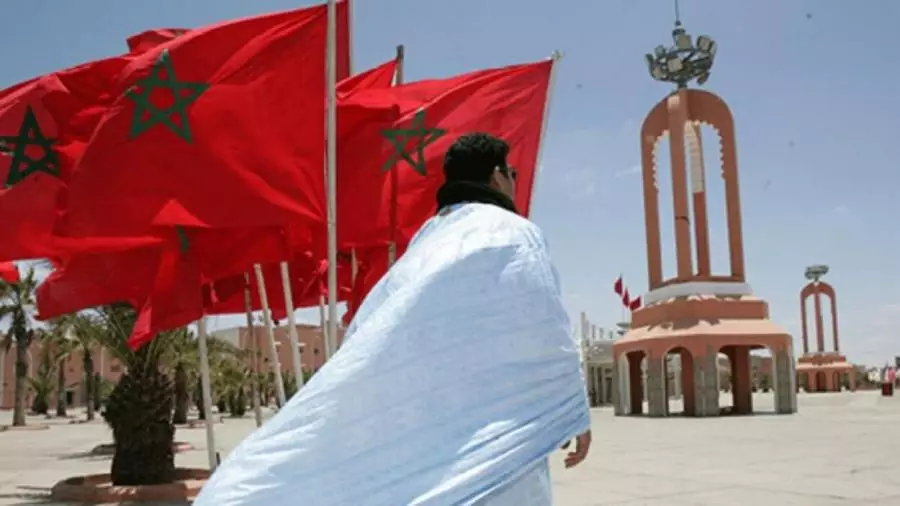
In a diplomatic moment that signals a profound shift in the international handling of Morocco’s national cause, forty states reaffirmed from Geneva their unequivocal support for Morocco’s full sovereignty over its Southern Provinces. Beyond the symbolic weight of numbers, the significance lies in the institutional setting — within the framework of the United Nations Human Rights Council — and in what it reveals about evolving dynamics inside the United Nations system.
The collective position reiterates a clear premise: the Sahara issue is a political dispute that falls exclusively under the mandate of the United Nations Security Council. By reinforcing this institutional centrality, supporting states underscore that a realistic, pragmatic, and sustainable solution lies in Morocco’s autonomy initiative under national sovereignty, in line with the trajectory established by Resolution 2797. The approach is no longer about indefinitely managing a conflict, but about structuring a viable political settlement.
This repositioning significantly narrows attempts to shift the debate toward parallel arenas, particularly through the politicization of human rights discussions. By reaffirming the Security Council’s exclusive competence, the group effectively safeguards the UN process from peripheral instrumentalization. The framework is set: political negotiation, and political negotiation alone, defines the legitimate path forward.
Diplomatically, this momentum reflects Morocco’s transition from reactive defense to strategic agenda-setting. The Sahara issue has become a benchmark for assessing the credibility of partnerships and the depth of international alignments. Gradually, the file is moving from the realm of contested narratives to that of institutional consolidation and development under Moroccan sovereignty.
Simultaneously, Rabat’s expanding strategic dialogue with Belgium illustrates a broader recalibration of alliances. The partnership now extends beyond migration and trade to encompass security cooperation, including safeguarding the spiritual security of the Moroccan diaspora. This integrated approach reflects a comprehensive vision of stability linking domestic cohesion, diaspora engagement, and European coordination.
Morocco has also reiterated its solidarity with the Sultanate of Oman and Gulf states amid regional tensions, affirming that regional security architectures are interdependent. Such positioning reinforces Morocco’s image as a reliable and strategically coherent partner in a rapidly shifting geopolitical landscape.
In essence, the Sahara dossier is evolving from a paradigm of dispute to one of consolidation: affirmed sovereignty, sustained territorial development, and clarified alliances. As international endorsements accumulate, Morocco’s position is no longer merely defended — it is increasingly embedded as a structural reality within contemporary diplomacy.


