

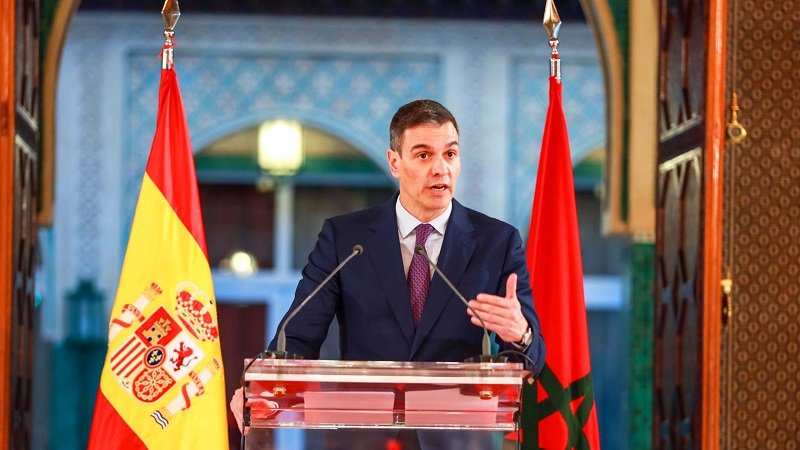
In a politically charged atmosphere in Madrid, Spanish investments in water and energy infrastructure projects in Morocco have become the focus of a heated parliamentary debate. The People’s Party, the main opposition force, has launched a strong attack against the government of Pedro Sánchez, accusing it of prioritizing infrastructure projects abroad while Spain itself allegedly faces structural shortcomings in the same critical sectors.
In the Senate, Senator Antonio Luengo Zapata questioned what he described as a reversal of national priorities. For the opposition, allocating financial resources to water and energy projects in Morocco appears unjustifiable at a time when parts of Spain continue to struggle with aging water networks, dam maintenance challenges, and energy system pressures. The criticism is not merely budgetary—it challenges the government’s broader strategic coherence.
The People’s Party has framed the issue within a wider critique of Spain’s recent energy policy. Rising energy costs, past electricity disruptions, and the complexities of the ecological transition provide the backdrop to a more comprehensive accusation: that the executive has weakened the domestic system while projecting investment efforts beyond national borders.
Yet a deeper reading suggests the controversy goes beyond internal policy disputes. Since Madrid recalibrated its diplomatic stance toward Rabat, Sánchez’s government has pursued a strengthened strategic partnership with Morocco, covering security, migration, energy cooperation, and logistical interconnections. From the government’s perspective, certain investments are part of a broader regional integration strategy aimed at fostering stability and long-term economic competitiveness.
The reference during parliamentary exchanges to the “Pegasus” affair adds a political layer to the debate. It signals an attempt to link bilateral cooperation with past controversies, reinforcing a narrative of questionable concessions in Spain’s relationship with Morocco. In this way, what begins as an economic discussion evolves into an ideological and electoral battleground.
Ultimately, the controversy reflects a clash between two visions: a government that views regional engagement and strategic cooperation as tools for strengthening Spain’s future economic position, and an opposition that insists domestic infrastructure must take absolute precedence. Between electoral calculations and geopolitical realities, Morocco once again finds itself at the center of Spain’s internal political debate.


