

It is increasingly likely that the upcoming high-level meeting between the French and Moroccan governments, or even King Mohammed VI’s expected visit to Paris this year, could result in the announcement of Morocco’s significant progress in civilian nuclear energy.
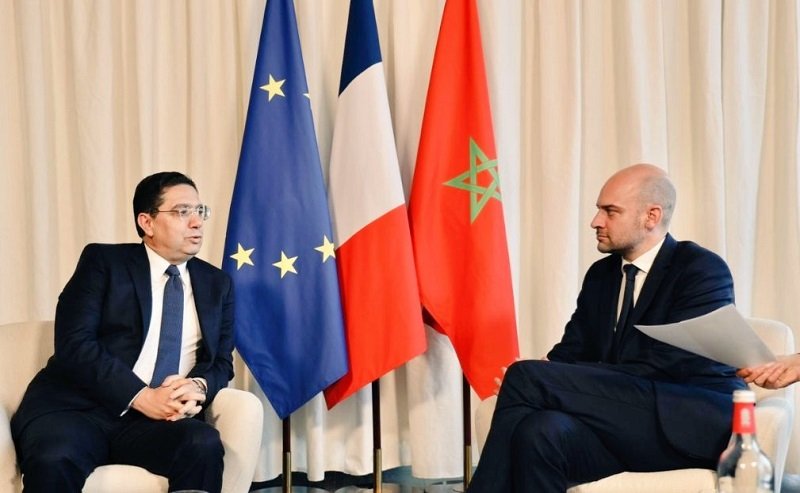
This shift has begun to emerge publicly, with nuclear issues moving out of the shadows. French reports, notably “Jeune Afrique”, highlighted that the meeting between French Foreign Minister Jean-Yves Le Drian and his Moroccan counterpart, Nasser Bourita, during the World Nuclear Energy Summit, was no coincidence. Morocco’s delegation, led by Prime Minister Aziz Akhannouch, underscores the growing importance of this file in bilateral relations.
France, as a global leader in civil nuclear energy, is not merely sharing expertise; it is also engaging close partners in international discussions on the low-carbon energy future, at a time when the world is focusing on energy transition and reducing fossil fuel dependency.
Morocco, for its part, has not overlooked recent advances in civilian nuclear technology, even while relying heavily on renewable energy for electricity production. The Kingdom closely monitors scientific and technological applications of nuclear energy, for both electricity generation and advanced research, having officially expressed its desire to master this energy source.
Morocco’s presence at the summit and participation in discussions on nuclear project financing reflects a long-term strategy to diversify energy sources and strengthen international technical partnerships.
In his speech in Paris, the Moroccan Prime Minister emphasized that civilian nuclear energy is not limited to electricity production: it opens avenues for green hydrogen, seawater desalination, nuclear medicine, and food security. He also noted that Morocco’s phosphate fields contain substantial natural uranium deposits, granting the country an “additional strategic dimension” in international nuclear debates.
Akhannouch stated: “In a world where energy stability is no longer merely an economic challenge but a matter of sovereignty, civilian nuclear energy represents an indispensable strategic lever in the face of global threats that disrupt international balances.”
He pointed out that rapid climate change, growing global energy demand, and fragile supply chains necessitate a profound transformation of energy systems and the search for low-carbon solutions, including civilian nuclear energy.
The nuclear dossier fits within a broader framework of cooperation between Paris and Rabat, encompassing energy, technology, and investment, demonstrating that bilateral relations are expanding to include major strategic projects, following President Macron’s 2024 support for Morocco’s sovereignty over the Sahara.


