

The new French Prime Minister’s first official visit to Morocco extends far beyond the ceremonial protocol of a diplomatic mission. It represents a pivotal geopolitical moment in which Paris appears to be fundamentally redefining its strategic outlook toward North Africa, the Western Mediterranean, and the African continent as a whole. Behind the official meetings and institutional announcements lies a broader strategic recalibration that places the Kingdom of Morocco at the center of France’s emerging priorities in defense, energy, investment, regional security, and continental connectivity.
A superficial reading might portray the visit as another high-level bilateral meeting intended to reinforce an already longstanding partnership. However, a deeper analytical perspective—one rooted in the methodology of Journalism of Vision and In-Depth Analysis—reveals something considerably more profound. France no longer views Morocco merely as a traditional Maghreb partner. Instead, it increasingly regards the Kingdom as a pivotal geopolitical actor capable of shaping strategic balances across the Mediterranean, the Sahel, and West Africa.
The decision to make Rabat the first foreign destination of France’s new Prime Minister is therefore anything but symbolic. In international diplomacy, first visits often communicate strategic priorities more effectively than official declarations. By choosing Morocco, Paris appears to acknowledge that many of its future interests in Africa and the Mediterranean will increasingly depend on a strengthened partnership with Rabat.
From Diplomatic Friction to Strategic Partnership: The Real Transformation
Franco-Moroccan relations have not always followed a linear trajectory. Recent years witnessed periods of diplomatic tension, fueled by disagreements over visa policies, security cooperation, and political misunderstandings. Yet these episodes now appear less as defining moments than as temporary disruptions within a relationship undergoing profound strategic renewal.
This evolution cannot simply be interpreted as diplomatic reconciliation. Rather, it reflects a broader transformation in the international system itself. As global power dynamics continue to shift, France has gradually recognized that its North African policy can no longer rely solely on historical balances. Instead, it must increasingly be guided by long-term strategic interests.
Within this context, Paris’s support for Morocco’s Autonomy Initiative—presented as the most serious and credible basis for resolving the dispute over the Kingdom’s Southern Provinces—marked a decisive turning point. It removed one of the principal political obstacles affecting bilateral relations and opened the door to a much broader strategic convergence.
Yet the deeper significance extends beyond diplomacy. The rapprochement also reflects a changing geopolitical landscape in which Morocco has emerged as one of Africa’s most stable political actors, combining institutional continuity with growing economic influence and expanding diplomatic reach across the continent.
Defense Is Only the Visible Layer of a Much Broader Strategic Architecture
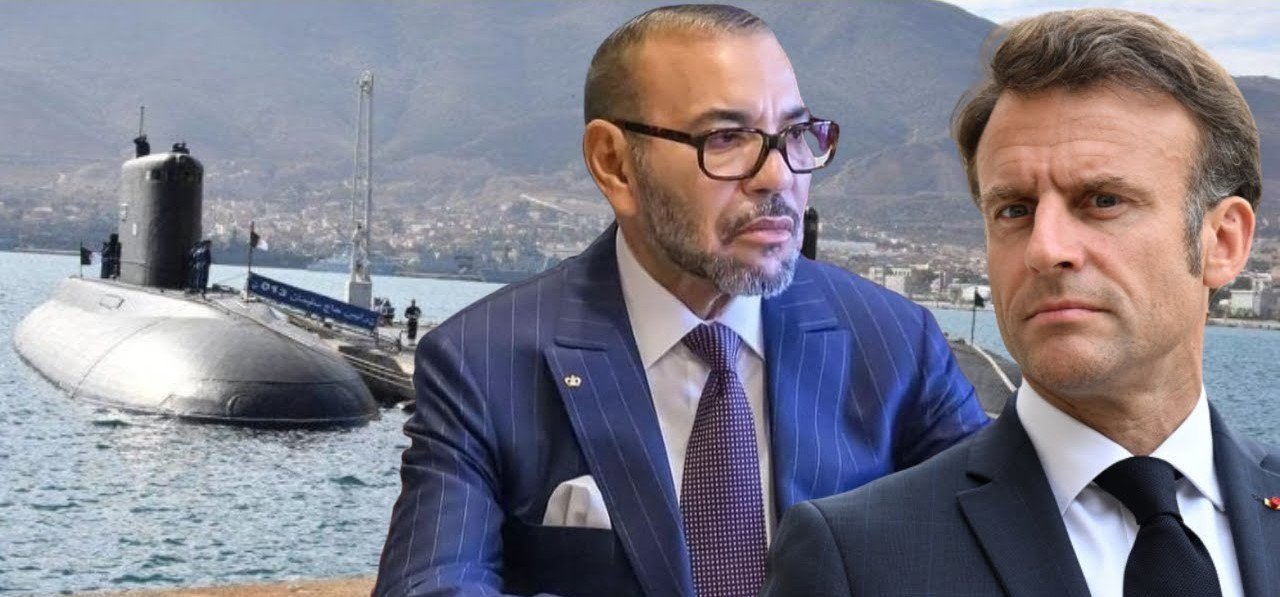
Public attention has naturally focused on possible negotiations involving submarines or Rafale fighter aircraft. Nevertheless, interpreting the visit solely through the lens of military procurement would overlook its broader strategic meaning.
In contemporary international relations, defense cooperation is rarely limited to the acquisition of military hardware. Instead, it serves as a long-term mechanism for building strategic trust through technology transfer, joint training, industrial partnerships, operational interoperability, and sustained political coordination.
Consequently, any future military agreements between Rabat and Paris should be understood not merely as commercial transactions but as components of a wider strategic framework designed to deepen bilateral confidence and reinforce long-term security cooperation.
At the same time, Morocco continues to pursue a deliberate strategy of diversifying its defense partnerships. This approach strengthens the Kingdom’s strategic autonomy while allowing it to benefit from advanced technologies supplied by multiple international partners. France therefore remains an important defense partner—but not an exclusive one—within Morocco’s broader doctrine of sovereign strategic independence.
The Battle for Energy: Beyond Gas Lies a New Geopolitical Order
If defense represents the most visible dimension of the visit, energy arguably constitutes its true strategic core.
The war in Ukraine, followed by successive disruptions affecting global energy markets and mounting instability in the Middle East, has fundamentally altered Europe’s understanding of energy security. Pipelines are no longer viewed merely as economic infrastructure; they have become instruments of geopolitical influence.
Against this backdrop, the Atlantic Africa Gas Pipeline project assumes exceptional strategic importance. Connecting Nigeria to Morocco through several West African nations before ultimately linking with European markets, the project is designed not only to transport natural gas but also to reposition Morocco as a major continental energy hub connecting Africa with Europe.
For France, supporting this initiative is equally an investment in a partner offering institutional stability, long-term strategic planning, and regional credibility. Morocco increasingly appears as one of Europe’s most reliable gateways for diversifying future energy supplies while strengthening broader economic integration with Africa.
Reading Between the Lines: The Messages Left Unspoken
Official statements emphasize economic cooperation, security coordination, and investment opportunities. Yet a closer reading uncovers several implicit strategic messages.
The first is that France now appears to regard Morocco as its principal geopolitical anchor in the Euro-African space.
The second reflects Paris’s broader effort to reposition its African strategy following significant geopolitical changes across the Sahel. Through its expanding diplomatic networks, investment footprint, and financial partnerships throughout Africa, Morocco provides France with an exceptionally valuable regional platform.
The third concerns collective security. Counterterrorism, organized crime, irregular migration, maritime security, supply chain resilience, and energy security increasingly require forms of cooperation that transcend traditional bilateral diplomacy.
Morocco: From Transit Territory to Regional Strategic Power
Perhaps the most significant conclusion emerging from this evolving relationship is that Morocco is no longer perceived simply as a transit country linking Europe and Africa.
Instead, it is progressively establishing itself as a regional strategic power capable of initiating major continental projects in ports, logistics, renewable energy, green hydrogen, automotive manufacturing, aerospace industries, digital infrastructure, and cross-continental connectivity.
This transformation naturally enhances Morocco’s attractiveness to European partners seeking reliable, politically stable, and economically dynamic gateways into Africa.
Conclusion: A Visit That Redefines Strategic Geography
Any agreements eventually signed in defense, energy, investment, or industrial cooperation will undoubtedly carry considerable importance. Yet they represent only the visible outcome of a much deeper strategic evolution.
The true significance of this visit lies in the redefinition of Franco-Moroccan relations themselves. Paris and Rabat increasingly appear to be building a partnership founded less on historical legacy and more on converging strategic interests, mutual respect, and a shared vision of regional and global challenges.
Viewed through the lens of Journalism of Vision and In-Depth Analysis, the real story is not simply that a French Prime Minister visited Rabat. Rather, it is that France is fundamentally recalibrating its geopolitical architecture in the Western Mediterranean and across Africa, while Morocco steadily consolidates its position as an indispensable strategic actor—one whose influence derives not merely from geography, but from its capacity to combine political stability, continental connectivity, energy leadership, and regional security into a coherent geopolitical vision for the decades ahead.


