

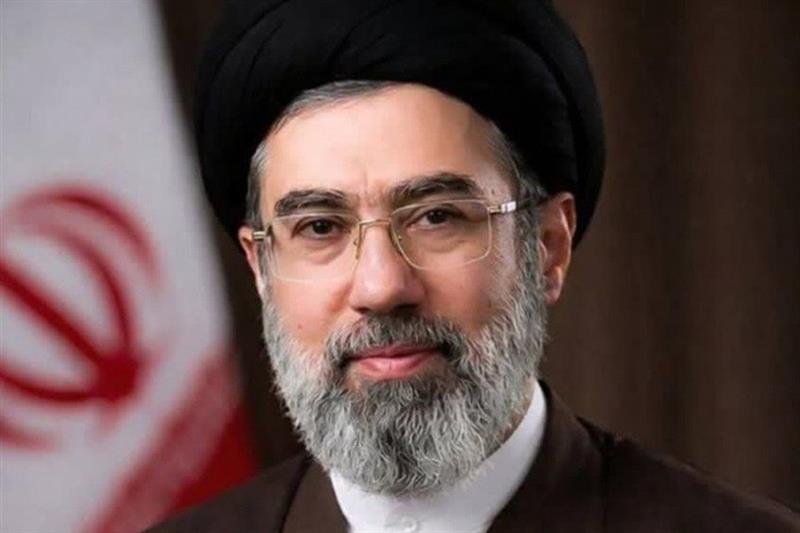
At a moment that appears to be reshaping the political balance of the Middle East, Iran has announced the appointment of Mojtaba Khamenei as the new Supreme Leader of the Islamic Republic, succeeding his father Ali Khamenei. This transfer of power represents far more than a routine change at the top of Iran’s political hierarchy. It signals the beginning of a new phase in which war dynamics, political legitimacy, and the survival of the Iranian system itself intersect.
The decision was reportedly taken during an emergency session of the Assembly of Experts, the constitutional body responsible for selecting the Supreme Leader. The primary objective was to prevent any power vacuum at a time when Iran is engaged in a direct military confrontation involving the United States and Israel. With this move, Mojtaba Khamenei becomes the third Supreme Leader since the 1979 Islamic Revolution, which established the doctrine of “Velayat-e Faqih,” granting the Supreme Leader ultimate authority over the state’s political and military institutions.
Yet the significance of this appointment goes well beyond the institutional framework. For the first time since the creation of the Islamic Republic, leadership effectively passes from father to son. This development revives a long-standing debate within Iranian political circles about whether the revolutionary system—originally designed to replace monarchy—could gradually evolve toward a form of quasi-dynastic continuity.
Although Mojtaba Khamenei has never held prominent government positions, his influence within Iran’s inner circle of power has long been considered substantial. For years, he reportedly operated from within his father’s office, cultivating strong relationships with key security institutions, particularly the Islamic Revolutionary Guard Corps. In Tehran’s political circles, he has often been described as a discreet but powerful figure capable of shaping decisions from behind the scenes.
His rise to power therefore carries a clear political message. At a time of intense military and economic pressure, the ruling elite appears to have opted for continuity and firmness rather than reform or political opening. In other words, Tehran seems determined to demonstrate that the death of its long-time leader has not weakened the structure of the Islamic Republic.
International reactions were swift. U.S. President Donald Trump rejected the succession, arguing that it would not contribute to ending the regional conflict. Meanwhile, several Israeli officials openly suggested that the new Supreme Leader could become a target, highlighting how the confrontation is expanding beyond conventional military arenas to the very top of political leadership.
Inside Iran, however, the situation remains more complex. Supporters of the regime portray the appointment as a symbol of resilience and national defiance in the face of external pressure. Critics, on the other hand, fear that it may permanently close the door to meaningful political change. Yet amid war conditions and a heavily securitized environment, the opposition’s ability to mobilize appears extremely limited.
Ultimately, Mojtaba Khamenei’s rise cannot be understood solely as an internal Iranian development. It is part of a broader geopolitical transformation affecting the entire Middle East. Many analysts believe it may signal a harder phase in Iran’s regional strategy at a time when energy markets and military balances across the region are already under severe strain.
The real question now extends beyond succession itself: has Iran chosen strategic continuity—or a deliberate escalation in a regional conflict that is already dangerously close to explosion?


