

Forty Nations in Geneva Are Not Just Supporting Morocco… They Are Endorsing the Logic of Statehood Over the Illusions of Conflict
In international politics, victories are not always measured by the number of agreements signed or the volume of official statements issued. Sometimes, they are reflected in a simple scene repeated inside United Nations halls: one country speaks, and dozens of others choose to stand behind its position. On the surface, the image may seem ordinary. In reality, it often reveals deeper shifts in international perceptions and political realities.
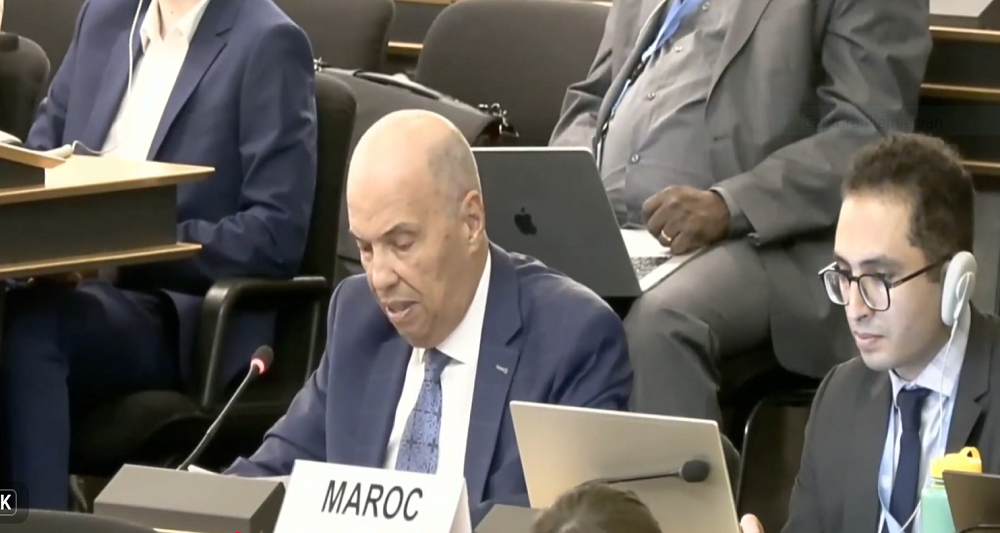
That is precisely what unfolded in Geneva when forty countries renewed their support for the Moroccan character of the Sahara during the 62nd session of the United Nations Human Rights Council. Far from being another routine diplomatic declaration, the event reflects a broader transformation in the way the Moroccan Sahara issue is increasingly perceived within international institutions. It signals the growing triumph of political realism over ideological narratives.
For decades, opponents of Morocco’s territorial integrity sought to keep the Sahara issue trapped within geopolitical calculations and ideological interpretations. Yet the international landscape appears to be evolving. More and more countries now favor a pragmatic approach focused on achieving a realistic and sustainable solution rather than perpetuating a dispute that continues to hinder the development of an entire region.
The significance of the support expressed by these forty states lies not only in their endorsement of Morocco’s position. More importantly, it stems from their insistence that the Sahara issue remains within the exclusive framework of the United Nations political process and the authority of the Security Council. Behind this institutional language stands a clear legal and political message: the issue should not be exploited through alternative channels or diverted from its internationally recognized framework.
Within this context, Morocco’s Autonomy Initiative occupies a central position. It is increasingly viewed not merely as one proposal among many, but as a serious, credible, and realistic basis for achieving a lasting settlement to the regional dispute. This evolution reflects a broader shift from theoretical debate toward practical solutions.
Why, then, does international support continue to expand year after year?
The answer is not found solely in diplomatic corridors. It is equally visible on the ground. Morocco’s southern provinces have gradually evolved from being perceived as a disputed territory into a dynamic hub for economic development, infrastructure investment, and African connectivity.
From Laayoune to Dakhla, large-scale development projects, modern infrastructure, strategic ports, and renewable energy initiatives have transformed the region’s landscape. Morocco has effectively made development itself part of its diplomatic argument. In today’s world, tangible achievements often carry more weight than political rhetoric, and this reality has strengthened the credibility of Morocco’s position.
The recognition of Morocco’s constructive and voluntary cooperation with United Nations human rights mechanisms is another important element. At a time when governance, rights, and institutional accountability have become central components of international legitimacy, Morocco’s engagement with international institutions reinforces confidence in its approach.
The reference to the populations living in the Tindouf camps introduces an equally important human dimension. Beyond diplomatic resolutions and geopolitical debates lie thousands of individuals whose futures remain tied to the resolution of this dispute. The prospect of return, integration, and equal citizenship reflects a vision focused on reconciliation and stability rather than the indefinite continuation of division.
The support expressed by the forty countries must also be understood within a wider international dynamic. The opening of numerous consulates in Laayoune and Dakhla is not merely a symbolic gesture. It represents a tangible political commitment and a recognition of the region’s strategic and economic potential. In international relations, actions often speak louder than statements.
Beyond the Sahara itself, the future of the broader Maghreb and Sahel regions is also at stake. For decades, this conflict has limited opportunities for economic integration, regional cooperation, and shared prosperity. A lasting settlement would therefore represent not only a Moroccan achievement but also a historic opportunity for regional stability and development.
Under the wise leadership of His Majesty King Mohammed VI, Morocco has pursued a strategy built on patience, historical legitimacy, diplomatic engagement, territorial development, and institutional openness. The results of this long-term vision are becoming increasingly visible across international forums.
Ultimately, the most important question raised by Geneva goes beyond the number of countries expressing support for Morocco. Are we witnessing a historic transition in which the Sahara issue is moving from a logic of conflict management toward a logic of solution-building?
If current international trends are any indication, an increasing number of states appear to believe that realism, stability, and development offer the strongest foundations for the future of the Moroccan Sahara.


